
In conversation with Financial Services: Why innovation really matters
The term ‘innovation’ might bring to mind a race for better technology, systems and smarter data, but beneath it all lies a fundamental question: how do we create a fairer financial future for all?
For most people, financial advice isn’t about products, platforms, or policy. It’s about life: buying a first home, protecting a family, surviving a setback, or planning for a future that feels uncertain.
Yet for millions, financial advice remains out of reach.
As one of the most significant regulatory shifts in recent years begins to reshape how people access financial support, the financial services sector is radically reshaping how advice and guidance is delivered.
This is just the kind of challenge that our pioneering Innovation Calls take on, led by our team in the Financial Regulation Innovation Lab (FRIL). Our latest call focused on the Financial Conduct Authority’s (FCA) Advice Guidance Boundary Review, a technical name for a very human issue: how to make financial help clearer, fairer and available to far more people.
Bringing together fintech founders, academics, financial services leaders, and regulators, FRIL’s Innovation Call creates a space where policy, practice, and possibility meet.
Here, we speak with two financial services leaders involved in the call to find out more about why innovation is so important to their firms, as well as the future of the sector:
- Maria Herrero Bullich – Chief Customer and Digital Officer, Insurance, Pensions & Investments at Lloyds Banking Group.
- Kate Murray – Strategic Projects Lead, Scottish Widows & Lloyds Banking Group.

Addressing the Big Picture
“For me, the utopia is that everyone who wants to do the right thing for their future has real choice. Whether they’re looking for simple guidance, clearer recommendations, or full financial advice. What matters is that people have different options, depending on their needs, and the freedom to decide which path is right for them,” explains Maria.
“It’s important to us to close the advice gap by building tools that help people think about their futures, especially those who can’t afford traditional advice, so they still have access to clear, targeted support when making important financial decisions.”
And this work matters, because the numbers are concerning. Millions of people across the UK still receive no financial advice at all, and while support exists, it is often out of reach for those who need it most.
The Advice Guidance Boundary Review represents a critical moment for the sector, an opportunity to ensure that more people can finally access support when making some of the most important decisions about their money.
Kate explains: “Our purpose is to help more people secure their financial futures, in a way that aligns with our wider goal of helping Britain prosper. There’s a real advice gap in the industry, and whether someone is our customer or not, we want to help fill that void so more people can move towards a more prosperous financial future.“
“At one end of the spectrum, people can’t afford advice –so they self-serve through available guidance, but don’t know what to do with it. At the other end, people can access full, holistic advice. In the middle, many don’t know how to save, invest or prepare for retirement. That’s where we see innovation and new solutions helping people understand their next step, whether that’s saving and investing more, planning for retirement, or putting more into their pension.”
Meeting Consumer Needs
And when we look more closely at this issue, it becomes clear that a one-size-fits-all approach simply won’t meet the diverse needs of consumers. Across the industry, firms are increasingly focused on developing more tailored ways to support those who are currently slipping through the advice and guidance net.
Maria explains: “There are parts of society that face very different challenges, from the gender gap in pensions to younger generations trying to save for the future. We’re focused on how to bring people who often have less financial confidence into the conversation and help them think about their futures.“
“Different groups need to be engaged in different ways. Younger people can be hard to reach, so we use techniques like gamification to encourage them to start those conversations. Others, such as people who feel less confident about investing, or women who may have taken career breaks and are worried about having enough for a comfortable retirement, face different barriers.”
These are very real issues, affecting everyday lives. Kate stresses the impact of what happens if the gap isn’t closed:
“Through work like our annual Women in Retirement report, we can see a massive gap in people’s financial futures. Significant proportions of society, who are working today, are on track to reach retirement without enough money, and that means going from work to a retirement in poverty.“
“That’s a serious problem, not just for individuals, but for the UK as a whole. It’s a systemic, government-level issue that needs to be addressed now, to prevent that happening for people as much as possible.”

Future Solutions Now
Finding solutions to these challenges requires a collaborative approach – different perspectives, experience and skillsets. That’s why this FRIL Innovation Call matters so much.
“It’s been so interesting to meet the fintechs and to connect with strategic partners, to better understand what they can bring to help us move at pace and innovate – so we can, at scale, support more customers to secure their financial futures,” says Kate.
“It’s been so interesting to meet the fintechs and to connect with strategic partners, to better understand what they can bring to help us move at pace and innovate – so we can, at scale, support more customers to secure their financial futures,” says Kate
“This is a huge opportunity for us. Scottish Widows has been involved in earlier calls, and this feels like a real chance to do things differently. At Lloyds Banking Group, we’re constantly trying to change how we innovate and move faster. Bringing in outside thinking, new technology, and completely different perspectives helps us bridge that and go quicker.”
And that’s why innovation in financial services is about far more than technology, systems, and data. As Maria puts it:
“We focus on creating experiences that aren’t built around products, but around people. It’s about understanding what they need, where the gaps are, and how to help them close them.”
The Advice Guidance Boundary Review. Just what does it all mean?
Advice: A regulated service where a financial adviser looks at your full financial situation and gives you a personalised recommendation.
Guidance: Support that points you in the right direction based on limited information you share, without telling you exactly what to do.
Boundary: The line that separates advice from guidance, defining how much information is needed and what a firm can or can’t recommend.
Review: The regulator’s process of consulting industry and consumers, and government to create clear new rules that will shape how these services work in future.
What next?
Enjoyed this piece? Hear from the perspective of the fintechs involved in the call. If you’re interested in the work of FRIL more generally and would like to contact a member of the team email: FRIL@fintechscotland.com.
About FRIL
Creating fairer financial futures: A focus on the fintechs
Innovation starts with people. That’s our belief at the Financial Regulation Innovation Lab (FRIL), and that’s why we bring together pioneering fintech entrepreneurs with industry and academia to address challenges facing financial services – both now and for the future.
At FRIL’s latest Innovation Call, fintech entrepreneurs took on one of the most significant regulatory shifts in the sector, pitching ideas that could change how millions of people access financial support and move us closer to fairer financial futures.
But what really drives these fintech founders, and what happens behind the scenes for them at an Innovation Call?
We spoke to two of the founders who took to the stage to find out more.
First of all, let’s meet Crawford Taylor, a co-founder of Afternoon, a data and AI operating model for financial advisors

Crawford, you’ve just come off the stage, but before we hear about that, please tell us, what exactly is a ‘data and AI operating model for financial advisors’?
“Sure, it means that we collect the data financial advisers need to support their clients, enrich it, and then use AI to automate their workflows. That significantly reduces the time it takes for advisers to deliver advice, so they can focus more on their clients.”
And why does this area matter to you?
“Before this, I worked as a consultant advising trustees and companies on defined benefit pension schemes, helping secure the future for people who already had a pension so they’d receive what they were due at retirement. This feels like a natural extension of that, helping more people manage their money better and be financially better off.”
You’ve just pitched at our Innovation Call, how did that go?
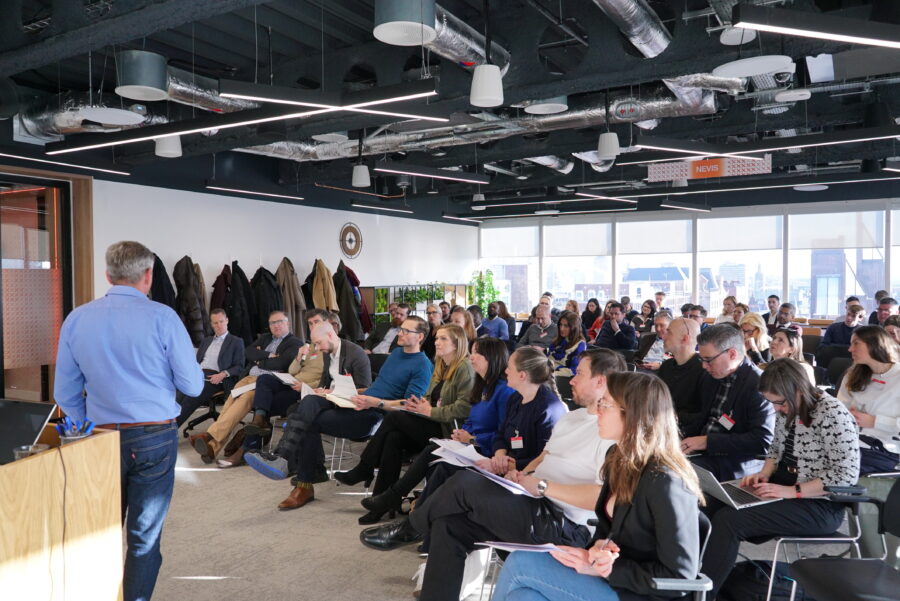
“I think it went well. With 19 other companies pitching to a panel of around 10 large corporates, including organisations like M&G, NatWest, and Sopra Steria, it’s a great opportunity to explore potential partnerships.”
As a fintech founder, what is your big ambition?
“There’s around £18 billion spent on financial services technology every year, and it’s only going to grow, yet there’s still a huge advice gap, where many people can’t access or afford support. So much time is lost joining the dots, from opening accounts to moving money. Our ambition is to automate that entire process, so advisers have everything at their fingertips and clients can go from advice to action – opening accounts and transferring funds – in seconds.”
Thanks Crawford, and final question, what has being involved in the Innovation Call meant for you?
“It’s been energising. The Innovation Call was exceptionally well designed; it respected how stretched early-stage teams are, while still pushing to sharpen our thinking and ambition. The combination of regulator insight, industry partners, expertise from Growth Builders and practical support created real momentum for us. Huge thanks to Fintech Scotland and everyone involved.”
And now let’s hear from another fintech founder, please meet… Dia Banerji, founder of Cherpa.ai, an AI money coach that delivers hyper-personalised financial education.
Dia, you’ve just done your pitch – how did it go?
“I was first up, which always adds a bit of pressure, but it felt good. The presentation went well. Most importantly, I was able to clearly tell the story of why Cherpa.ai exists.“
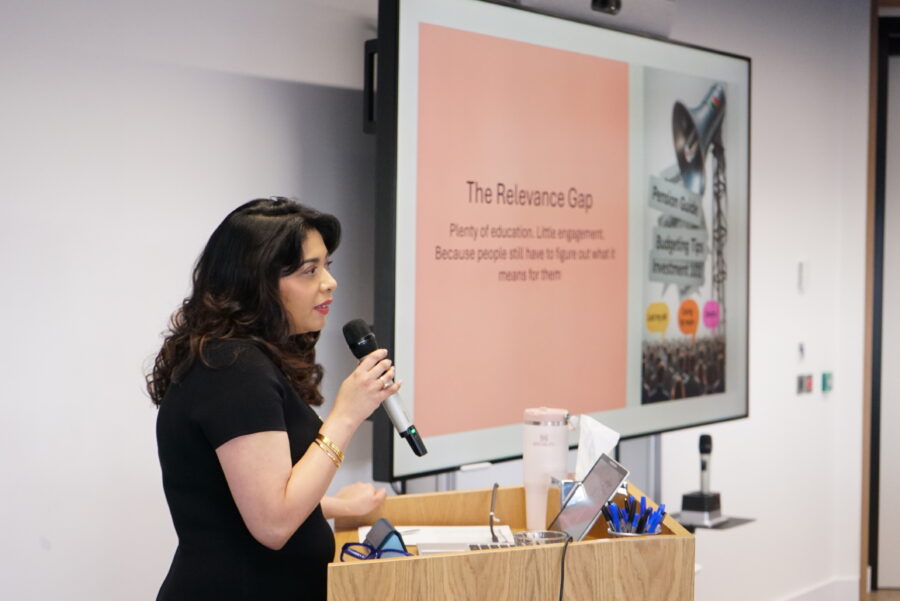
And on that note, Dia, why does Cherpa.ai exist?
“It is very close to my heart. So many people feel a real sense of shame when they don’t understand money, and that keeps them from asking questions. I recently ran a survey about money confidence, one person told us their biggest wish was simply to feel less ashamed about talking about money – and that really stayed with me. Cherpa is here to change that and help people connect with their money and navigate life with confidence. Because every life moment is a money moment.”
Why does this call matter to you?
“This call matters a lot to Cherpa & me personally. More than 90% of people in the UK can’t access financial advice, and there’s a big step before advice that’s really about awareness and education. People often see ‘investment’ as something for someone else, and financial education is still very low, which leaves people disconnected from their money. That’s why this call feels important, not just for the UK but for the world.”
And are there any particular aspects that have struck you over the last few weeks?
“I’ve been really happy to be part of this cohort. The run-up has been amazing, with sponsors coming in, sharing their problem statements, and giving us time to learn from them and from the other fintechs. It’s been great to feel part of a real community and to play a small part in helping Scotland thrive.”
What are your hopes for the result?
“I’m really excited to be part of this cohort and would love to work more closely with some of the sponsors. Beyond that, it’s about being part of a wider fintech community, learning from others, and helping Scotland, and ultimately people everywhere, build more confidence and connection with their money.”
So what next for the fintechs who took part?
With the winners now announced, the successful teams will receive grants of up to £50,000 to develop, scale and implement their ideas over the coming months.
But the journey doesn’t end there. Beyond the winners, many of these ideas are likely to spark further interest, partnerships and pilots in the months ahead.
If you’d like to find out more about the work of FRIL, please contact us at FRIL@fintechscotland.com.
About FRIL
Creating Fairer Financial Futures – AGBR Innovation Showcase Day
On 15 January 2026 in Glasgow, more than 100 people gathered for a high-stakes showcase.
The purpose of the gathering?
To address one of the most important regulatory shifts in financial services today. A shift which could reshape how millions of people access financial support and create fairer financial futures for all.
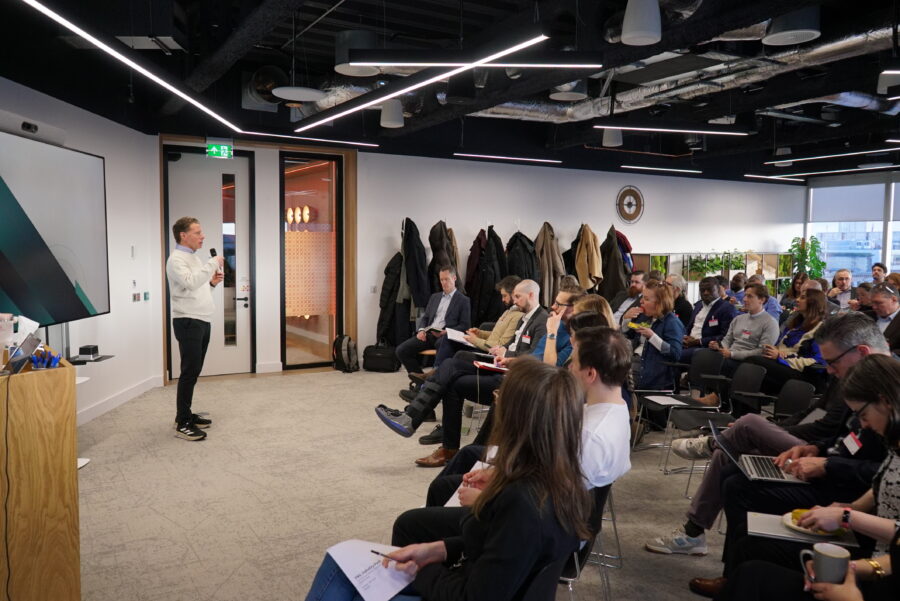
The event was the final showcase day of an Innovation Call – a pioneering initiative led by the Financial Regulation Innovation Lab (FRIL) at the heart of FinTech Scotland.
But, what is an Innovation Call, what happens on showcase day and what is achieved?
Well, join us as we take you behind the scenes of the day and speak to some of the people involved.
Let’s start with Clare Reid, Strategic Innovation Director at FRIL.
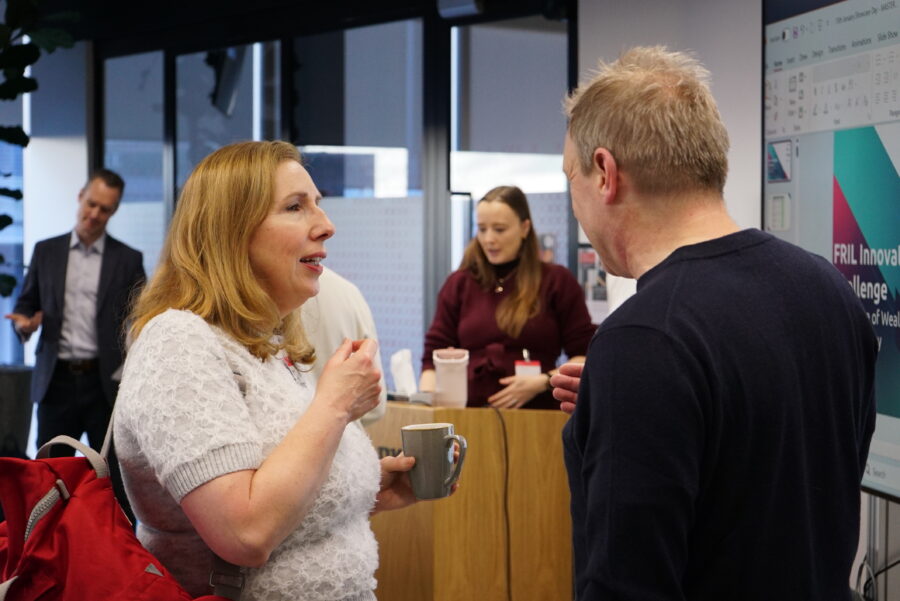
Clare, explain to us what to expect on a Showcase Day of an Innovation Call?
“Nerves certainly run high on showcase day of an Innovation Call! It’s the culmination of months of work for Fintech entrepreneurs as they pitch their solutions to an audience of potential Financial Services partners. And the stakes are high – there is an award of £50,000 to successful fintechs and the opportunity to take forward some potential game changing solutions and partnerships with those partners.“
What was the challenge or opportunity today’s call addressed?
“This call focused on the FCA’s Advice Guidance Boundary Review – which is addressing a very human issue about how to make financial help clearer, fairer and available to far more people.”
“The call is all about finding new ways to help consumers make informed financial decisions, delivering more accessible and tailored support while staying within evolving regulatory expectations.”
Who was involved?
“The call brings together fintech entrepreneurs, financials services and academia, who are all tackling some of the biggest challenges in financial services today.”
Let’s hear from one of the Fintech founders pitching today to hear their side of the story. Dia Banerji, founder of Cherpa.ai:
Dia, you’ve just done your pitch – how did it go?
“I was first up, which always adds a bit of pressure, but it felt good. The presentation went well. Most importantly, I was able to clearly tell the story of why Cherpa.ai exists.”
What was your pitch addressing?
“Cherpa.ai is an AI money coach that delivers hyper-personalised financial education. The pitch focused on the huge gap before financial advice – helping people build awareness, understanding, and confidence about their money, so they’re better prepared to make decisions.”
What are your hopes for the result?
“I’m really excited to be part of this cohort and would love to work more closely with some of the sponsors. Beyond that, it’s about being part of a wider fintech community, learning from others, and helping Scotland, and ultimately people everywhere, build more confidence and connection with their money”
And on that note, let’s hear from Kate Murray who works for Scottish Widows as part of Lloyds Banking Group.

What has struck you about the pitches that you’ve heard today?
“What’s really struck me is the breadth of innovation on show – from fintechs tackling very niche, complex problems to those covering the entire end-to-end customer journey. It’s impressive what they’ve delivered in such a short time, and the quality of the user interfaces has really stood out to me. They’re slick, well thought-through, and genuinely exciting to imagine working with as we design our future journeys.”
What does AGBR mean for your firm, and why does this call matter?
“For us, AGBR is about helping more people secure their financial futures, in a way that aligns with our wider purpose of helping Britain prosper. There’s a real advice gap in the industry, and a big void in the middle where people don’t know what to do next — how to save, how to prepare for retirement, or how to make better decisions. We see innovation and new solutions as a way to bridge that gap, giving people the clarity and confidence to take the next step towards a more prosperous financial future.”
“The Innovation Call matters because we’re always reviewing how we change, innovate, and go faster. And sometimes, being part of a big organisation slows us down. Bringing in outside thinking, new technology, and completely different perspectives helps us bridge that and move quicker.”
And let’s finish with Christine Sinclair, Programme Director for FRIL at the University of Strathclyde.

Christine, that was quite a day…anything else that might surprise us about an Innovation Call?
“It doesn’t stop here. There are many layers to an Innovation Call. While the successful fintechs will go on to partner with a financial services firm and grow their businesses, the research by the academics involved in the call is captured in White Papers to support industry learning.“
“The insights also shape current and developing skills programmes hosted by the University of Strathclyde and the University of Glasgow. These are aimed at helping people develop the skills they need to adopt new technologies responsibly, whether that’s AI, data, digital transformation or ESG reporting.”
Sounds interesting? You can hear more about those courses in this interview with Christine.
So what next for the fintechs who took part?
Now, the wait begins! Next week the judges will decide which teams will be awarded grants of up to £50,000 to develop, scale and implement their ideas.
But the journey doesn’t end there. Beyond the winners, many of these ideas are likely to spark further interest, partnerships and pilots in the months ahead.
We’ll keep you posted.
In the meantime, if you’d like to find out more about the work of the Financial Regulation Innovation Lab, please contact us at FRIL@fintechscotland.com.
About FRIL
Why Upskilling can’t wait: Building Smarter Skills for a Smarter Financial Future
Q&A With Christine Sinclair
Programme Director, Financial Regulation Innovation Lab (FRIL), University of Strathclyde
Financial services is undergoing one of the most significant periods of change in decades. Technology is advancing at pace, new regulations are emerging, and organisations of every size are wrestling with the skills needed to keep up. The Financial Regulation Innovation Lab (FRIL) was created as a catalyst to help the sector respond, to support better outcomes for consumers, strengthen the industry, and enable fintech entrepreneurs to innovate with confidence.
Central to this mission is a progressive skills development programme delivered in partnership with the University of Strathclyde and the University of Glasgow. Together, they’re building a portfolio of Microcredentials (which gain academic credits), short courses and executive education that help people across financial services understand, adopt and apply new technologies responsibly and effectively.
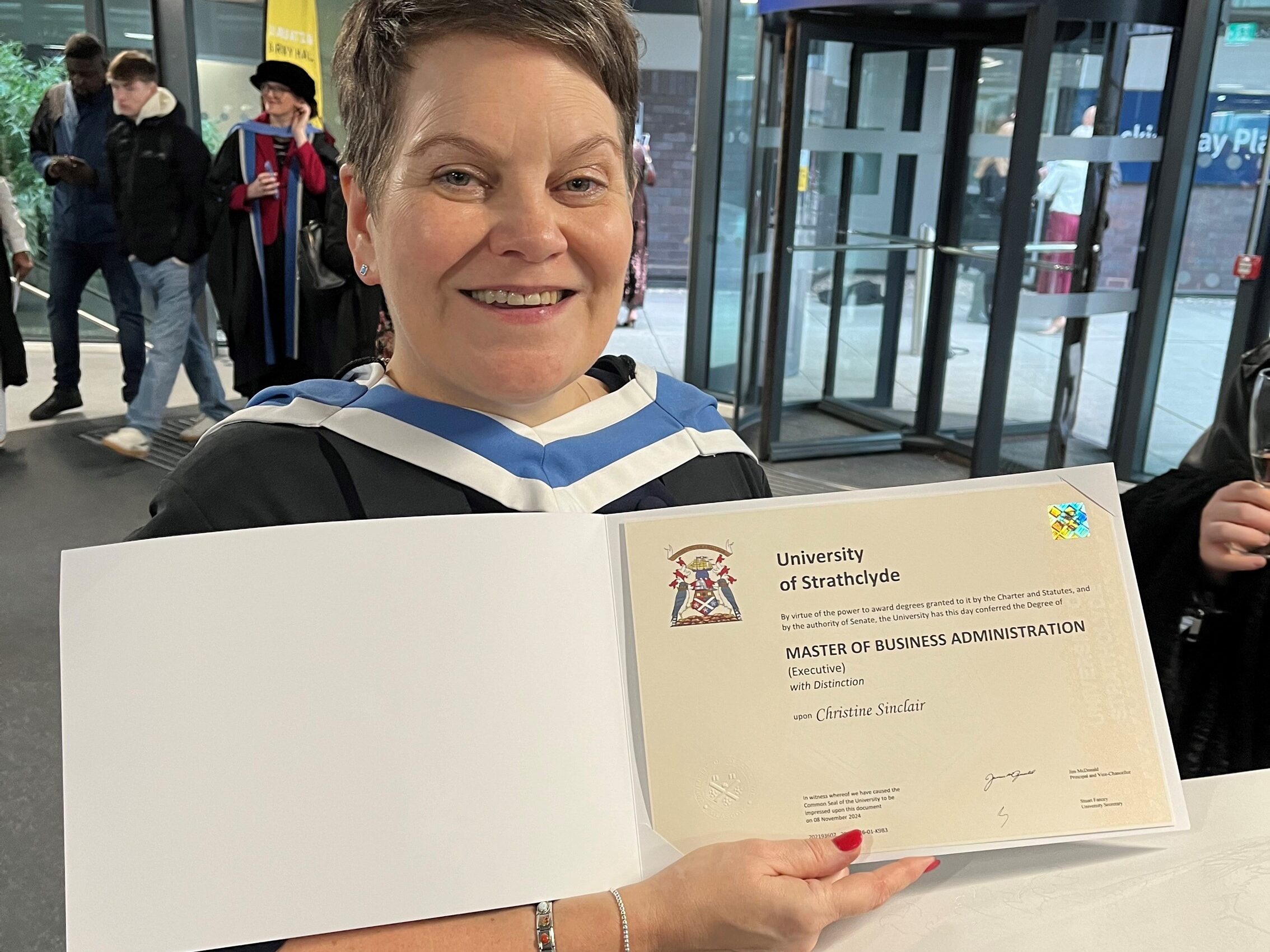
Christine Sinclair, Programme Director, FRIL, University of Strathclyde
Here, Christine Sinclair, Programme Director for FRIL, explains why this work matters, and why now is the time to invest in the future skills of the sector.
Q 1 – Hello Christine, let’s start with the big questions first… what challenge are you addressing here, and why does this matter?
A 1- When you look across financial services, the message is the same everywhere: the pace of technological change is relentless, and people and industry need to keep up. The biggest example right now is generative AI. There’s a real desire to understand it, but also a lot of uncertainty.
When you look at the evidence around AI adoption, the barriers are strikingly consistent. Many organisations hold back because they don’t have the skills or confidence to implement it safely. They don’t fully understand the risks, or they’re concerned about data management and governance. A lot of this is driven by the hype cycle, which can be overwhelming.
So the challenge we’re addressing is simple but vital: helping people develop the skills they need to adopt new technologies responsibly, whether that’s AI, data, digital transformation or ESG reporting. And what we’re doing is demand-led, we’re not creating courses and hoping people want them. We’re listening closely to what financial services and fintechs tell us they need.
Interestingly, the needs differ. Fintechs tend to be highly technical but often need more support with leadership, negotiation and change management. Larger financial institutions have deep organisational knowledge, but they often need help with the technical understanding. So it’s about supporting both sides, and helping both work together…
…and it’s all really important because with the speed of change, the biggest risk is to do nothing.
Q 2 – Who are the courses for?

A 2 – They’re for anyone in financial services, from credit unions to fintechs and large institutions to board-level executives.
A lot of participants join because they want to refresh their own skills. Others are sent by employers who know they need to build capability quickly. And we’re seeing more early-career professionals who want to understand the fundamentals of digital transformation or AI as they move into new roles.
What’s important is that the courses meet people where they are. You don’t need a technical background. You just need curiosity and a willingness to learn.
As a result of the success of the programmes developed for financial services, we’ve also welcomed people from energy and health sectors where the challenges are very similar.
Q 3 – What’s unique about this particular skills offering?
A 3 – The comprehensiveness. There are plenty of short “how to prompt engineer” or “what is GenAI” sessions out there, but they tend to cover only one slice of the picture. FRIL’s courses build from fundamentals all the way through to practical application in financial services.
For example, our AI microcredentials are designed to allow learners to understand and engage with AI in a structured and progressive manner. Focussing on core concepts and techniques, such as machine learning and large language models, but also, cover risk, governance and data science, and communication skills, whilst including real industry use cases which demonstrate practical application. For executives, we even include topics such as decision-making through AI driving business insights in the boardroom, AI Governance and compliance, as well as AI in Enterprise Risk Management and developing strategies to implement and scale GenAI.
Everything is designed to be flexible and accessible. You can learn in your own time, supported by lecturers who track your engagement and are available when you need help. It’s comprehensive without being overwhelming.
Q 4 – What kind of courses are currently being offered?
A 5 – We’ve developed microcredentials in Digital Transformation, ESG for Executives, and a full AI literacy suite, from beginner to advanced, plus an executive-level course. And there are programmes in AI & RegTech, and ESG Leadership.
We originally planned to deliver two microcredentials. We’ve delivered ten due to demand. Seven at Strathclyde, two at Glasgow, and one short course through the UK Government’s Help to Grow programme at Strathclyde. Our microcredentials are accredited and can stack towards a postgraduate qualification, so learners build credits over time.
For those who don’t wish to earn credits, we are now looking at awarding digital badges so learners can showcase their acquired skills on LinkedIn or their CV.
Q 5 – What format do the courses take?
A 5 – In general, course delivery is blended. Each week, participants complete short online lectures, which are no more than 15 minutes each. This, along with reading and other practical activities helps them apply what they’ve learned and typically brings the total up to around two to three hours per week.
We run online inductions, drop-in webinars and a final in-person consolidation session on campus. That’s where the learning community really comes together. Everyone arrives with the same foundation and can share what’s worked in their own organisations.
Our blended delivery provides a safe space to learn at your own pace and without judgement.
Q 6 – Can you share a story of someone who’s been on a course, and the impact it’s had?
A 6 – One participant told us he’d never been to college or university. He came straight into work and never had the opportunity to study formally. He was the first person in his family to ever take a university course, and it was our Digital Transformation programme.
Something clicked for him. After completing the course, he asked what else he could do. He’s now enrolled on a graduate apprenticeship degree. Another participant has gone on to apply for an MBA. So these short courses aren’t just about skills, they can genuinely spark lifelong learning.
Short courses are powerful…they can change the course of someone’s career.
Q 7 – How does FRIL create the ‘engine’ that drives these skills programmes?
A 7 – Our skills work is tightly linked to the Research and Innovation strands of FRIL. The research teams produce white papers, and we analyse common themes. We attend FRIL’s Innovation Calls, listening to pitches from fintechs proposing solutions to challenges highlighted by industry partners. That’s where you hear the real issues, things like: AI, data, legacy systems, regulatory change.
We also have a skills subgroup with finance industry representatives who act as a sounding board and help us to shape course priorities. Everything is demand-led, grounded in industry conversations, networking and skills gap analysis. We’re supporting a sector that contributes hugely to Scotland’s economy, and we want to get this right.
We’re not just creating courses, we’re listening to what the sector is telling us it needs.
Q 8 – How can what we’re doing here influence learnings across other sectors?
A 8 – While the focus here is financial services, the content isn’t always sector-specific, which means we can swap out case studies to fit different industries. We’re already seeing learners from energy and health joining our courses. Because the pace of change is constant everywhere, the need for digital and AI literacy applies just as much outside financial services.
And the short video-based model means we can keep content fresh. If something changes in AI, which it does daily, we can re-record a section quickly.
Q 9 – While this might be our final question today, this really is just the beginning. What might we expect to come?
A 9 Visibility is a big focus. We’re launching the FRIL Skills Academy, which brings everything together including upskilling, reskilling, executive education, and early-career engagement. It will guide people through learning pathways based on their needs, offer microcredentials, and connect with the student FinTech societies across Strathclyde and Glasgow. There will also be the opportunity to engage with either University to gain support for projects, knowledge transfer partnerships and PhD@Work.
Longer term, we want to work more closely with colleges to support talent pipelines, widen access and create opportunities for people who wouldn’t normally enter higher education. We’re also exploring mentoring programmes, internships guest lectures and masterclasses.
This is about us all embracing the future together. When you engage with the universities through FRIL you’re part of a learning community for the long term.
What next?
If you’d like to find out more about FRIL’s skills programmes, please visit:
- Financial Regulation Innovation Lab (FRIL) – Skills development.
- 10‑credit Online Microcredentials from the University of Glasgow.
The FRIL Skills Academy will be launched at the end of January 2026.
About FRIL
Creating Fairer Financial Futures
Advice Guidance Boundary Review Innovation Call
The Financial Regulation Innovation Lab (FRIL) launched its latest Innovation Call last week, which addresses one of the most important regulatory shifts in financial services and could reshape how millions of people access financial support.
The call is all about finding new ways to help consumers make informed financial decisions, delivering more accessible and tailored support while staying within evolving regulatory expectations.
The call focusses on the FCA’s Advice Guidance Boundary Review – a technical name for a very human issue: how to make financial help clearer, fairer and available to far more people.
To understand what all this means – and how it connects to creating a fairer financial future – we spoke with Kostas Oikonomakos, Programme Manager at the Financial Regulation Innovation Lab (FRIL), ahead of last week’s launch of the Innovation Call.
In Conversation with Kostas Oikonomakos

Hi Kostas!
Q: OK, let’s start with what is the Advice Guidance Boundary Review, and why does it matter?
Kostas: The AGBR is a really important development for the financial services industry. Right now, millions of people in the UK don’t receive any financial advice at all. Advice exists, of course, but it’s often too expensive for most people. The Review aims to make sure those people can finally get some form of support to help them make important decisions about their money.
Just 9% of UK adults took financial advice in the year leading up to 2022. While 64% hadn’t in five years. This highlights an ‘advice gap’ affecting an estimated 12 million people identified as non-advised but with need or potential.
*Stats from FCA’s 2022 Financial Lives Survey and the Financial Services Scheme.
It’s also good for firms. It gives them new ways to deliver support that is practical and can scale. And it brings clarity. Today, there are grey areas where a firm thinks they’re offering guidance, but the FCA might say it’s actually advice. AGBR will help define what is advice, what is guidance, and how new services like ‘targeted support’ and ‘simplified advice’ fit in. That clarity will help the whole financial system work better for everyone.
Q: Why does this matter to our everyday lives?
Kostas: The gap is real. The wealthy can afford advice, but millions of people don’t receive any support at all, so they have to navigate pensions, savings, and long-term planning by themselves. New types of guided support can help close that gap and improve confidence and outcomes for people who’ve never had access to anything before.
Q: At what points in our lives would we feel the difference created by AGBR, and how would it change the way we access advice or guidance?
Kostas: You’d notice it would make financial decisions easier. For example, when you’re getting close to retirement and need to understand your pension options, but you can’t afford full advice. With developments from AGBR, you could use a digital service that gives you targeted support based on the information you share, helping you make decisions with much more confidence. The same applies if you have a few small pension pots from different employers and don’t know how they fit together. Guided tools can help you navigate that without needing a one-to-one adviser.
You’d also see the difference much earlier in life. Let’s say you have a small amount of savings and you’re trying to work out how to make it grow, or you’re deciding whether to pay off debt or put money into a pension. Right now, most people in that situation get no support at all. New ‘advice-lite’ services would give clearer, personalised guidance at a price people can actually access. And in time, as open finance develops, firms could safely build a fuller picture of your financial situation and offer even more accurate guidance without you having to pull everything together yourself.
Q: What is the main challenge that the FCA is trying to address?
Kostas: The main challenge the FCA and HM Treasury are trying to solve through the AGBR is that too few people are getting the financial support they need. There are lots of people who could really benefit from help but don’t get it – that is the advice gap. Part of the problem is that firms aren’t always sure where the line sits between regulated advice and general guidance. The Review should clear up that uncertainty and create space for new, more affordable ways to help people, like Targeted Support and Simplified Advice, so that many more consumers can get the right help at the right time.
Q: What is the difference between advice and guidance?
Kostas: Advice is the traditional, regulated service where an adviser understands your full financial picture and gives you a personalised recommendation. It’s tailored to you and your long-term goals, and the firm takes responsibility for that recommendation. Guidance is different. It doesn’t look at your whole situation and it doesn’t tell you exactly what to do. Instead, it helps point you in the right direction based on the information you choose to share. It supports your decision, but it’s not a personalised recommendation.
Q: Why is FRIL taking on this topic right now, and what does it hope to achieve?
Kostas: The timing is ideal because the AGBR framework is still being developed. Final rules are expected by the end of 2025, with firms able to apply for the new targeted-support regime from Spring 2026. That means there’s still an opportunity to feed in insights before anything becomes enforceable.
This creates a safe space for firms to share challenges and explore potential solutions without regulatory pressure. Through this work, we can generate early evidence and practical ideas to help shape how the new regime operates in practice.
The kinds of ideas we expect to explore include digital tools for targeted support, simpler ‘advice-lite’ journeys, interactive disclosures, and even early work on open finance so firms can safely access a fuller picture of a customer’s finances. The goal is to produce practical, testable solutions that show how AGBR could work in the real world, to prepare for tomorrow and to improve outcomes for people who currently receive no support at all.
Q: Why is FRIL a good environment to help shape developments?
Kostas: More broadly, what FRIL wants to achieve is genuine collaboration around real problems. Large firms get early sight of new technologies and ideas that could help them support customers at scale. Fintechs get a clear understanding of what those firms actually need, and they can adjust or sharpen their solutions accordingly. The FCA is part of those conversations too, which is helpful for any fintech that might want to become regulated in future. And our academic partners bring research and analytical thinking that helps everyone look at these issues from different angles.
Q: OK quick summary – how does this help create a fairer financial future?
Kostas: By widening access. More people get the right kind of help, firms can serve broader audiences, and the rules are clearer. That combination improves confidence, access to financial advice and guidance, and ultimately, better outcomes for everyone.
Explaining the terminology
The Advice Guidance Boundary Review. Just what does it mean? A brief glossary:
- Advice: A regulated service where a financial adviser looks at your full financial situation and gives you a personalised recommendation.
- Guidance: Support that points you in the right direction based on limited information you share, without telling you exactly what to do.
- Boundary: The line that separates advice from guidance, defining how much information is needed and what a firm can or can’t recommend.
- Review: The FCA’s process of consulting industry and consumers, and government to create clear new rules that will shape how these services work in future.
What next?
Over the coming weeks, FRIL will be exploring new technologies, fresh thinking and real-world challenges with partners across the ecosystem. Watch this space for insights and thought leadership content from across the call – there’s much more to come.
Email the team at FRIL@fintechscotland.com if you’d like more information about our Innovation Calls.