
Behind the Scenes at the Skills Academy
“When you look across financial services, the message is the same everywhere: the pace of technological change is relentless, and people and industry need to keep up,” explains Christine Sinclair, Programme Director for FRIL.
And that is exactly what sits behind the FRIL Skills Academy – a pioneering, demand-led, skills and education platform created by the Financial Regulation Innovation Lab (FRIL).
“With the speed of change, the biggest risk is to do nothing,” adds Christine.

The Academy is delivered in partnership between Fintech Scotland and the University of Strathclyde and the University of Glasgow. It is a practical response to real skills gaps identified across the sector from work within FRIL’s Innovation Calls and research.
The academy, which launched officially in January, brings together a portfolio of short courses, microcredentials (which gain academic credits), and executive education that help people across financial services and beyond to understand, adopt and apply new technologies responsibly and effectively.
So, that’s the context. But what are people actually learning at the Academy, and what difference does it make?
Here, we explore the stories of several participants to find out:
Closing the gap, accelerating progress
Professor Mick O’Connor started his working life as an apprentice welder in the Clyde shipyards and is now a serial entrepreneur, academic and managing director of multiple high‑tech businesses spanning regtech, spaceports and drones. When Mick’s regulatory technology firm Haelo won one of FRIL’s first Innovation Calls, he was already building AI-enabled solutions. But as we often find, the more we learn, the more we realise we need to learn.

“I’d never been formally taught AI,” he says. “I’m not a coder. I had an enthusiastic amateur understanding, but I owed it to myself and the business to understand more.”
So, he enrolled in the AI and Regulatory Technology in Financial Compliance microcredential at the University of Glasgow.
“I still wouldn’t describe myself as an AI expert,” he explains. “But I can now talk comfortably with people who are. I can translate the customer problem into user stories, and then into technical requirements.”
And this has helped Mick bring together the business and technical teams required to make the Haelo magic happen.
“We talked different languages. This has helped close that gap,” he explains.
And while the gap may have narrowed, Haelo’s trajectory has accelerated.
“As a direct consequence of FRIL, I developed a technology roadmap. I didn’t have that before. I started with the problems then understood the technology I needed to solve them.”
Haelo is now preparing to launch its first product, designed to be sector-agnostic, capable of pivoting across highly regulated industries including pharma, rail, nuclear, space and aviation.
“I’ve said to FinTech Scotland that this is such a great story,” he reflects. “I can demonstrate that the whole genesis of that product and building the business has been seeded by FRIL.”
Joining the dots between rockets and regulation
“My job is business development,” says Derek Harris. “I need to understand what my clients are doing, especially around satellite launching. These courses helped me have that conversation.”
Derek is Director of Business Development and Communications at Skyrora, which builds small launch vehicles for launching satellites into space.

You might not associate the FRIL Sklls Academy as an enabler for the Space industry but the sectors intersect in surprising ways.
Satellites may orbit the earth, but their impact is grounded in everyday systems: encryption, cybersecurity, data protection, which is also the invisible infrastructure behind banking and digital security.
And similarly, Derek’s career has bridged those two worlds. Before rockets, he spent 15 years in financial services.”
“When it comes to Space and Finance, we have one of the biggest finance areas outside London and Frankfurt. But we also now have a fully forming space industry where the two can work hand in hand.
“So, if we can identify what data is required by financial institutions, these courses can help turn wish lists into actual products,” he explains.
Micro-credentials in AI Implementation and Financial Crime Prevention gave him a structured understanding of how space-enabled data connects with financial regulation and risk.
“These courses helped me fill in the dots,” explains Derek.
And it wasn’t just what was being taught that was helpful, it was the way it was being taught too.
For someone who is dyslexic, the flexible online format was crucial.
“I could go back, relook, learn at my own pace, even while on the go and in between flights. I could jump online and do 30 minutes. That made a huge difference,” explains Derek.
And his biggest surprise about the Academy? “It’s not as well-known as it should be,” says Derek.
“If all the banks were doing this, it would be a game changer. And it’s the customers who would win at the end of the day.”
Confidence to challenge and connect
“The Digital Transformation course brought learning to life with real-world examples, group work and problem-solving,” says Joanne Seagrave, founder of Norwood Risk and Compliance, who offers yet another perspective on the Academy’s impact.

“As a result, I felt empowered to grow my scope within the fintech community, which inspired me to develop my role as a board advisor to start-ups.”
With 25 years in financial services and experience supporting fintechs through FRIL as an industry partner, she joined the course not out of necessity, but curiosity.
“I wanted to take my understanding to a more in-depth level,” she says.
The micro-credentials allowed her to explore business strategy through a technology-led lens, from generative AI to distributed ledger technology, grounding innovation in commercial and regulatory realities.
“The course gave me confidence to be curious,” she explains. “Whether that means challenging compliance teams to use technology more effectively or factoring risk in at the early stages of a project.”
What surprised her most was the diversity of the cohort.
“I’ve worked in financial services for over 25 years, but the community included people from charities, engineering, life sciences, public sector and software development, which made for some interesting discussions and led to diversity of thought,” she explains.
Shaping the future… and your future
So that’s a glimpse behind the scenes of the Academy and the programmes on offer. But let’s leave the final word around its impact to Christine:
“There are so many inspiring stories from people who’ve been through these programmes,” she says. “One participant told us he’d never been to college or university. He went straight into work and never had the opportunity to study formally. He was the first person in his family to take a university course, and it was our Digital Transformation programme.”
“Something clicked for him. After completing the course, he asked what else he could do. He’s now enrolled on a graduate apprenticeship degree. Another participant has gone on to apply for an MBA. So, these short courses aren’t just about skills, they can genuinely spark lifelong learning.”
“Short courses are powerful,” she adds. “They can change the course of someone’s career.”
If you’ve liked what you’ve read and would like to change the course of your career, then please check out the FRIL Skills Academy webpage. Or contact the Skills Team for more information at sbs-fril@strath.ac.uk. They are waiting to hear from you.
About FRIL
Financial Regulation Innovation Lab (FRIL) launches Skills Academy to Develop Future FinTech and Financial Regulation Talent
Financial services is undergoing one of the most significant periods of change in decades. Technology is advancing at pace, new regulations are emerging, and organisations of every size are wrestling with how to build the skills needed to keep up.
In response to this, the Financial Regulation Innovation Lab (FRIL) – created as a catalyst to help the sector respond to these challenges – has launched the FRIL Skills Academy, a pioneering skills and education platform designed to address skills gaps and support career development across the financial and professional services sector and fintech ecosystem.
Supported and delivered by FRIL’s academic partners, the University of Strathclyde and University of Glasgow, the Skills Academy will go live on 30 January 2026, offering a transformative learning environment for professionals and industry partners.
The FRIL Skills Academy responds directly to the rapidly accelerating pace of technological change, especially in areas such as AI, data quality, and regulatory compliance, where talent shortages continue to hinder innovation and increase recruitment costs. Research conducted by FRIL identified skills gaps across the sector which supports the need for strategic investment in workforce development to maintain the UK’s global competitiveness.
Professor Stephen McArthur, Principal and Vice-Chancellor of the University of Strathclyde, said:
“The FRIL Skills Academy strengthens Strathclyde’s role in delivering executive education and its launch is extremely encouraging and a significant step forward.
“Informed by Scotland’s expertise in financial services and shaped by industry demands, the Academy will provide challenge-led skills and leadership development aligned to productivity, innovation and growth. This is an ambitious project that is unique in the higher education sector in the UK, and I have no doubt that it will support the wider economic ambitions of the city, Scotland and beyond.”
Professor Graeme Roy, Head of University of Glasgow Adam Smith Business School said:
“The FRIL Skills Academy demonstrates our commitment to working closely with industry, co-creating engaging and practical learning, and fulfilling our ambition as a civic institution to contribute positively to economic resilience, innovation and societal good.
“Universities have a vital role to play in supporting lifelong learning – providing opportunities for upskilling and reskilling that enable people and organisations to thrive in a rapidly changing world. I would like to thank colleagues at our University and our partner institutions, as well as our industry collaborators, whose commitment, expertise and shared vision have made this possible.
“It is enormously gratifying to see this initiative evolve from an ambitious idea into a fully realised Skills Academy with the potential to make a lasting impact across the financial and professional services sector.”
Professor Eleanor Shaw, Associate Principal (External Engagement & Partnerships) of the University of Strathclyde, said:
“I am delighted that the FRIL Academy is now launching. This is an important milestone for FRIL, marking one important outcome of the project which is to launch a Skills Academy informed by the needs of Scotland’s vibrant FinTech community and Glasgow’s internationally recognised financial services district. Strathclyde is committed to providing useful learning and the Skills Academy promises to deliver just that. This is an important development in our commitment to executive education focused on what matters to our entrepreneurial and industrial partners: fresh skills, leadership development, and a commitment to making Scotland and the UK a more productive, innovative and flourishing environment in which founders want to start, grow and scale their businesses and towards which talent is attracted. This is an exciting development, and the Skills Academy is likely to grow to become an important learning asset for not only Glasgow but across Scotland.”
Aleks Tomczyk, Chief Executive of FinTech Scotland, said:
“As Scotland continues to lead in fintech and digital innovation, the FRIL Skills Academy sets a new benchmark for how academia and industry partner at pace. As the first initiative of its kind in UK higher education, it will provide professionals with practical, employer driven skills across AI, data and regulation, strengthening our talent pipeline and competitiveness.”
A Demand‑Led Approach
The FRIL Skills Academy is the first of its kind in UK Higher Education, will be delivered through a virtual platform that provides 24/7 global access and supports both blended and traditional learning formats.
The FRIL Skills Academy offers an extensive portfolio of microcredentials, short courses, and executive education opportunities, tailored to different stages of a learner’s career journey.
Industry partners will gain access to courses which develop a pipeline of skilled professionals trained on real regulatory and technological challenges as well as opportunities to co‑create content, deliver guest lectures, and engage in knowledge‑exchange events.
Learners will benefit from employer‑driven microcredentials and practical learning experiences; career pathways spanning early career to senior executive; and a supportive environment that fosters lifelong learning and professional advancement.
Click the following link to access the FRIL Skills Academy: FRIL Skills Academy
Contact
Christine Sinclair
Programme Director
christine.sinclair@strath.ac.uk
Xiang Li
FRIL Skills Development Lead, Senior Lecturer in Management and Professional Development
About FRIL
Why Upskilling can’t wait: Building Smarter Skills for a Smarter Financial Future
Q&A With Christine Sinclair
Programme Director, Financial Regulation Innovation Lab (FRIL), University of Strathclyde
Financial services is undergoing one of the most significant periods of change in decades. Technology is advancing at pace, new regulations are emerging, and organisations of every size are wrestling with the skills needed to keep up. The Financial Regulation Innovation Lab (FRIL) was created as a catalyst to help the sector respond, to support better outcomes for consumers, strengthen the industry, and enable fintech entrepreneurs to innovate with confidence.
Central to this mission is a progressive skills development programme delivered in partnership with the University of Strathclyde and the University of Glasgow. Together, they’re building a portfolio of Microcredentials (which gain academic credits), short courses and executive education that help people across financial services understand, adopt and apply new technologies responsibly and effectively.
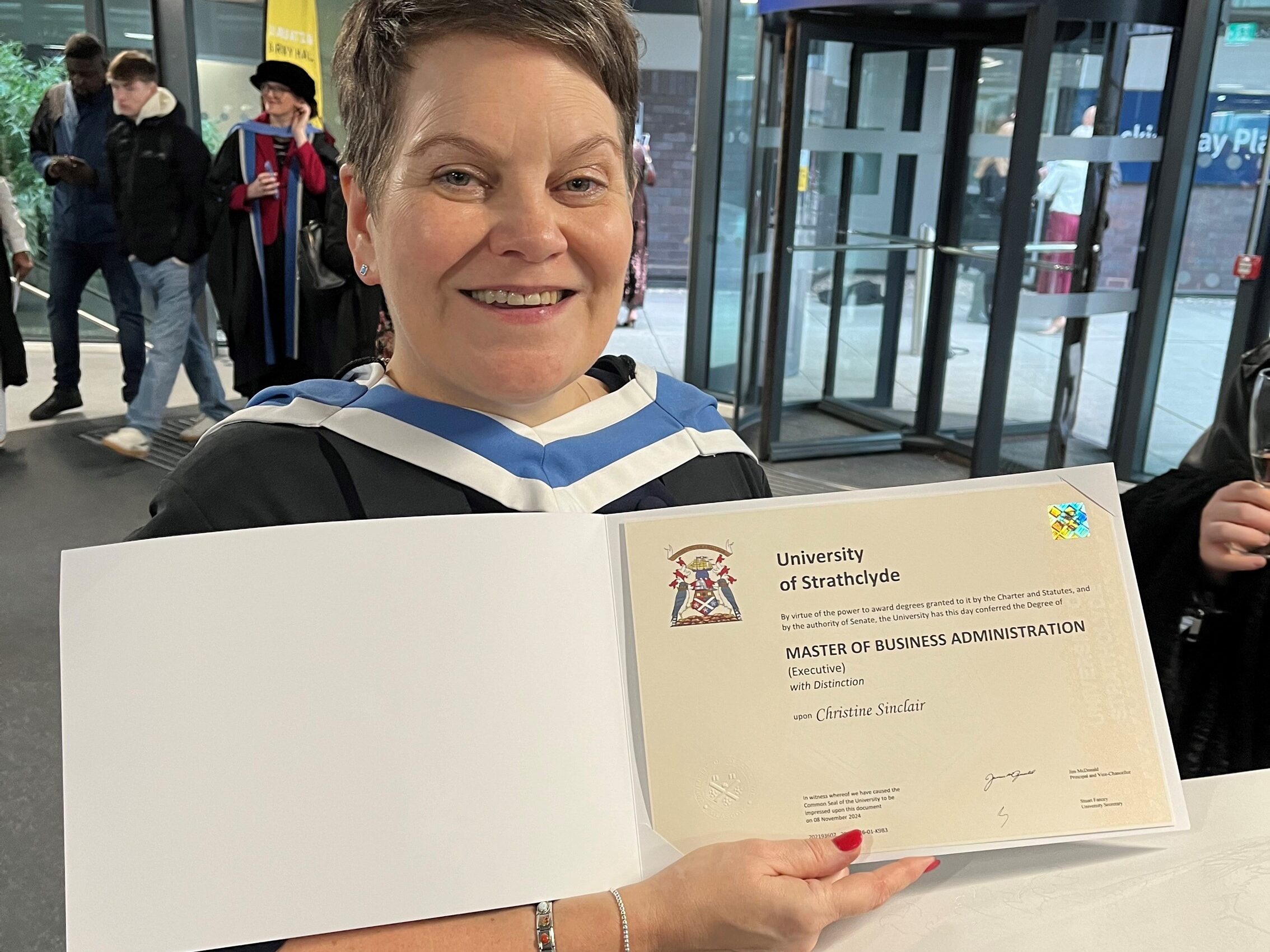
Christine Sinclair, Programme Director, FRIL, University of Strathclyde
Here, Christine Sinclair, Programme Director for FRIL, explains why this work matters, and why now is the time to invest in the future skills of the sector.
Q 1 – Hello Christine, let’s start with the big questions first… what challenge are you addressing here, and why does this matter?
A 1- When you look across financial services, the message is the same everywhere: the pace of technological change is relentless, and people and industry need to keep up. The biggest example right now is generative AI. There’s a real desire to understand it, but also a lot of uncertainty.
When you look at the evidence around AI adoption, the barriers are strikingly consistent. Many organisations hold back because they don’t have the skills or confidence to implement it safely. They don’t fully understand the risks, or they’re concerned about data management and governance. A lot of this is driven by the hype cycle, which can be overwhelming.
So the challenge we’re addressing is simple but vital: helping people develop the skills they need to adopt new technologies responsibly, whether that’s AI, data, digital transformation or ESG reporting. And what we’re doing is demand-led, we’re not creating courses and hoping people want them. We’re listening closely to what financial services and fintechs tell us they need.
Interestingly, the needs differ. Fintechs tend to be highly technical but often need more support with leadership, negotiation and change management. Larger financial institutions have deep organisational knowledge, but they often need help with the technical understanding. So it’s about supporting both sides, and helping both work together…
…and it’s all really important because with the speed of change, the biggest risk is to do nothing.
Q 2 – Who are the courses for?

A 2 – They’re for anyone in financial services, from credit unions to fintechs and large institutions to board-level executives.
A lot of participants join because they want to refresh their own skills. Others are sent by employers who know they need to build capability quickly. And we’re seeing more early-career professionals who want to understand the fundamentals of digital transformation or AI as they move into new roles.
What’s important is that the courses meet people where they are. You don’t need a technical background. You just need curiosity and a willingness to learn.
As a result of the success of the programmes developed for financial services, we’ve also welcomed people from energy and health sectors where the challenges are very similar.
Q 3 – What’s unique about this particular skills offering?
A 3 – The comprehensiveness. There are plenty of short “how to prompt engineer” or “what is GenAI” sessions out there, but they tend to cover only one slice of the picture. FRIL’s courses build from fundamentals all the way through to practical application in financial services.
For example, our AI microcredentials are designed to allow learners to understand and engage with AI in a structured and progressive manner. Focussing on core concepts and techniques, such as machine learning and large language models, but also, cover risk, governance and data science, and communication skills, whilst including real industry use cases which demonstrate practical application. For executives, we even include topics such as decision-making through AI driving business insights in the boardroom, AI Governance and compliance, as well as AI in Enterprise Risk Management and developing strategies to implement and scale GenAI.
Everything is designed to be flexible and accessible. You can learn in your own time, supported by lecturers who track your engagement and are available when you need help. It’s comprehensive without being overwhelming.
Q 4 – What kind of courses are currently being offered?
A 5 – We’ve developed microcredentials in Digital Transformation, ESG for Executives, and a full AI literacy suite, from beginner to advanced, plus an executive-level course. And there are programmes in AI & RegTech, and ESG Leadership.
We originally planned to deliver two microcredentials. We’ve delivered ten due to demand. Seven at Strathclyde, two at Glasgow, and one short course through the UK Government’s Help to Grow programme at Strathclyde. Our microcredentials are accredited and can stack towards a postgraduate qualification, so learners build credits over time.
For those who don’t wish to earn credits, we are now looking at awarding digital badges so learners can showcase their acquired skills on LinkedIn or their CV.
Q 5 – What format do the courses take?
A 5 – In general, course delivery is blended. Each week, participants complete short online lectures, which are no more than 15 minutes each. This, along with reading and other practical activities helps them apply what they’ve learned and typically brings the total up to around two to three hours per week.
We run online inductions, drop-in webinars and a final in-person consolidation session on campus. That’s where the learning community really comes together. Everyone arrives with the same foundation and can share what’s worked in their own organisations.
Our blended delivery provides a safe space to learn at your own pace and without judgement.
Q 6 – Can you share a story of someone who’s been on a course, and the impact it’s had?
A 6 – One participant told us he’d never been to college or university. He came straight into work and never had the opportunity to study formally. He was the first person in his family to ever take a university course, and it was our Digital Transformation programme.
Something clicked for him. After completing the course, he asked what else he could do. He’s now enrolled on a graduate apprenticeship degree. Another participant has gone on to apply for an MBA. So these short courses aren’t just about skills, they can genuinely spark lifelong learning.
Short courses are powerful…they can change the course of someone’s career.
Q 7 – How does FRIL create the ‘engine’ that drives these skills programmes?
A 7 – Our skills work is tightly linked to the Research and Innovation strands of FRIL. The research teams produce white papers, and we analyse common themes. We attend FRIL’s Innovation Calls, listening to pitches from fintechs proposing solutions to challenges highlighted by industry partners. That’s where you hear the real issues, things like: AI, data, legacy systems, regulatory change.
We also have a skills subgroup with finance industry representatives who act as a sounding board and help us to shape course priorities. Everything is demand-led, grounded in industry conversations, networking and skills gap analysis. We’re supporting a sector that contributes hugely to Scotland’s economy, and we want to get this right.
We’re not just creating courses, we’re listening to what the sector is telling us it needs.
Q 8 – How can what we’re doing here influence learnings across other sectors?
A 8 – While the focus here is financial services, the content isn’t always sector-specific, which means we can swap out case studies to fit different industries. We’re already seeing learners from energy and health joining our courses. Because the pace of change is constant everywhere, the need for digital and AI literacy applies just as much outside financial services.
And the short video-based model means we can keep content fresh. If something changes in AI, which it does daily, we can re-record a section quickly.
Q 9 – While this might be our final question today, this really is just the beginning. What might we expect to come?
A 9 Visibility is a big focus. We’re launching the FRIL Skills Academy, which brings everything together including upskilling, reskilling, executive education, and early-career engagement. It will guide people through learning pathways based on their needs, offer microcredentials, and connect with the student FinTech societies across Strathclyde and Glasgow. There will also be the opportunity to engage with either University to gain support for projects, knowledge transfer partnerships and PhD@Work.
Longer term, we want to work more closely with colleges to support talent pipelines, widen access and create opportunities for people who wouldn’t normally enter higher education. We’re also exploring mentoring programmes, internships guest lectures and masterclasses.
This is about us all embracing the future together. When you engage with the universities through FRIL you’re part of a learning community for the long term.
What next?
If you’d like to find out more about FRIL’s skills programmes, please visit:
- Financial Regulation Innovation Lab (FRIL) – Skills development.
- 10‑credit Online Microcredentials from the University of Glasgow.
The FRIL Skills Academy will be launched at the end of January 2026.
About FRIL
New Year, New Skills: 10‑credit Online Microcredentials from the University of Glasgow
Whether you’re looking to enhance your skills or develop your team, short online courses are a fast, flexible way to upskill and advance your career. The University of Glasgow is offering 10‑credit online microcredentials to help you build in‑demand capabilities quickly, with start dates in January and February 2026. Explore the options below.
Project Management
Start-Date: 26 January 2026
Project management is an essential business tool that is being adopted worldwide. It is also a growing and highly sought-after profession, with the Project Management Institute estimating it to have grown by $6.61 trillion by the end of 2020. In this microcredential course, you will gain a deep understanding of practical project management skills using real-world case studies. You will examine the entire project lifecycle, from feasibility to closure, and explore important topics such as managing people, setting priorities, working to tight deadlines, developing schedules and managing risks.
Intro to Business Analytics
Start-Date: 26 January 2026
The Introduction to Business Analytics: Empowering Decision-Making Through Data course is designed to introduce learners to the concepts, techniques, and methods used to analyse an organisation’s operational performance and enable them to make informed business decisions using business analytics skills. The course will discuss the different sources of data and information necessary for analysis, and how to turn an understanding of business analytics into a competitive advantage. At the end of this course, learners will understand the challenges in sourcing data in today’s internet enabled world, what we can/cannot expect the data/information to tell us, and how we can analyse what we have to the best effect. Learners will also be introduced to the data visualization techniques to maximise the impact of data on decision-making, presentation, stakeholder engagement and stakeholder buy-in.
Business Financial Management
Start-Date: 26 January 2026
This course examines the role of accounting and finance in organisational decision‑making, control and performance management. It offers a broad overview of the function and introduces practical skills for interpreting and using financial information and reports to support these activities.
AI & RegTech in Financial Compliance
Start-Date: February 2026 (TBC)
This course provides a practical approach to understanding and applying Artificial Intelligence (AI) and Regulatory Technology (RegTech) in financial compliance and risk management. It introduces the fundamentals of AI capabilities, the evolution of RegTech, and the regulatory and governance frameworks that shape compliance across banking, fintechs, and the wider financial ecosystem.
ESG (Environmental, Social and Governance) Leadership
Start-Date: February 2026 (TBC)
This course aims to introduce recent graduates and early career professionals in the financial services and financial technology sectors to the areas of ESG policy and compliance, data and analysis requirements, and organisational and strategic opportunities. By focussing on ESG leadership, the course aims to equip learners with the practical knowledge, skills and capabilities to evaluate the strategic positioning of their organisation and to develop an ESG plan for their organisation.
Discount codes
As a valued member of the FinTech Scotland community, and with support from the Financial Regulation Innovation Lab (FRIL), you can use the following discount codes:
- AI & RegTech course: use code ‘FRIL’ at checkout. Standard price £499; FinTech Scotland members pay £349 with this code.
- ESG Leadership microcredential: use code ‘ESGFriends’ at checkout. Standard price £599; FinTech Scotland members pay £399 with this code.
Hiring optimism in Scotland dips as Hays encourages employers to aim for long-term staff retention
- Optimism for the economic environment among employers in Scotland has dipped from 31% in 2025 to 26% for 2026, although hiring continues
- Significant workforce mobility expected in Scotland as 57% of professionals report they expect to move jobs next year
- 58% of Scotland employers cite recruiting the right talent as their key external challenge
- Talent retention (57%), skills shortages within current teams (51%) and managing change (46%) are other key concerns
- Hiring should be based on potential, not just skills, says Hays
Long-term optimism for the economic environment has dropped among Scotland employers in the last 12 months to 26%, compared to 31% in 2025. This is higher than the rest of the UK where only 15% of employers are optimistic, compared to 34% UK-wide in 2025.
The research, from Hays recent Salary & Recruiting Trends guide for 2026, reports cautious optimism in the short-term as employers continue to hire, but pessimism in the long-term as employers respond to cost pressures, revisions to workforce strategy and the uncertain economic outlook.
Current priorities for organisations are operational efficiency (73%), revenue growth (62%) and customer experience (42%), with recruiting the right talent at 53% being the top recruitment challenge. Regardless of short and long-term challenges, Keith Mason, director at Hays Scotland, believes that employers are still not majoring enough on the employee proposition when attracting talent.
“There’s been quite a culture shift since the pandemic, and employers need to focus much more on their employee value proposition than they did before to differentiate their organisation,” he says.
“Yes, salary is important, especially as the cost of living is rising. But professionals are looking more closely at what they need from a role. Our research found that 57% of professionals in Scotland are planning to move jobs next year – this is a striking figure that signals a period of significant workforce mobility. This level of intent suggests that employees are increasingly reassessing their career paths, driven by factors such as better pay, improved work-life balance, and opportunities for growth.”
The research also shows that 74% of employers in Scotland are planning to hire in the next 12 months which is the same as in 2025. 70% plan to hire permanent staff, with 27% planning to hire contract, freelance, interim or temporary workers. And as the debate continues on the benefits or otherwise of hybrid working, Mason believes that this issue needs to be managed carefully.
“This discussion has to be based on productivity – not time,” he says. “The research shows that profit growth is a key priority for organisations, but this only comes with efficiency and productivity which shouldn’t be based on the time someone spends in an office or working from home. And an effective workplace culture can’t thrive if too many people are absent. Hybrid working therefore needs to be managed with care, striking a balance between organisational priorities and employee expectations.”
Skills shortages within current teams are also a challenge according to 51% of respondents, highlighting a need for employers to identify future managers and leaders.
“It’s important to remember that the notions of ‘talent’ and ‘skills’ are very different. You can teach people skills, but you can’t teach talent as this is a natural attribute in a person. Be mindful of hiring for potential, for example, identify today the people who will be able to lead tomorrow. Only 16% of employers said that applicants need a university degree – it’s the talent to go further that often matters more.”
Other expected challenges for employers in Scotland are the rising costs for businesses (48%), managing risk and cyber security (32%), keeping up with technology innovation (27%) and keeping up with, and implementing, new legislation (15%).
To request access to the Hays Salary & Recruiting Trends guide, click here.
About the research: The survey on which these findings are based was conducted between 19th August 2025 and 9th September 2025 and received 5,136 responses from employers and employees working in a range of organisations and sectors across the UK, including 360 in Scotland.
Future-Ready Skills in Financial Regulation: AI, RegTech and ESG Leadership
Alessio Azzutti, John Finch and Xiang Li, of the University of Glasgow, introduce two new professional courses for our FinTech, Financial Services and Financial Regulation communities, introduced as part of the Financial Regulation Innovation Lab project. Please do follow up with us by alessio.azzutti@glasgow.ac.uk, john.finch@glasgow.ac.uk, or xiang.li@glasgow.ac.uk
In today’s fast-changing and increasingly complex regulatory landscape, financial institutions face mounting challenges: rising compliance costs, increasingly sophisticated financial crime, outdated technological capabilities, and growing sustainability demands/pressures from stakeholders and activists. Faced with these pressures, professionals need to reskill and upskill, in particular in areas of AI, RegTech, and ESG leadership, to thrive and remain competitive.
About the Financial Regulation Innovation Lab (FRIL)
As part of the Financial Regulation Innovation Lab (FRIL), we are committed to promoting the flourishing of human capital, particularly deepening the expertise in financial regulation among financial services, fintechs and regulators. We aim to make our university’s educational offering easily accessible and directly relevant to industry professionals to support both career and organisational development. Aspiring to excellence in what we do, we introduce learner-centred active learning approaches and incorporate real-life challenges into our teaching that help our course participants address the challenges they experience at work and develop and implement appropriate solutions.
Our FRIL team at the University of Glasgow has spent two and a half years living and breathing financial regulation innovation alongside our colleagues in financial services, fintech and regulation. The FRIL project involves us all in co-developing and collaborating on action research, knowledge exchange, and innovation calls, and our skills development theme, professional education courses, presented as short micro-credentials. By drawing together our insights from the FRIL project together with our expertise in research and learning and teaching in the University of Glasgow’s Adam Smith Business School and School of Law, we have developed two professional education courses in ‘AI, RegTech and Financial Compliance’ and ‘ESG Leadership’.
Our Learning Design Approach
Experiential and active learning inform our course design and approach to learning. This approach has been proven impactful in leadership, entrepreneurial, and professional education. It draws on wide-ranging experiences of working professionals in roles connected with the courses, across careers, supports participants in applying concepts and tools introduced in the course to workplaces, and facilitates reflections and discussions among participants through practical cases and in-course exercises.
The focus of the course content is informed by leading industry professionals involved in the action research and innovation calls, thereby ensuring close alignment with industry demands. Alongside expert-led lectures and interviews, participants immerse themselves in interactive activities—from tackling real-world compliance scenarios and innovation challenges to collaborative problem-solving with peers. This ensures learners move beyond concepts into the skills and confidence to navigate the complex intersection of financial regulation, compliance demands, sustainability, and AI solutions.
Course 1: AI, RegTech and Financial Compliance
Led by: Alessio Azzutti and Ian MacNeil
Context
With exploding regulatory requirements, rising costs, increasingly sophisticated financial crime, outdated systems, and shifting consumer expectations, financial compliance is becoming ever more demanding for regulated institutions. This urgent need for both business and technological innovation is driving the rise of Regulatory Technology (RegTech)—and particularly Artificial Intelligence (AI)—which is transforming how organisations respond. Lasting success, however, depends not only on innovative technology but also on professionals equipped to harness it.
Course details
This course progresses from AI and RegTech foundations to real-world applications, governance, emerging regulations, and future-ready compliance strategies. Assessment is fully practice-based: instead of traditional exams or theoretical essays, learners will complete a Capstone Project where they design an AI-enabled compliance solution, analyse its risks and governance, and map a personalised professional development pathway.
If you’re interested in this course, please email Alessio Azzutti at Alessio.Azzutti@glasgow.ac.uk.
Intended Learning Outcomes
By the end of the course, participants will be able to:
- Critically analyse and evaluate AI applications in financial compliance contexts.
- Design theory-informed, effective, responsible, and future-ready solutions.
- Position themselves as compliance professionals prepared to lead digital transformation in banking, finance, FinTech, consultancy, and regulatory bodies.
Course 2: ESG Leadership
Led by: Erika Anderson, John Finch and Xiang Li
Context
Complex and dynamic regulation remains a feature of sustainability and ESG reporting, with notable differences across regions and jurisdictions. Given the long-lived qualities of reputation, product and process, and the global reach of supply chains, investors, consumers, and business customers want to know about an organisation’s sustainability offer and profile. We focus on that point of transition—from compliance to strategy and leadership—highlighting the strategic approach to leveraging ESG insights to achieve both the organisation’s competitive advantage and reduction of material risks embedded in sustainability.
Course details
This course covers the regulatory framework and its implications for organisations and their supply chains, including sustainability reporting and disclosures as these address risk management and inform investment and investor stewardship. From reporting to transition, the course highlights the critical roles of strategic development, leadership and organisational change. We draw on case studies, short lectures, interviews with the community of practice, evaluations of current sustainability plans, and discussions among participants and our teaching team to facilitate participants’ learning.
Intended Learning Outcomes
By the end of the course, participants will be able to:
- Evaluate an organisation’s sustainability performance from multiple perspectives.
- Develop a comprehensive ESG/sustainability plan, integrating compliance with business strategy.
- Lead organisational change by embedding ESG considerations into leadership and strategy.
Practical Information
- AI, RegTech and Financial Compliance course: to be delivered in-person at the University of Glasgow between 16 October and 27 November 2025.
- ESG Leadership course: to be delivered online in six weekly modules from late September 2025, with an option for participants to complete the assessment and claim 10 credits at the postgraduate level, which are recognised by the University of Glasgow.
- Both courses will also be available online in early 2026.
- Participants from both courses can receive a certificate of participation
Future-Proof Your Expertise
Whether your focus is mastering AI-enabled compliance or leading ESG transformation, these short courses will position you at the forefront of professional development. Join us to upskill/reskill, strengthen your expertise, prepare for your organisation’s transition, and lead confidently in a rapidly evolving financial landscape.
Shifting the Skills Conversation: Building a Lifelong Learning Culture to Foster Innovation in Scotland’s Financial Sector
Building a sustainable, productive and inclusive financial services sector in Scotland means thinking beyond the needs of today. ‘Fostering innovation’ requires investing in people’s ability to think broader than what’s right in front of them, and such capability to be dynamic in behaviour, knowledge and practical expertise is built through the process of learning – over and over again, exploring many different skills and interests, and throughout life.
It’s for this reason that in this white paper we propose shifting the skills conversation beyond plugging skills gaps and identifying which is the latest technical need in the workforce, and instead building a ‘lifelong learning’ culture to better foster innovation in Scotland’s financial sector, long-term.
Accelerating Action: Enabling Female Leadership
Welcome back to our spotlight series celebrating colleagues who are inspiring change and Accelerating Action across the technology sector. This month’s edition focusses on female leadership and the enhancement of progression opportunities.
International Women’s Day 2025
For every 115 UK tech roles only one will be filled by a woman, thus revealing a significant underrepresentation in the sector and huge loss given the benefits for financial performance and innovation generated from gender diversity. This is further illustrated by the fact that although women make up nearly half of the overall workforce, only 24% of the UK tech force is female.
These barriers in tech result in major difficulties for promotion and career growth for women in the sphere. In fact, a 2022 report from McKinsey found that only 52 women are promoted to manager for every 100 men in the tech industry. This figure is surprising considering inclusive environments mean career advancement are significantly more likely for both men (15%) and women (61%).
BT Group and FinTech Scotland are committed to championing female progression and recognise that inclusion and diversity is critical to growth.
BT Group Celebrations
This year, BT Group are choosing to focus on the theme of “Remarkable Women” to highlight the inspirational and innovative work of many talented female colleges within BT and across various industries.
BT Group are passionate about ensuring women have the skills and tools to move into the tech sector and advance their careers. For instance, BT’s Passport scheme and ‘three together and two wherever’ encourages flexibility in the workforce by allowing those who need it, to work from home. This inclusive scheme acknowledges familial responsibilities, enhancing opportunities and increasing diversity in the workplace.
BT works to inspire and encourage women to enter the Telco sector, teaming with charities including CodeFirstGirls and Black Girls Tech Summit to empower women and help them stay ahead in a competitive industry. BT Group’s Returner initiative supports women to re-enter the workforce, recognising the unique hurdles career returners face. The program is designed to provide mentorship, training and hands-on experience to help individuals regain confidence and thrive in their careers (Flexa., 2024).
Fiona Vines, Chief Inclusion, Equity & Diversity officer at BT Group, is a key example of a woman who has reached a successful leadership position despite facing unexpected challenges and prejudice in a very male dominated industry. Fiona is a keen feminist and an inspiration, particularly to women who are looking to grow their career and have a family at the same time. Another notable example is Claire Gillies, CEO of Consumer, who is passionate about supporting women and advancing female leadership by being apart of the International Women’s Forum.
Fintech Scotland Celebrations
Exceptional leadership at FinTech Scotland was highlighted in the Innovate Finance Women In Fintech Powerlist in March 2025 with both its CEO, Nicola Anderson and its Research & Innovation Programme Manager, Lauren Cassell making it to the list.
Nicola appeared in the 45 Standout List recognising women who have made an incredible, lasting impact in fintech, going the extra mile to enable sustainable change.
Lauren was named amongst the Rising Stars for her amazing contribution to fintech innovation through her work at FinTech Scotland’s Financial Regulation Innovation Lab and for the FCA’s Innovation Lab.
Allison Kirkby, CEO, BT Group

Allison Kirkby is a pioneer in the world of business, breaking barriers and traditional perceptions. BT Groups’ first female CEO, started off as a Chartered Accountant Apprenticeship. Described as a “proven leader, with deep sector experience” she is already immersing herself in the business, transforming the organisation by cutting costs, restructuring areas and finding saleable assets. Her determination to find savings and optimise efficiency is visible through the 3% reduction of the workforce and negotiations to sell BT’s 50% stake in TNT Sports, formerly known as BT Sport. Allison’s hands on approach has already resulted in rising share prices and efforts to improve productivity has been successful with the more strictly monitored “three together, two wherever”.
“None of them look, talk or think like me… so I need to get in there!”
Allison is passionate about showcasing incredible female talent at BT Group and advises colleagues to “Be brave, be bold, be fearless” and “regularly put yourself out of your comfort zone”. This advice is highly beneficial to all women looking to succeed and inspires confidence in senior leadership as the company goes through a restructuring. Her career growth from a Chartered Management Accountant apprentice to now one of only 10 female CEOs among the FTSE 100 companies is a testament to her resilience and determination.
“Always think of the ‘So what?’ or ‘What if?’ questions”
Nicola Anderson, CEO, FinTech Scotland

Nicola Anderson, CEO of FinTech Scotland since January 2021, has been pivotal in establishing Scotland as a leading fintech hub.
Under her leadership, FinTech Scotland was recognised as a cluster of excellence at the European level, reflecting the region’s prominence in financial innovation. Nicola’s commitment to driving collaboration is evident in initiatives like the Financial Regulation Innovation Lab (FRIL), launched in 2023. This industry-led program brings together regulators, financial institutions, and fintech firms to explore technological solutions for regulatory challenges and build a safer and more inclusive financial services sector.
Beyond her role at FinTech Scotland, Nicola serves as a non-executive director at Advice Direct Scotland and is a member of both the Scottish Taskforce for Green and Sustainable Financial Services and the Scottish Government’s Financial Services Growth and Development Board.
Throughout her career, Nicola has been an influential advocate for making finance work well for customers, society, business, and markets. She has been directly engaged in digital and data transformation, regulation, and policy development, with an emphasis on innovation, collaboration, and customer-focused outcomes.
Nicola’s dedication to diversity and inclusion is also noteworthy. She has been instrumental in developing lasting relationships between FinTech Scotland and a broad range of consumer and citizen advocate groups, such as Money Advice Scotland, Advice Direct Scotland, Age Scotland, and Mental Health and Money Advice. This work led to the creation of the first fintech consumer panel in the UK, enabling cross-sector collaboration in building fintech propositions focused on citizen needs.
In her own words, Nicola emphasizes the importance of collaboration for driving better consumer outcomes:
“Bringing together ambitious fintech firms and leading financial institutions not only enhances good consumer outcomes—it accelerates the development of inclusive digital financial services and supports the evolution of the future digital economy.”
Below you will find sign up links where you can get involved in celebrating this year!
- House of Nine Sorority – 8th March – 2nd Annual International Women’s Day Assembly & SIS Program Finale Registration, Sat, Mar 8, 2025 at 11:00 AM | Eventbrite
- Changing the face of Northern Ireland – 8th March Members of the Irish Writers Union since 2019 | How Ulster makes its money
- The World Association for Sustainable Development (WASD) – 8th March – International Women’s Day 2025 Tickets, Sat 8 Mar 2025 at 10:00 | Eventbrite
- EMPLUMAR – Own Your Wins – an Imposter’s Dilemma Game – 13th March –International Women’s Day 2025 – Emplumar
- WIBF – Fertility in the workplace- 12th March 12:30-1:30pm – Fertility in the workplace – WIBF
- MiGSO-PCUBED Project Management Consultancy – 12th March – 3:30-6pm International Women’s Day Project Panel Discussion MIGSO-PCUBED Tickets, Wed 12 Mar 2025 at 15:30 | Eventbrite
- Bright Network ~ Making HERstory – 12th March Bright Network Making HERstory | Bright Network
- Transformative potential of gender equity in negotiation and leadership – 16th March – 3-4pmNegotiating equality: unlocking the power of diverse teams : WorldCC
- National Council of Women GB – Women and Poverty – March 20th 12-2pm-Women and Poverty Tickets, Thu, Mar 20, 2025 at 12:00 PM | Eventbrite
- ETHERA Empower Tech Women – 18th March 4-4:45pm – March – Introduction to ETHERA: Mentoring for Women in Tech Tickets, Tue 18 Mar 2025 at 16:00 | Eventbrite
- Rewriting the Code ~ Unite & Ignite Women in Tech Summit – March 25-27th Unite & Ignite Summit | Rewriting the Code
- One Tech World 2025 – Conference for Women in Tech – 28th March – 9:30-5 wearetechwomen.com
The business case for re-skilling: unlocking opportunities for women in tech
Welcome to our second chapter in the spotlight series celebrating colleagues who are inspiring change and accelerating action across the technology sector!
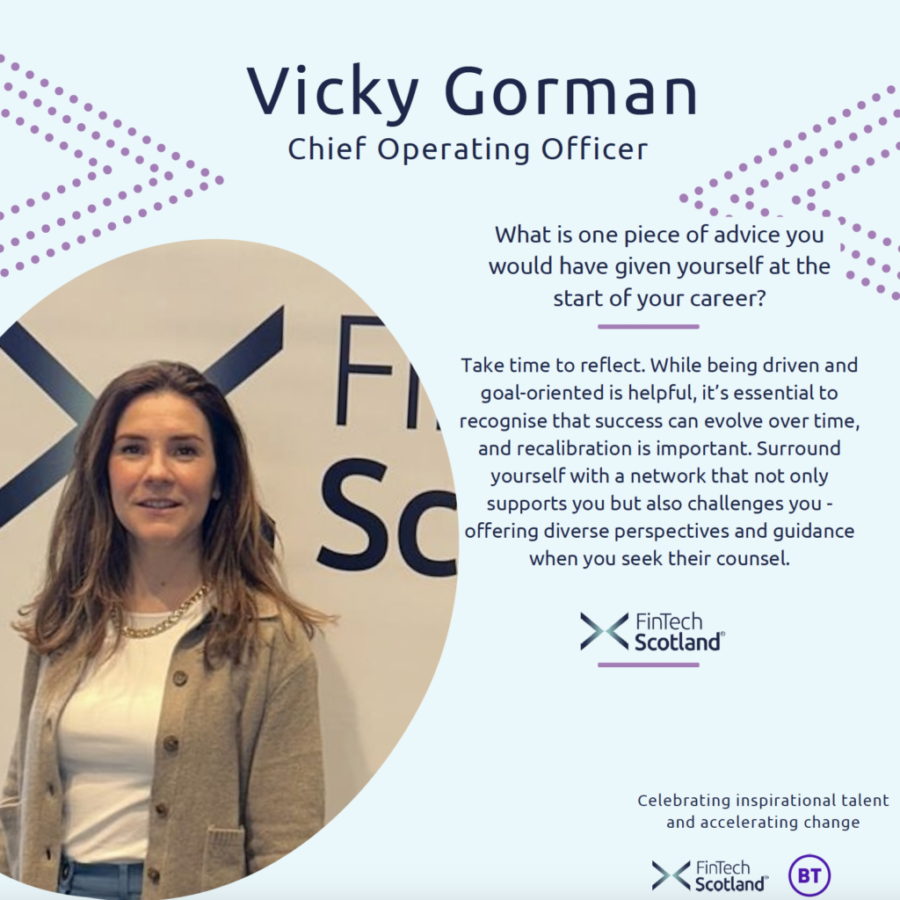
This blog will reflect on the recent roundtable hosted by FinTech Scotland in partnership with the City of London Corporation Women Pivoting to Digital Taskforce, chaired by Vicky Gorman, Chief Operating Officer at FinTech Scotland and Deborah O’Neill, Head of Digital Europe and Partner, Oliver Wyman. The Taskforce brings together business, government, third sector, and industry groups to bring more attention to and action around supporting women from non-technical backgrounds to pivot to digital roles. The aim is to address the underrepresentation of women working in digital careers by providing women with vital skills to future-proof the digital workforce.
The values and objectives of the taskforce are something that FinTech Scotland very much align to and we jumped at the chance to co-host this discussion in Scotland and engage our colleagues across the cluster. . The dialogue highlighted the importance of reskilling, clear pathways into digital careers, and the power of collaboration in addressing the digital skills gap. This is a very important topic that we’re looking forward to addressing alongside our strategic partners.
The Business Case for Re-skilling
The discussion began with a summary of the current landscape, with one example highlighting the financial benefits of internal reskilling. Employers can save over £49,000 by upskilling existing employees rather than hiring externally. The benefits of up-skilling were detailed further by one participant who shared their experience transitioning from a tech background into the financial services sector, describing their seven-month learning curve to get used to financial jargon and industry knowledge, a timeframe which could have been significantly reduced if organisations had re-skilled internal talent familiar with the business context.
Breaking Barriers: Women and the Digital Skills Pipeline
A key theme that emerged was the difficulty women face in accessing clear pathways into digital roles. The Taskforce’s research revealed that even for those already interested in tech, the lack of guidance remains a barrier. However, a deeper issue was highlighted: many women don’t even consider digital careers due to misleading job descriptions and preconceived notions about what a tech role entails. There is an urgent need for businesses to reframe job postings and provide accessible entry points into the industry.
The Fintech Landscape and the Skills Gap
The discussion then turned to fintech, highlighting that the FinTech Scotland Cluster recorded an 8% year-on-year employment growth in 2024 bringing the total number of people working in fintech to over 11,300. Despite this growth, talent acquisition and skills development remain significant challenges, with research revealing that only 21% of Scottish businesses feel equipped with the right digital skills for the future.
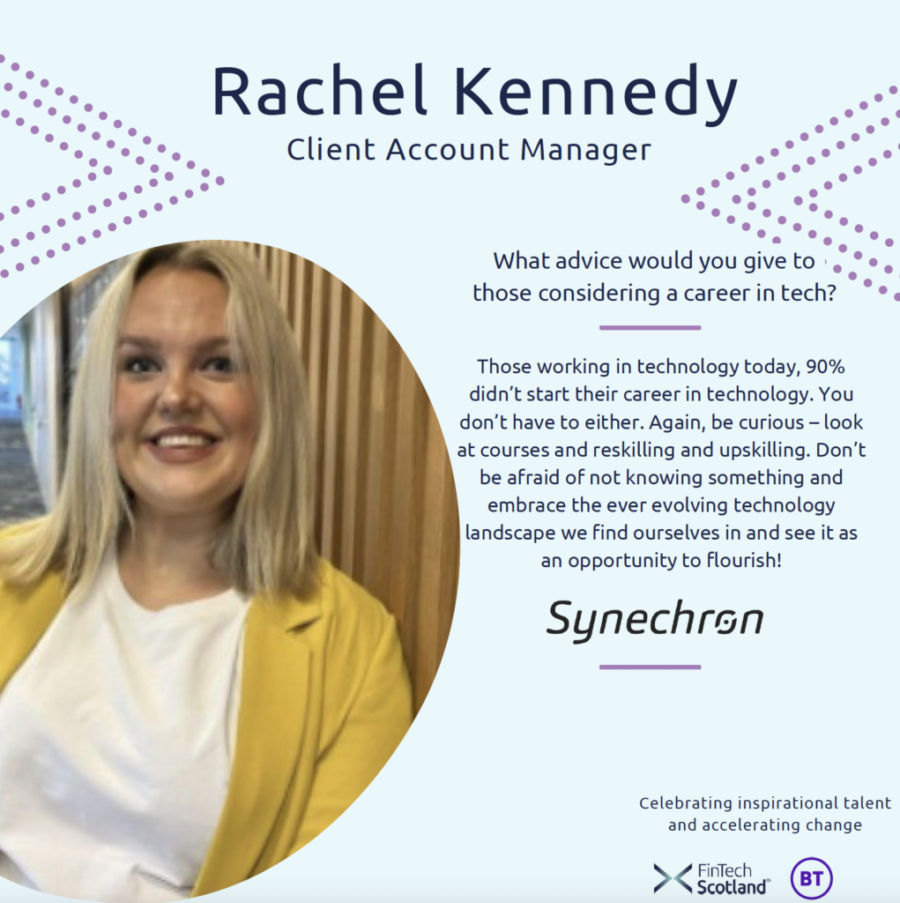
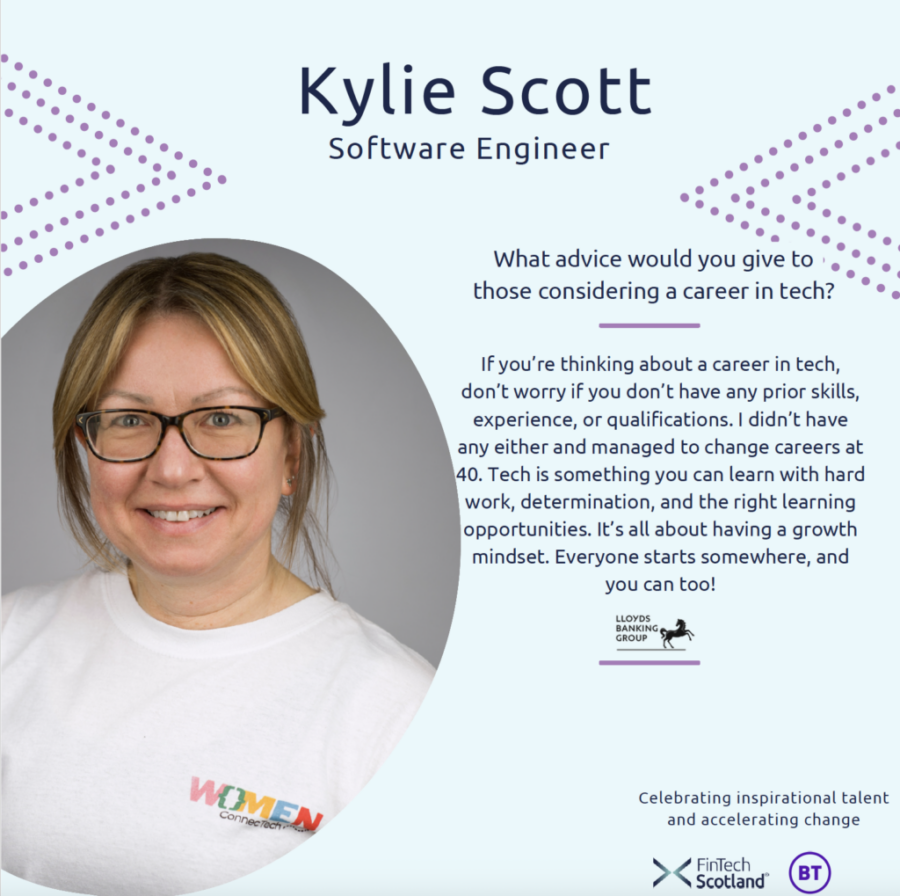
We also heard from Kylie Scott, Lloyds Banking Group, on her inspiring journey successfully pivoting into a digital role. It was fantastic to hear about the support she was provided throughout this journey by her colleagues across Lloyds Banking Group, demonstrating the critical role of a support network and organisational backing in facilitating career shifts.
Collaboration: The Key to Sustainable Change
The latter part of the discussion explored employer-led reskilling initiatives, hiring from non-traditional routes, and the role of government-business collaboration. A recurring theme was the need for collective action. The group consensus was the digital skills challenge cannot be solved by individual organisations working in silos – highlighting the cluster model of collaboration across organisations, education providers, and policymakers is essential to drive meaningful progress.
Next steps
The City of London are calling all women who have ever thought about, or work in, a digital or tech career to action by responding to their Women Pivoting to Digital survey. Survey results will underpin the Taskforce outputs, providing on the ground insights and understanding around why women may or may not be interested in career-changing to tech role (in any sector!) and the barriers to making this change. We encourage you to respond to this survey, and share with your network as we focus on strengthening representation across Scotland.
There was a resounding agreement across the discussion on the importance of continuing to promote and celebrate role models across technology roles and in financial services. We are delighted to be driving forward this action through this monthly campaign and will be continuing to spotlight colleagues across the cluster who are Accelerating Action and contributing to progress on this important agenda.
Finally, there are already valuable initiatives across the cluster driving progress on this important issue. Our goal is to expand on the success of our Women in Tech Campaign by highlighting organisational strategies that support career transitions into digital roles. By doing so, we aim to encourage wider adoption of these impactful practices throughout the cluster.
February profile spotlight
Why Graduates Should Consider a Career in Fintech
The fintech industry is growing rapidly and has been recognised as a key driver of the UK’s economic growth. With strong investment and continued innovation, now is a great time for graduates to explore career opportunities in this sector.
The Growth of Fintech in the UK
The UK is a leading fintech hub, home to around 2,500 firms and employing over 76,500 people. By 2030, employment in the sector is expected to reach 105,500. Despite a global dip in fintech investment in 2024, the UK still attracted over £3 billion, demonstrating the industry’s resilience.
UK Chancellor Rachel Reeves has highlighted fintech as a major contributor to the economy. The government’s focus on this sector means more opportunities for innovation, investment, and job creation.
The Skills Gap in Fintech
Although fintech is expanding, it faces a significant skills shortage. To remain competitive globally, the industry needs to attract more skilled professionals. However, a recent survey by fintech company Quotezone.co.uk found that 76% of students have never considered a career in fintech. The main reasons include:
- Lack of knowledge about the sector (36%)
- Pressure to follow a traditional career path (26%)
- Limited access to relevant work experience (9%)
Encouraging New Talent
To bridge this gap, initiatives like the Fintech Scholarship from Quotezone.co.uk aim to raise awareness and encourage students to learn about fintech. This scholarship invites students to share their thoughts on improving recruitment in the sector, with the winner receiving a £1,000 bursary and industry work experience.
Why Graduates Should Consider Fintech
A career in fintech offers competitive salaries, strong career development, and the chance to work in an innovative environment. Fintech professionals play a role in shaping the future of banking, payments, investment, and insurance through technology.
Fintech is an attractive option for graduates looking to enter a dynamic and rewarding industry thanks to growing government support and increasing job opportunities.