
Behind the Scenes at the Skills Academy
“When you look across financial services, the message is the same everywhere: the pace of technological change is relentless, and people and industry need to keep up,” explains Christine Sinclair, Programme Director for FRIL.
And that is exactly what sits behind the FRIL Skills Academy – a pioneering, demand-led, skills and education platform created by the Financial Regulation Innovation Lab (FRIL).
“With the speed of change, the biggest risk is to do nothing,” adds Christine.

The Academy is delivered in partnership between Fintech Scotland and the University of Strathclyde and the University of Glasgow. It is a practical response to real skills gaps identified across the sector from work within FRIL’s Innovation Calls and research.
The academy, which launched officially in January, brings together a portfolio of short courses, microcredentials (which gain academic credits), and executive education that help people across financial services and beyond to understand, adopt and apply new technologies responsibly and effectively.
So, that’s the context. But what are people actually learning at the Academy, and what difference does it make?
Here, we explore the stories of several participants to find out:
Closing the gap, accelerating progress
Professor Mick O’Connor started his working life as an apprentice welder in the Clyde shipyards and is now a serial entrepreneur, academic and managing director of multiple high‑tech businesses spanning regtech, spaceports and drones. When Mick’s regulatory technology firm Haelo won one of FRIL’s first Innovation Calls, he was already building AI-enabled solutions. But as we often find, the more we learn, the more we realise we need to learn.

“I’d never been formally taught AI,” he says. “I’m not a coder. I had an enthusiastic amateur understanding, but I owed it to myself and the business to understand more.”
So, he enrolled in the AI and Regulatory Technology in Financial Compliance microcredential at the University of Glasgow.
“I still wouldn’t describe myself as an AI expert,” he explains. “But I can now talk comfortably with people who are. I can translate the customer problem into user stories, and then into technical requirements.”
And this has helped Mick bring together the business and technical teams required to make the Haelo magic happen.
“We talked different languages. This has helped close that gap,” he explains.
And while the gap may have narrowed, Haelo’s trajectory has accelerated.
“As a direct consequence of FRIL, I developed a technology roadmap. I didn’t have that before. I started with the problems then understood the technology I needed to solve them.”
Haelo is now preparing to launch its first product, designed to be sector-agnostic, capable of pivoting across highly regulated industries including pharma, rail, nuclear, space and aviation.
“I’ve said to FinTech Scotland that this is such a great story,” he reflects. “I can demonstrate that the whole genesis of that product and building the business has been seeded by FRIL.”
Joining the dots between rockets and regulation
“My job is business development,” says Derek Harris. “I need to understand what my clients are doing, especially around satellite launching. These courses helped me have that conversation.”
Derek is Director of Business Development and Communications at Skyrora, which builds small launch vehicles for launching satellites into space.

You might not associate the FRIL Sklls Academy as an enabler for the Space industry but the sectors intersect in surprising ways.
Satellites may orbit the earth, but their impact is grounded in everyday systems: encryption, cybersecurity, data protection, which is also the invisible infrastructure behind banking and digital security.
And similarly, Derek’s career has bridged those two worlds. Before rockets, he spent 15 years in financial services.”
“When it comes to Space and Finance, we have one of the biggest finance areas outside London and Frankfurt. But we also now have a fully forming space industry where the two can work hand in hand.
“So, if we can identify what data is required by financial institutions, these courses can help turn wish lists into actual products,” he explains.
Micro-credentials in AI Implementation and Financial Crime Prevention gave him a structured understanding of how space-enabled data connects with financial regulation and risk.
“These courses helped me fill in the dots,” explains Derek.
And it wasn’t just what was being taught that was helpful, it was the way it was being taught too.
For someone who is dyslexic, the flexible online format was crucial.
“I could go back, relook, learn at my own pace, even while on the go and in between flights. I could jump online and do 30 minutes. That made a huge difference,” explains Derek.
And his biggest surprise about the Academy? “It’s not as well-known as it should be,” says Derek.
“If all the banks were doing this, it would be a game changer. And it’s the customers who would win at the end of the day.”
Confidence to challenge and connect
“The Digital Transformation course brought learning to life with real-world examples, group work and problem-solving,” says Joanne Seagrave, founder of Norwood Risk and Compliance, who offers yet another perspective on the Academy’s impact.

“As a result, I felt empowered to grow my scope within the fintech community, which inspired me to develop my role as a board advisor to start-ups.”
With 25 years in financial services and experience supporting fintechs through FRIL as an industry partner, she joined the course not out of necessity, but curiosity.
“I wanted to take my understanding to a more in-depth level,” she says.
The micro-credentials allowed her to explore business strategy through a technology-led lens, from generative AI to distributed ledger technology, grounding innovation in commercial and regulatory realities.
“The course gave me confidence to be curious,” she explains. “Whether that means challenging compliance teams to use technology more effectively or factoring risk in at the early stages of a project.”
What surprised her most was the diversity of the cohort.
“I’ve worked in financial services for over 25 years, but the community included people from charities, engineering, life sciences, public sector and software development, which made for some interesting discussions and led to diversity of thought,” she explains.
Shaping the future… and your future
So that’s a glimpse behind the scenes of the Academy and the programmes on offer. But let’s leave the final word around its impact to Christine:
“There are so many inspiring stories from people who’ve been through these programmes,” she says. “One participant told us he’d never been to college or university. He went straight into work and never had the opportunity to study formally. He was the first person in his family to take a university course, and it was our Digital Transformation programme.”
“Something clicked for him. After completing the course, he asked what else he could do. He’s now enrolled on a graduate apprenticeship degree. Another participant has gone on to apply for an MBA. So, these short courses aren’t just about skills, they can genuinely spark lifelong learning.”
“Short courses are powerful,” she adds. “They can change the course of someone’s career.”
If you’ve liked what you’ve read and would like to change the course of your career, then please check out the FRIL Skills Academy webpage. Or contact the Skills Team for more information at sbs-fril@strath.ac.uk. They are waiting to hear from you.
About FRIL
Research in Action – How Financial Regulation Innovation Lab (FRIL) Is Turning Insight into Impact for Industry and Consumers
FRIL is turning collaborative research into real-world solutions for the future of financial services – and, in turn, for all of us.
“There’s hardly an organisation you can talk to that isn’t interested in artificial intelligence and cyber security – the opportunities created and the challenges they might face,” explains Professor Eleanor Shaw OBE, Associate Principal External Engagement and Partnerships at the University of Strathclyde.
“As researchers, it’s really important that we use our expertise to explore those challenges with our external partners and find solutions. That’s how we drive impact.”
And the impact Eleanor describes isn’t just for industry; it’s for all of us, in our everyday financial lives.
“Imagine a world where, regardless of your postcode, you can access good-value, high-quality financial products: mortgages, insurance, advice and guidance. That’s the world we’re working towards at FRIL,” adds Eleanor.
Speak to almost anyone in financial services right now – just like many sectors – and you’ll hear the same underlying tension: the future is arriving faster than most organisations can comfortably absorb.
Technology and consumers. Opportunity and risk. Acceleration and anxiety. The list of modern paradoxes keeps growing. It’s enough to raise the pulse slightly.
That’s why addressing those challenges is at the core of the research undertaken by FRIL. This research is not theory alone. It is applied, fast-moving, tested, and shaped alongside industry and regulators – with real-world consequences in mind. Consequences that mean faster solutions for consumers, greater innovation capacity for banks, and new skills development programmes designed for the next generation of financial services.

“There’s a magic formula at the heart of FRIL, which is why we see the results we do. Actionable research is one of four key ingredients. The others are our Innovation Calls, Knowledge Exchange and Skills and Education programmes. Together, they drive impact and get solutions out into industry quickly,” explains Clare Reid, Strategic Innovation Director at FinTech Scotland. “Our partnerships with the Universities of Glasgow and Strathclyde are really important in driving research that shapes positive outcomes.”
Preparing for the future now
So, how does this actionable research actually work? Mark Cummins, Professor of Financial Technology and Lead Investigator at the University of Strathclyde, explains:
“At the University of Strathclyde translation of research has always been a key focus. We work in fundamental research and publications are critical – they build credibility, but we also work hard to translate that research into impact.
“At the University of Strathclyde, for example, we use cluster mechanisms to coordinate expertise across different areas. I lead our FinTech cluster, and those clusters are a key way of translating research for real-world impact.
“What FRIL brings is a mechanism for bringing all the stakeholders into one room: financial services, professional services, fintechs, regulators and others. That coordination gives us a reach that can be difficult to replicate in other ways.”
And that connection to industry and regulators is key:
“We draw on our academic knowledge to deliver applied research set by companies and regulators, and connect that directly to skills development and real industry challenges,” adds John Finch, Professor of Marketing at the Adam Smith Business School at the University of Glasgow and another Lead Investigator for FRIL.
FRIL research starts with real, live problems ranging from consumer vulnerability to operational resilience. The research activities bring banks, fintechs, regulators, and technology firms together to turn those challenges into direct, applied research built for a rapidly moving environment and evolving consumer needs. And it is a model that is appealing to action orientated academics.
“One of the key reasons I came back to academia was the chance to work on these white papers with industry,” says Steve Owens, a knowledge exchange fellow at the University of Strathclyde, and an engineer by trade. “We take real use cases and put academic research around them, then get that knowledge back out quickly. The focus is on getting useful insight into industry hands as quickly as possible.”
That research is increasingly boundary-pushing, and spans explainable AI, multi-modal generative AI, earth intelligence using satellite data, and agentic systems, but always tied back to regulatory and market needs.
The FRIL research model blends open and applied innovation. White papers are published openly so the wider sector can benefit.
Meeting needs
For banks, this means the research environment that FRIL offers becomes a home for strategic insights.
“We’re an insight-led team,” explains Nicole Alston, Programmes and Community Engagement Manager from Natwest. “FRIL gives us visibility across disruptive technologies and emerging sectors. We know we can’t build everything internally and that this is a two-way exchange.”
And that two-way exchange is critical, because at the centre of this high-tech research, is a clear purpose to tackle very human needs.
“If we apply technology correctly in financial services, we can drive greater inclusion and economic prosperity,” Eleanor reminds us.
Consumer vulnerability and consumer duty are recurring themes across FRIL research, but all of these areas are deeply nuanced where ‘one-size-fits-all’ solutions won’t cater for the needs of all those in society. John helps explain:
“Vulnerability isn’t always permanent; it can be linked to life stage and personal circumstances. Insights from firms who see this day to day often reshape how and where we focus our research.”
Those insights are increasingly being translated into practical tools, and Advanced AI research is being applied directly to consumer outcomes.
But what does all of that actually mean? Well, just a few of those examples include identifying potential discrimination in financial decision-making, bringing financial advice and guidance to the masses rather than the few, and building voice-led digital interfaces that help people with reading or learning difficulties access support more easily. This is work that matters for everyday people.
And for technology partners, the value lies in bringing together the academic rigour with market urgency.
“We take hypotheses from industry challenges and shape them into structured research with academic partners,” says John Donoghue, Chief Technology Officer at Sopra Steria, a major tech firm with over 50,000 employees worldwide.
Students are embedded too – through live projects, dissertations, and industry-defined challenges, with the aim of building future skills alongside present solutions
“Students and researchers test and explore the challenges through projects and dissertations, then play findings back to us. We feed that directly into our product and strategy thinking,” adds John.
“This matters because we want to stay at the front edge of the industry,” he explains. “Working on challenges alongside – or ahead of – our clients helps us respond proactively and differentiate.”
People and collaboration
Across every voice we speak to, there is one theme that repeats: collaboration is essential – critical, even:
“Actionable research is crucial,” adds Kal Bukovski, Head of Academia and Research at Sopra Steria. “We bring together regulators, firms and technical practitioners so everyone takes something practical away. It’s about answering the what, why and how, not just describing the problem.”
With such a focus on technology, it may be surprising that what really drives FRIL’s research environment is a community of people who place a strong emphasis on meaningful and productive relationships. Mark explains:
“Our research, skills and education activities are all built on relationships. FRIL gives us a unique environment to build those and to translate research into real use.”
Research with purpose
This is research that doesn’t sit still. It moves quickly into white papers, innovation calls, student projects, product strategy, workforce upskilling and regulatory thinking. Kate Blatchford- Hick is Head of Consumer Investments Policy and Market Analysis at the Financial Conduct Authority and explains how the work drives impact for the regulators:
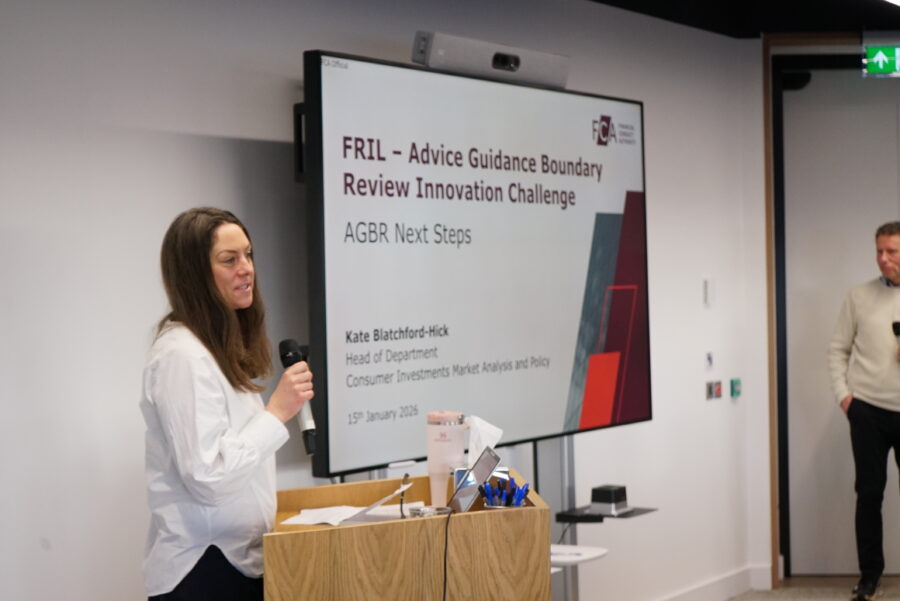
“FRIL’s research is really valuable as part of the market analysis, horizon scanning and insight work that we do. The work on AI and open finance, for example, helps deepen the evidence base around how emerging technologies are shaping consumer decision-making, both now and in the future. That, in turn, strengthens the FCA’s ability to anticipate market behaviours, risks and innovation, and helps us prioritise policy work that responds to both the opportunities and the potential risks.”
And while insights from FRIL are actively informing regulation and policy, they are also shaping a new generation of skills programmes designed for a rapidly changing sector. Earlier this year, FRIL launched the FRIL Skills Academy. The academy is a first-of-its-kind skills and education platform created to address capability gaps and support career development across financial and professional services and the wider fintech community.
Delivered with academic partners at the University of Strathclyde and the University of Glasgow, the Skills Academy responds directly to the accelerating pace of technological change, particularly in areas such as AI, data quality, and regulatory compliance, where talent shortages continue to slow innovation and increase recruitment costs.
FRIL research has highlighted persistent skills gaps across the sector, reinforcing the need for sustained, strategic investment in workforce development to maintain the UK’s global competitiveness.
“This is a new benchmark for how academia and industry partner at pace,” says Clare Reid, Strategic Innovation Director at FinTech Scotland.
And this point leads us to the nub of FRIL research. This research doesn’t just help us understand change, it informs how we shape it. That’s what makes this model so distinctive.
“I believe in this research because it’s about doing good quickly, we’re not just producing journal outputs, but creating real industry impact and addressing real consumer needs, right here and right now,” concludes Mark.
At the centre of FRIL’s research is a common theme – in a world of rapid change, we need to think differently and act boldly. That same mindset runs through the fintech world, where pushing boundaries, breaking ground, and creating new ways forward are part of the DNA.
As Kal puts it: “Fintech is a kind of art: you have to think beyond the limits and create something new that genuinely serves the right purpose.”
And that is FRIL research.
‘Innovation in financial regulation’ might not sound like the catchiest tagline, but it is at the heart of making the world better for all of us – today, tomorrow and in the decades that come.
What next?
Interested in the research generated by FRIL? Then check out our White Papers across a range of subjects.
If you’re interested in the work of FRIL more generally and would like to contact a member of the team email: FRIL@fintechscotland.com.
About FRIL
Launching Turnkey PI and unveiling our rebrand: a new chapter in insolvency technology
By Turnkey, the cloud-based insolvency software provider.
After over four decades of supporting insolvency professionals with powerful, reliable technology, we are introducing a new product, Turnkey PI, and stepping into a bold new era with our rebrand. It’s more than a refreshed logo or updated colour palette: it’s a reflection of who we’ve become and where we’re going.
A natural next step: Welcome Turnkey PI
For over four decades, we’ve been focused on doing one thing exceptionally well: supporting corporate insolvency professionals with robust, purpose-built technology. Since then, we’ve grown in experience, capability, and reach – and we’ve realised something: we weren’t just a corporate insolvency software provider anymore; we were becoming a broader technology partner to modern insolvency practices. Globally.
As a matter of fact, one of the biggest drivers behind our rebrand is something we’re incredibly proud of: the launch of Turnkey PI (Personal Insolvency). It’s an important step for us, and it signals something bigger: that Turnkey is growing to support the full landscape of the insolvency industry.
Turnkey PI goes beyond our existing capabilities by delivering connected, client-centric tools built specifically for personal insolvency practitioners. At its heart is a secure, intuitive Client Portal where clients can submit and track queries, upload documents, make secure payments, approve actions electronically, and monitor real-time case progress through a clear dashboard.

“This product matters because it can affect people who are in debt in an unbelievably positive way.” – Craig McDonnell, Director at Turnkey
Alongside this, a fully integrated Communications Hub centralises email, SMS, and WhatsApp in one place, automatically storing all correspondence against the case file. The result is a complete audit trail that strengthens compliance, improves transparency, and reduces administrative workload.
Over the years, our product suite has become more sophisticated, more integrated, and more intuitive. The old brand no longer fully represented the technology behind it. Our new look is modern, confident, and purposeful designed to visually express the clarity and ease our solutions deliver.
“This milestone brings our growth strategy to life – transforming our vision into delivery through a reimagined, modern brand that better reflects who we are today and provides a strong foundation for continued expansion.” – Deborah Baxter, CEO at Turnkey
This new phase is also a reflection of the people behind it. There’s a real sense of pride across the business in what we’ve achieved and where we’re heading, and it’s that collective energy that’s powering this next stage for Turnkey.
Merchant Transact 360: The Event Shaping the Future of Merchant Payments
Co-located with PAY360, Europe’s largest payments event, Merchant Transact 360 is the new, dedicated conference for merchant payment professionals. On the 25-26 March 2026, the event will welcome 400+ attendees, including 200+ leading merchants, for two days of curated insight, innovation and networking.
In an increasingly complex ecosystem, Merchants look 10-15 years ahead, anticipating how future generations will shop, pay and consume, Merchant Transact 360 brings the community together to explore what’s next at a time when seamless money movement and agile payments strategies are becoming central to growth.
A Merchant-Led Agenda
Shaped by The Payments Association’s Merchant Payments Working Group, with input from leaders at Spotify, BT, Frasers Group, Sky, DAZN and Jaguar Land Rover, the agenda reflects the issues merchants are tackling right now.
Across keynotes, panel discussions and closed-door roundtables, 50+ speakers will address the sector’s most urgent themes:
- Maximising revenue and reducing loss – Increase acceptance, optimise methods, fix failure points and mitigate emerging fraud.
- Enhancing customer experience – Deliver seamless checkout experiences that match evolving payment preferences.
- Reducing operational costs – Cut fees, eliminate hidden costs and streamline your payments tech stack.
- Navigating compliance and regulation – Stay ahead of new open banking, data and security requirements with reduced internal strain.
- Driving strategic growth – Transform payments into a growth driver through analytics, fraud insights and cross-border expansion.
Purpose-Built for Merchants
- A two-day conference dedicated solely to merchant payments
- Peer-to-peer roundtables for confidential, experience-driven discussion
- AI-powered matchmaking to help attendees connect with the right people
- A VIP lounge exclusively for merchant teams
The event welcomes attendees from across retail, hospitality, telecom, travel and digital services, including members of our growing merchant community such as BT Group, Coop, Marriott, New Look, Flutter Entertainment and Sky.
Why Attend?
Merchant Transact 360 is the only event built for merchants rather than around them. It provides:
- Access to merchant-focused insights and practical case studies
- The opportunity to meet 200+ fellow merchants and industry partners
- Direct engagement with decision-makers who influence payments strategy
- A platform to showcase and discover solutions that drive measurable impact
Whether you aim to streamline costs, improve customer experience, reduce fraud, or re-position payments as a strategic growth tool, Merchant Transact 360 offers the essential space to connect, learn and lead.
Get your tickets here.
Use Code FintechScotland20 to save 20% off your delegate pass.
Where Banking Is Heading: From Vision to Execution in London this May
Banking Transformation Summit | 19–20 May | Tobacco Dock, London
The Banking Transformation Summit is the definitive gathering for senior executives driving real change inside Europe’s leading banks and building societies to shape what’s next in banking. Returning to London on 19–20 May, a verified audience of 1,000 decision-makers will convene at Tobacco Dock; a first-class venue delivering premium hospitality for all attendees, and located a convenient distance from London’s financial districts and major transport links for ease of travel.
What to expect: agenda and themes
Carefully curated to ensure high-value connection and strategic clarity, the two-day agenda addresses the decisions, technologies and leadership challenges actively reshaping banking today. Day One focuses on vision and where banking is heading, exploring what’s changing across the industry, the forces shaping the future of financial services, and what leaders need to be thinking about next as regulation, technology, and customer expectations continue to evolve. Day Two turns vision into execution, examining how ideas translate into action inside complex banking environments, what actually works in practice, and how teams move forward with confidence and clarity.
Across the two days, 150 world-class speakers will share practical, battle-tested insights and honest perspectives on what’s working today and what’s coming next, providing actionable, take-home learnings to apply to your own strategies. Through keynotes, panels, roundtables, lightning talks and demos, they’ll divulge exclusive case studies across six core themes, reflecting the most important challenges and opportunities banks are facing:
- The AI Frontier: Explore how generative AI, machine learning, and predictive analytics are transforming customer engagement, fraud detection, risk management, and operations.
- Intelligent Infrastructure: Learn how banks are simplifying legacy environments, improving resilience, and building the foundations for AI-powered transformation.
- Money in Motion: Discover how the flow of money is changing, with real-time payments, instant settlement, digital identity, and the platforms powering embedded finance.
- Trust in the System: Explore how banks are strengthening defences, improving detection and response, and protecting customers while still enabling innovation.
- Power to the People: Dive into how banks are redesigning services that are faster, simpler, and more relevant while meeting rising expectations and Consumer Duty.
- Human & Machine Leadership: Learn how banks adapt their culture, operating models, and ways of working as automation and AI reshape roles, teams, and decision-making.

Networking, audience and how to attend
Every detail has been centred around connection, from the event app with messaging and meeting booking functionality, to networking breaks and more informal drinks receptions – ensuring you network and connect with the transformation leaders driving real change. With 62% of attendees at VP-level and above, and more than 120 banks and building societies in attendance, you’re 5x more likely to meet a bank than at other European Fintech conferences.
This year, to protect the experience, attendance is capped at just 750 complimentary tickets for banks and building societies, and limited sponsorship opportunities are available on a first-come first-served basis.
Visit the links below to learn more.
Banks & Building Societies Apply to Attend for Free: https://hubs.ly/Q03_lXt10
Sponsorship Enquiries: https://hubs.ly/Q03_lYm90
The real constraint in advice firms is capacity
Insights from Tom Matthieson, Founder & Director, Glimzer
Capacity, not regulation
When people talk about the challenges facing financial advice firms, regulation is usually the first thing mentioned.
But in conversations with advisers, operations teams and firm leaders, a different constraint comes up far more consistently: capacity.
Not a lack of demand. Not a lack of intent to do the right thing for clients. Simply a lack of time and headroom in the day‑to‑day running of the business.
Advisers want to spend time with clients. Firms want to serve more people, improve consistency and grow sustainably. What gets in the way is the volume of administrative work required to keep everything moving. Manual updates. Duplicated data entry. Chasing information across systems. Maintaining spreadsheets alongside core platforms just to get a clear picture of what’s going on.
None of this work improves client outcomes. But it quietly consumes hours every week.
What’s striking is how normal this has become. Many firms accept admin drag as the cost of doing business, even though it directly limits how many clients they can realistically support. As teams grow, the problem often gets worse. More people means more handoffs, more checks and more effort spent reconciling information rather than using it.
Tools built for records, not delivery
A big part of this comes down to the tools firms rely on. Much of the infrastructure used in advice today was designed primarily to store records, not to support how advice is actually delivered in practice. Over time, firms adapt around these systems, building workarounds and manual processes to keep things running. The result is friction that feels unavoidable, but isn’t.
Small fixes that unlock capacity
At Glimzer, we’ve been spending time listening closely to how advice firms actually work day to day. What becomes clear very quickly is that small improvements in how information flows through a business can unlock meaningful capacity. Capturing data once instead of multiple times. Making workflows clearer. Giving teams visibility without having to build reports by hand.
This isn’t about changing the role of the adviser or introducing more complexity. It’s about removing unnecessary work so firms can use the capability they already have more effectively.

Collaboration matters
Being part of the FinTech Scotland community matters to us because these problems aren’t solved in isolation. They sit at the intersection of advice delivery, operations and technology, and they benefit from a shared perspective and honest discussion.
Our aim at Glimzer
We’re building in this space with a simple aim: to reduce friction, give advice firms back time and help them serve more clients without stretching their teams thinner. We’re keen to learn from others who are thinking about the same challenges, and to contribute to a broader conversation about how better infrastructure can support the future of advice.
When Technology Stops Being the Hard Part: The Real Constraint on Scale
By Patrick Byrne, Co-founder and CEO, Struan.ai
I’ve spent most of my career helping to grow technology-led businesses. Most often, I’ve been brought in when growth was the ambition, but the wheels were starting to wobble.
Years ago, the main risk was obvious. Would the technology work at all? Could it scale? Could the team actually build what had been promised to customers or investors? Infrastructure was expensive. Engineering talent was scarce. Shipping even something modest took time, money and a fair amount of nerve.
That environment shaped how a lot of us learned to build companies.
Today, that constraint has largely gone away. Cloud platforms are easy to access. Tooling is mature. AI has lowered the barrier to building and iterating to the point where small teams can move at a speed that would have felt unrealistic not that long ago. In many cases, the product gets built. It ships. It works.
And yet, despite all of that, growth still feels harder than it should.

I remember this very clearly in one of my former businesses. In 2017, as CEO, we kicked off what was meant to be a straightforward CRM migration. The plan was sensible enough. Four months end-to-end. Clean up the data, move systems, improve visibility, then get back to growing the business.
Seven years later, that project was still technically ‘ongoing’.
Not because the technology didn’t work. The tools were fine. The vendors did their part. The issue was everything wrapped around the technology. Data ownership was unclear. Processes changed faster than they were documented. Edge cases kept appearing. People worked around problems rather than fixing them, because there was always something more urgent to do.
Where Things Start to Strain
What I see repeatedly is execution starting to lag as momentum builds.
As organisations grow, the volume of everyday work rises quickly. Sales activity increases. Marketing needs to operate consistently, not just when there’s time. Customers need onboarding, support and follow-up. Different stakeholders need different reports to meet their own agendas. Controls tighten. None of this is optional, and most of it relies on context, judgement and continuity.
This kind of work doesn’t lend itself to an organisation that was once dynamic and nimble. Suddenly, everything is a priority and everything is urgent. So, more people are hired.
At a small size, teams cope. People know what’s going on. Gaps get filled informally. Someone stays late. Someone remembers how a thing was done last time. As volume increases, those informal fixes start to break down. Processes end up spread across tools, documents and inboxes. Important details live in people’s heads. Things still get done, but more slowly, and with less confidence.
When problems surface, they’re often written off as one-offs. In reality, they’re early signals that the operating model is under strain.
Predictable Reactions
When pressure builds, most organisations reach for the same levers.
They hire more people. They add more tools. They outsource parts of the operation.
Sometimes that helps, at least temporarily. But it usually introduces new trade-offs. More people means more overhead and more management. More tools mean more things to manage. Outsourcing can reduce visibility at the exact point where clarity matters most.
This is how many businesses drift into an awkward middle ground. The product works. Demand exists. The team is capable. But progress feels like running through treacle. Growth becomes something to manage carefully, rather than something to lean into.
What’s Usually Missing
In almost every case, the same things show up.
There isn’t a clear operating model for execution, or if there is, it’s not followed.
In organisations that scale well, execution isn’t something that happens between meetings or when people find the time. It’s treated as a system. There is ownership. There are rules, controls and clear escalation paths. Outcomes are visible and repeatable, rather than dependent on who happens to be involved on a given day.
AI can help here, but only if it’s applied in the right place. Used simply to assist individuals, it has limited impact. Applied to running defined workflows, it starts to change how work actually gets done.
Sales, marketing and operational processes benefit far more from reliability than creativity. When execution is predictable, people can spend their time on decisions, relationships and direction instead of firefighting.
Why Struan Exists
Struan came out of seeing this pattern first-hand, over decades of building high-growth businesses, operating at the edges of cashflow constraints.
While building an AI-first business that demanded a high level of control and consistency, it became clear that the real challenge wasn’t technical capability. It was execution. Specifically, who owned it, how it was run day to day, and what happened when things inevitably drifted.
Struan was built as a managed service to address that gap. It is delivered by a team with decades of experience building, scaling and running high-growth businesses, often in environments where cashflow was tight, stakes were high and there was no room for theoretical solutions. Between us, we have lived through most of the realities organisations face as they grow: performance issues that are hard to confront, people problems that drain energy, systems that fail at the worst possible moment, clients who don’t pay on time, difficult customer relationships, cashflow pressure, cultural changes as teams scale, multi-site complexity, poor management decisions, and the cost of reacting too slowly when things start to go wrong.
That experience is distilled into how Struan operates. We don’t sell tools or frameworks and leave clients to make them work. We take responsibility for execution itself, embedding AI into real workflows and running them on our clients’ behalf. The surface-level problems vary from business to business, but the underlying causes are remarkably consistent. By addressing those causes directly, Struan delivers practical impact where it matters most: reliable execution, reduced operational drag and the confidence to scale without losing control.
The Takeaway
The tools to build faster, operate leaner and scale more confidently are already here – accessible, proven and improving rapidly. What’s missing is conviction.
The real barriers to AI adoption are fear and trust. Fear of getting it wrong. Fear of disrupting something that currently works. A lingering suspicion that this only applies to technology companies with deep pockets and specialist teams.
That thinking is already out of date.
The organisations that thrive over the next decade will be defined by leadership that recognises what AI makes possible and acts on it before the competition does. Because competitors will act. In every sector, in every vertical, someone is already working out how to do more with less, move faster and operate with greater consistency. The gap between organisations that embrace this shift and those that hesitate will widen quickly and may not close again.
The question isn’t whether AI will reshape your market. It’s whether you’ll ride the wave or be swept away by it.
In conversation with Financial Services: Why innovation really matters
The term ‘innovation’ might bring to mind a race for better technology, systems and smarter data, but beneath it all lies a fundamental question: how do we create a fairer financial future for all?
For most people, financial advice isn’t about products, platforms, or policy. It’s about life: buying a first home, protecting a family, surviving a setback, or planning for a future that feels uncertain.
Yet for millions, financial advice remains out of reach.
As one of the most significant regulatory shifts in recent years begins to reshape how people access financial support, the financial services sector is radically reshaping how advice and guidance is delivered.
This is just the kind of challenge that our pioneering Innovation Calls take on, led by our team in the Financial Regulation Innovation Lab (FRIL). Our latest call focused on the Financial Conduct Authority’s (FCA) Advice Guidance Boundary Review, a technical name for a very human issue: how to make financial help clearer, fairer and available to far more people.
Bringing together fintech founders, academics, financial services leaders, and regulators, FRIL’s Innovation Call creates a space where policy, practice, and possibility meet.
Here, we speak with two financial services leaders involved in the call to find out more about why innovation is so important to their firms, as well as the future of the sector:
- Maria Herrero Bullich – Chief Customer and Digital Officer, Insurance, Pensions & Investments at Lloyds Banking Group.
- Kate Murray – Strategic Projects Lead, Scottish Widows & Lloyds Banking Group.

Addressing the Big Picture
“For me, the utopia is that everyone who wants to do the right thing for their future has real choice. Whether they’re looking for simple guidance, clearer recommendations, or full financial advice. What matters is that people have different options, depending on their needs, and the freedom to decide which path is right for them,” explains Maria.
“It’s important to us to close the advice gap by building tools that help people think about their futures, especially those who can’t afford traditional advice, so they still have access to clear, targeted support when making important financial decisions.”
And this work matters, because the numbers are concerning. Millions of people across the UK still receive no financial advice at all, and while support exists, it is often out of reach for those who need it most.
The Advice Guidance Boundary Review represents a critical moment for the sector, an opportunity to ensure that more people can finally access support when making some of the most important decisions about their money.
Kate explains: “Our purpose is to help more people secure their financial futures, in a way that aligns with our wider goal of helping Britain prosper. There’s a real advice gap in the industry, and whether someone is our customer or not, we want to help fill that void so more people can move towards a more prosperous financial future.“
“At one end of the spectrum, people can’t afford advice –so they self-serve through available guidance, but don’t know what to do with it. At the other end, people can access full, holistic advice. In the middle, many don’t know how to save, invest or prepare for retirement. That’s where we see innovation and new solutions helping people understand their next step, whether that’s saving and investing more, planning for retirement, or putting more into their pension.”
Meeting Consumer Needs
And when we look more closely at this issue, it becomes clear that a one-size-fits-all approach simply won’t meet the diverse needs of consumers. Across the industry, firms are increasingly focused on developing more tailored ways to support those who are currently slipping through the advice and guidance net.
Maria explains: “There are parts of society that face very different challenges, from the gender gap in pensions to younger generations trying to save for the future. We’re focused on how to bring people who often have less financial confidence into the conversation and help them think about their futures.“
“Different groups need to be engaged in different ways. Younger people can be hard to reach, so we use techniques like gamification to encourage them to start those conversations. Others, such as people who feel less confident about investing, or women who may have taken career breaks and are worried about having enough for a comfortable retirement, face different barriers.”
These are very real issues, affecting everyday lives. Kate stresses the impact of what happens if the gap isn’t closed:
“Through work like our annual Women in Retirement report, we can see a massive gap in people’s financial futures. Significant proportions of society, who are working today, are on track to reach retirement without enough money, and that means going from work to a retirement in poverty.“
“That’s a serious problem, not just for individuals, but for the UK as a whole. It’s a systemic, government-level issue that needs to be addressed now, to prevent that happening for people as much as possible.”

Future Solutions Now
Finding solutions to these challenges requires a collaborative approach – different perspectives, experience and skillsets. That’s why this FRIL Innovation Call matters so much.
“It’s been so interesting to meet the fintechs and to connect with strategic partners, to better understand what they can bring to help us move at pace and innovate – so we can, at scale, support more customers to secure their financial futures,” says Kate.
“It’s been so interesting to meet the fintechs and to connect with strategic partners, to better understand what they can bring to help us move at pace and innovate – so we can, at scale, support more customers to secure their financial futures,” says Kate
“This is a huge opportunity for us. Scottish Widows has been involved in earlier calls, and this feels like a real chance to do things differently. At Lloyds Banking Group, we’re constantly trying to change how we innovate and move faster. Bringing in outside thinking, new technology, and completely different perspectives helps us bridge that and go quicker.”
And that’s why innovation in financial services is about far more than technology, systems, and data. As Maria puts it:
“We focus on creating experiences that aren’t built around products, but around people. It’s about understanding what they need, where the gaps are, and how to help them close them.”
The Advice Guidance Boundary Review. Just what does it all mean?
Advice: A regulated service where a financial adviser looks at your full financial situation and gives you a personalised recommendation.
Guidance: Support that points you in the right direction based on limited information you share, without telling you exactly what to do.
Boundary: The line that separates advice from guidance, defining how much information is needed and what a firm can or can’t recommend.
Review: The regulator’s process of consulting industry and consumers, and government to create clear new rules that will shape how these services work in future.
What next?
Enjoyed this piece? Hear from the perspective of the fintechs involved in the call. If you’re interested in the work of FRIL more generally and would like to contact a member of the team email: FRIL@fintechscotland.com.
About FRIL
2026 and Beyond: FinTech Scotland’s Next Chapter
A Message from Aleks Tomczyk
In 2025, global fintech investment rose by 21% to $53bn, signalling a welcome return to growth across most markets. The US remained the global leader at $25.1bn, while the UK reclaimed second place with $3.6bn. These figures are more than just encouraging – they point to renewed confidence across the fintech ecosystem and set a strong foundation for 2026.
Against this backdrop, I feel a genuine sense excitement and responsibility as Chief Executive of FinTech Scotland. We’re at a pivotal moment for the cluster: it’s vibrant, the ambition is real, and the opportunities ahead of us are immense.
My immediate focus is clear, centred on three priorities.
Firstly, we will strengthen and scale our innovation programmes to deliver real value across the ecosystem including measurable social impact.
That means deepening the work already underway and improving on it:
- Through our award-winning Financial Regulation Innovation Lab, we will continue to strengthen the collaboration between innovators and regulators, ensuring Scotland remains at the forefront of fintech that supports regulation and reducing operating costs whilst improving consumer outcomes.
- With the Centre of Excellence in Digital Trust, led by Edinburgh Napier University, delivered in partnership with Edinburgh and Glasgow Universities, we will position Scotland as a global innovator at the intersection of digital trust, identity, crypto and data in financial services.
- We will scale the Finance and Health Lab, driving better financial wellbeing, resilience and long-term financial health for people across Scotland.
Secondly, we will build sharper, more targeted support for fintech entrepreneurs – from idea through to international scale-up.
This means clearer enabling pathways, stronger networks, better access to funding, and programmes (including our Innovation Labs) grounded in real company needs. Alongside this, we will amplify Scotland’s presence in priority global markets, making our firms more visible, better connected, and bringing more of Scotland’s fintech innovation onto the world stage.
Thirdly, we will drive greater collaboration across the ecosystem.
By enabling connections inside and outside Scotland amongst our strategic partners, fintechs, academic institutions and in related professional services we will help financial services and fintech companies large and small to prosper. This will be made possible by strong foundations – an excellent talent pool, world class research base and great, forward thinking, existing financial services companies – we will help to strengthen them, further.
These three things will result in growth, create high-value jobs, attract inward investment, encourage new startups and strengthen resilience in the cluster. Fintech will play an enhanced critical role in Scotland’s economic future.
I have a background in technology innovation and business building. I have run major change projects in financial services. I have built two fintechs from the ground up.
One of the things that has always excited me most is the role of people, networks and ecosystems in innovation. Technology doesn’t create change – people do. Innovation succeeds best when stakeholders collaborate to solve real problems, when trust is built, and when ambition and success are shared.
I am confident that by building further on our fintech community, and by staying focused, collaborative and ambitious, we can deliver tangible impact for our companies large and small, our people, and our country – plus companies and people elsewhere.
In the years ahead, I look forward to meeting many of you – employees, founders, investors, academics, regulators and partners – because relationships are the bedrock of success. I welcome your ideas, your energy and your feedback, and I encourage you to reach out to us here any time.
Here’s to the journey ahead.
Creating fairer financial futures: A focus on the fintechs
Innovation starts with people. That’s our belief at the Financial Regulation Innovation Lab (FRIL), and that’s why we bring together pioneering fintech entrepreneurs with industry and academia to address challenges facing financial services – both now and for the future.
At FRIL’s latest Innovation Call, fintech entrepreneurs took on one of the most significant regulatory shifts in the sector, pitching ideas that could change how millions of people access financial support and move us closer to fairer financial futures.
But what really drives these fintech founders, and what happens behind the scenes for them at an Innovation Call?
We spoke to two of the founders who took to the stage to find out more.
First of all, let’s meet Crawford Taylor, a co-founder of Afternoon, a data and AI operating model for financial advisors

Crawford, you’ve just come off the stage, but before we hear about that, please tell us, what exactly is a ‘data and AI operating model for financial advisors’?
“Sure, it means that we collect the data financial advisers need to support their clients, enrich it, and then use AI to automate their workflows. That significantly reduces the time it takes for advisers to deliver advice, so they can focus more on their clients.”
And why does this area matter to you?
“Before this, I worked as a consultant advising trustees and companies on defined benefit pension schemes, helping secure the future for people who already had a pension so they’d receive what they were due at retirement. This feels like a natural extension of that, helping more people manage their money better and be financially better off.”
You’ve just pitched at our Innovation Call, how did that go?
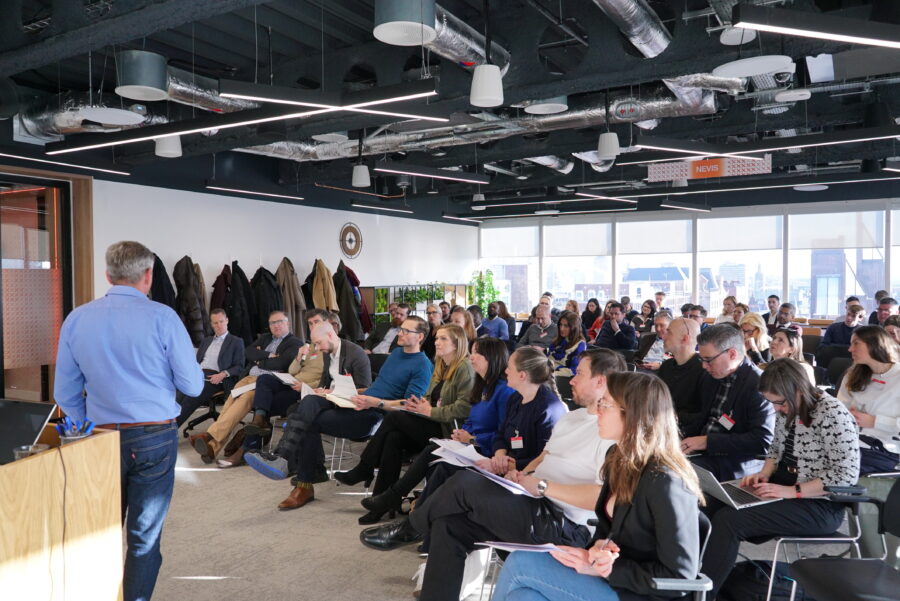
“I think it went well. With 19 other companies pitching to a panel of around 10 large corporates, including organisations like M&G, NatWest, and Sopra Steria, it’s a great opportunity to explore potential partnerships.”
As a fintech founder, what is your big ambition?
“There’s around £18 billion spent on financial services technology every year, and it’s only going to grow, yet there’s still a huge advice gap, where many people can’t access or afford support. So much time is lost joining the dots, from opening accounts to moving money. Our ambition is to automate that entire process, so advisers have everything at their fingertips and clients can go from advice to action – opening accounts and transferring funds – in seconds.”
Thanks Crawford, and final question, what has being involved in the Innovation Call meant for you?
“It’s been energising. The Innovation Call was exceptionally well designed; it respected how stretched early-stage teams are, while still pushing to sharpen our thinking and ambition. The combination of regulator insight, industry partners, expertise from Growth Builders and practical support created real momentum for us. Huge thanks to Fintech Scotland and everyone involved.”
And now let’s hear from another fintech founder, please meet… Dia Banerji, founder of Cherpa.ai, an AI money coach that delivers hyper-personalised financial education.
Dia, you’ve just done your pitch – how did it go?
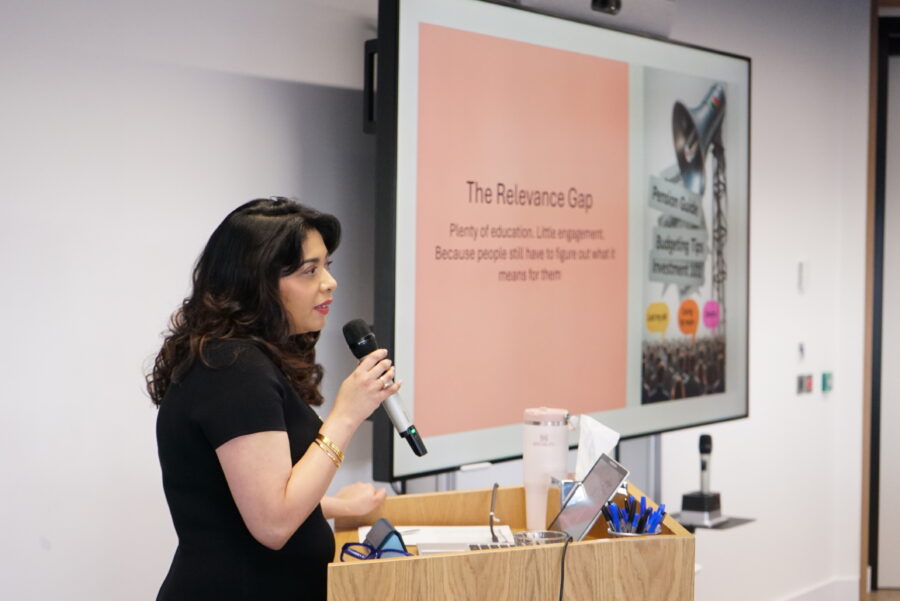
“I was first up, which always adds a bit of pressure, but it felt good. The presentation went well. Most importantly, I was able to clearly tell the story of why Cherpa.ai exists.“
And on that note, Dia, why does Cherpa.ai exist?
“It is very close to my heart. So many people feel a real sense of shame when they don’t understand money, and that keeps them from asking questions. I recently ran a survey about money confidence, one person told us their biggest wish was simply to feel less ashamed about talking about money – and that really stayed with me. Cherpa is here to change that and help people connect with their money and navigate life with confidence. Because every life moment is a money moment.”
Why does this call matter to you?
“This call matters a lot to Cherpa & me personally. More than 90% of people in the UK can’t access financial advice, and there’s a big step before advice that’s really about awareness and education. People often see ‘investment’ as something for someone else, and financial education is still very low, which leaves people disconnected from their money. That’s why this call feels important, not just for the UK but for the world.”
And are there any particular aspects that have struck you over the last few weeks?
“I’ve been really happy to be part of this cohort. The run-up has been amazing, with sponsors coming in, sharing their problem statements, and giving us time to learn from them and from the other fintechs. It’s been great to feel part of a real community and to play a small part in helping Scotland thrive.”
What are your hopes for the result?
“I’m really excited to be part of this cohort and would love to work more closely with some of the sponsors. Beyond that, it’s about being part of a wider fintech community, learning from others, and helping Scotland, and ultimately people everywhere, build more confidence and connection with their money.”
So what next for the fintechs who took part?
With the winners now announced, the successful teams will receive grants of up to £50,000 to develop, scale and implement their ideas over the coming months.
But the journey doesn’t end there. Beyond the winners, many of these ideas are likely to spark further interest, partnerships and pilots in the months ahead.
If you’d like to find out more about the work of FRIL, please contact us at FRIL@fintechscotland.com.