
Creating Fairer Financial Futures
Advice Guidance Boundary Review Innovation Call
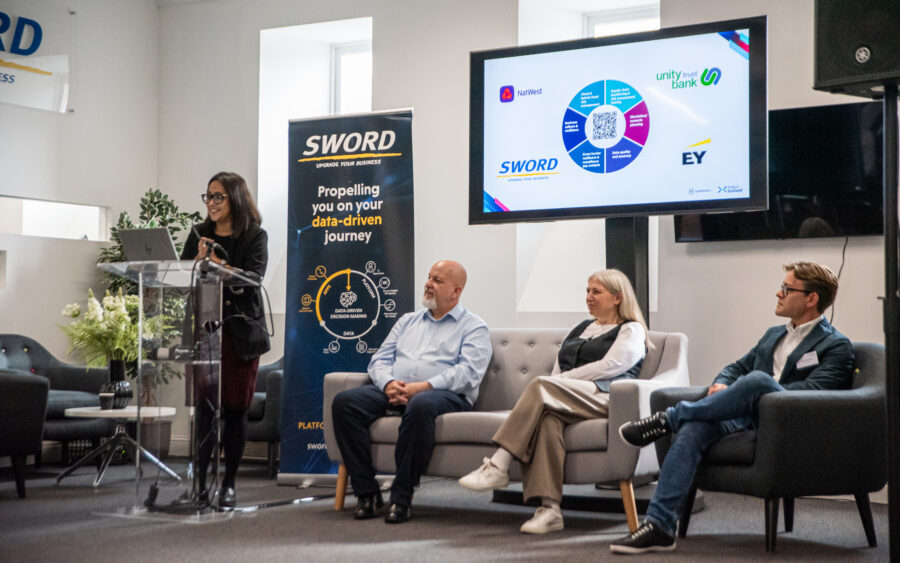
The Financial Regulation Innovation Lab (FRIL) launched its latest Innovation Call last week, which addresses one of the most important regulatory shifts in financial services and could reshape how millions of people access financial support.
The call is all about finding new ways to help consumers make informed financial decisions, delivering more accessible and tailored support while staying within evolving regulatory expectations.
The call focusses on the FCA’s Advice Guidance Boundary Review – a technical name for a very human issue: how to make financial help clearer, fairer and available to far more people.
To understand what all this means – and how it connects to creating a fairer financial future – we spoke with Kostas Oikonomakos, Programme Manager at the Financial Regulation Innovation Lab (FRIL), ahead of last week’s launch of the Innovation Call.
In Conversation with Kostas Oikonomakos

Hi Kostas!
Q: OK, let’s start with what is the Advice Guidance Boundary Review, and why does it matter?
Kostas: The AGBR is a really important development for the financial services industry. Right now, millions of people in the UK don’t receive any financial advice at all. Advice exists, of course, but it’s often too expensive for most people. The Review aims to make sure those people can finally get some form of support to help them make important decisions about their money.
Just 9% of UK adults took financial advice in the year leading up to 2022. While 64% hadn’t in five years. This highlights an ‘advice gap’ affecting an estimated 12 million people identified as non-advised but with need or potential.
*Stats from FCA’s 2022 Financial Lives Survey and the Financial Services Scheme.
It’s also good for firms. It gives them new ways to deliver support that is practical and can scale. And it brings clarity. Today, there are grey areas where a firm thinks they’re offering guidance, but the FCA might say it’s actually advice. AGBR will help define what is advice, what is guidance, and how new services like ‘targeted support’ and ‘simplified advice’ fit in. That clarity will help the whole financial system work better for everyone.
Q: Why does this matter to our everyday lives?
Kostas: The gap is real. The wealthy can afford advice, but millions of people don’t receive any support at all, so they have to navigate pensions, savings, and long-term planning by themselves. New types of guided support can help close that gap and improve confidence and outcomes for people who’ve never had access to anything before.
Q: At what points in our lives would we feel the difference created by AGBR, and how would it change the way we access advice or guidance?
Kostas: You’d notice it would make financial decisions easier. For example, when you’re getting close to retirement and need to understand your pension options, but you can’t afford full advice. With developments from AGBR, you could use a digital service that gives you targeted support based on the information you share, helping you make decisions with much more confidence. The same applies if you have a few small pension pots from different employers and don’t know how they fit together. Guided tools can help you navigate that without needing a one-to-one adviser.
You’d also see the difference much earlier in life. Let’s say you have a small amount of savings and you’re trying to work out how to make it grow, or you’re deciding whether to pay off debt or put money into a pension. Right now, most people in that situation get no support at all. New ‘advice-lite’ services would give clearer, personalised guidance at a price people can actually access. And in time, as open finance develops, firms could safely build a fuller picture of your financial situation and offer even more accurate guidance without you having to pull everything together yourself.
Q: What is the main challenge that the FCA is trying to address?
Kostas: The main challenge the FCA and HM Treasury are trying to solve through the AGBR is that too few people are getting the financial support they need. There are lots of people who could really benefit from help but don’t get it – that is the advice gap. Part of the problem is that firms aren’t always sure where the line sits between regulated advice and general guidance. The Review should clear up that uncertainty and create space for new, more affordable ways to help people, like Targeted Support and Simplified Advice, so that many more consumers can get the right help at the right time.
Q: What is the difference between advice and guidance?
Kostas: Advice is the traditional, regulated service where an adviser understands your full financial picture and gives you a personalised recommendation. It’s tailored to you and your long-term goals, and the firm takes responsibility for that recommendation. Guidance is different. It doesn’t look at your whole situation and it doesn’t tell you exactly what to do. Instead, it helps point you in the right direction based on the information you choose to share. It supports your decision, but it’s not a personalised recommendation.
Q: Why is FRIL taking on this topic right now, and what does it hope to achieve?
Kostas: The timing is ideal because the AGBR framework is still being developed. Final rules are expected by the end of 2025, with firms able to apply for the new targeted-support regime from Spring 2026. That means there’s still an opportunity to feed in insights before anything becomes enforceable.
This creates a safe space for firms to share challenges and explore potential solutions without regulatory pressure. Through this work, we can generate early evidence and practical ideas to help shape how the new regime operates in practice.
The kinds of ideas we expect to explore include digital tools for targeted support, simpler ‘advice-lite’ journeys, interactive disclosures, and even early work on open finance so firms can safely access a fuller picture of a customer’s finances. The goal is to produce practical, testable solutions that show how AGBR could work in the real world, to prepare for tomorrow and to improve outcomes for people who currently receive no support at all.
Q: Why is FRIL a good environment to help shape developments?
Kostas: More broadly, what FRIL wants to achieve is genuine collaboration around real problems. Large firms get early sight of new technologies and ideas that could help them support customers at scale. Fintechs get a clear understanding of what those firms actually need, and they can adjust or sharpen their solutions accordingly. The FCA is part of those conversations too, which is helpful for any fintech that might want to become regulated in future. And our academic partners bring research and analytical thinking that helps everyone look at these issues from different angles.
Q: OK quick summary – how does this help create a fairer financial future?
Kostas: By widening access. More people get the right kind of help, firms can serve broader audiences, and the rules are clearer. That combination improves confidence, access to financial advice and guidance, and ultimately, better outcomes for everyone.
Explaining the terminology
The Advice Guidance Boundary Review. Just what does it mean? A brief glossary:
- Advice: A regulated service where a financial adviser looks at your full financial situation and gives you a personalised recommendation.
- Guidance: Support that points you in the right direction based on limited information you share, without telling you exactly what to do.
- Boundary: The line that separates advice from guidance, defining how much information is needed and what a firm can or can’t recommend.
- Review: The FCA’s process of consulting industry and consumers, and government to create clear new rules that will shape how these services work in future.
What next?
Over the coming weeks, FRIL will be exploring new technologies, fresh thinking and real-world challenges with partners across the ecosystem. Watch this space for insights and thought leadership content from across the call – there’s much more to come.
Email the team at FRIL@fintechscotland.com if you’d like more information about our Innovation Calls.
About FRIL
Building Trust in the Age of AI: How AFREEGUARD AI Is Redefining Ethical Intelligence
In today’s rapidly evolving fintech landscape, one question looms larger than ever: Can we truly trust artificial intelligence?
From generative AI models that shape financial decisions to autonomous systems that handle sensitive data, trust has become the most valuable and most fragile currency in technology. It’s in this climate that WOW Global Solutions Ltd, through its innovation hub AFREE Labs, is developing AFREEGUARD AI, a revolutionary trust layer for the global AI economy.
From Glasgow to the Global Stage
Founded in Glasgow in 2014, WOW Global Solutions began as a sales and marketing company helping small businesses scale their presence across the UK. But when the pandemic hit, founder Armand Byamha saw a deeper need: small businesses and entrepreneurs were struggling not only with visibility but also with digital adaptation itself.
That challenge sparked a transformation. WOW Global Solutions evolved into a digital innovation firm, helping companies navigate the new era of decentralisation, blockchain and artificial intelligence. This evolution gave birth to AFREE Labs, the company’s research and innovation division dedicated to building intelligent tools for the emerging decentralised economy.
The Problem: AI’s Trust Deficit
While AI continues to transform industries, its explosive growth has raised serious concerns around bias, misinformation and accountability. From inexplicable algorithms to deepfakes and manipulated data, users increasingly question what, or who, to trust.
As financial systems integrate AI more deeply, trust becomes not just a moral issue but also a systemic one. Regulators demand transparency. Institutions demand proof. And individuals demand control.
The Solution: AFREEGUARD AI
AFREEGUARD AI was built to answer that demand. It functions as a blockchain-powered AI trust layer, ensuring that every data point, algorithmic decision and AI output can be verified, traced and trusted.
By combining AI governance frameworks with Algorand’s blockchain infrastructure, AFREEGUARD AI provides verifiable proof of how AI systems behave, thereby turning “black box” intelligence into transparent, auditable technology.
In simple terms, it acts as the digital conscience of AI. It protects users from malicious or biased systems, ensures accountability and brings mathematical transparency to the way AI decisions are made.
Why Scotland, Why Now
Scotland has quietly become one of the most dynamic fintech ecosystems in Europe, a place where innovation meets integrity. FinTech Scotland’s focus on responsible innovation and inclusion aligns perfectly with AFREE Labs’ mission: to make advanced technologies human-centred and trustworthy.
By building from Glasgow, AFREE Labs bridges global collaboration with local excellence, combining Scotland’s world-class academic and financial institutions with a broader vision for global digital inclusion.
Beyond Borders: The AFREE Vision
AFREE Labs is part of a larger innovation ecosystem led by WOW Global Solutions, which includes:
- AFREECHAIN: blockchain education and empowerment;
- AFREE.AI: AI and Web3 education for underserved communities;
- AFREEGRI: AI and agri-tech innovation for sustainable farming.
Together, these initiatives form a unified mission: to bridge the gap between Web2 and Web3, ensuring that both businesses and individuals can thrive in the digital economy, with trust as the foundation.
A Vision of Ethical Intelligence
As Armand Byamha puts it:
“The future of AI isn’t just about intelligence: it’s about integrity. AFREEGUARD AI was born to ensure both. Scotland is where that vision begins.”
From the heart of Glasgow, AFREE Labs is proving that the next generation of fintech innovation will not just be powered by code; it will be built on trust.
Exploring the Digital Pound: The Bank of England’s Latest Update
The Bank of England and HM Treasury have shared their latest update on the progress towards a potential digital pound, a central bank digital currency (CBDC) that could serve as a base for the next generation of retail payments in the UK.
The two bodies are moving through the design phase, their focus remaining on developing a detailed blueprint for how a digital pound could work in practice. This includes rigorous experimentation through the Digital Pound Lab and continuous collaboration with industry stakeholders. Together, this work will inform a joint assessment by the Bank and HM Treasury, with a decision on next steps expected in 2026.
The update also introduces two new design notes that explore the technical and practical dimensions of a digital pound:
- Alias Service: Examines how using account aliases (such as email addresses or phone numbers) could simplify retail payments, enhancing usability and security. The paper also explores the Bank’s potential role in enabling such a service across the payments ecosystem.
- Offline Payments: Explores how the digital pound could support deferred offline transactions, including applications in transport, vending, and other unattended terminals. The paper also considers how device-to-device payments could operate securely without a live internet connection.
The exploration of a UK digital currency represents a great opportunity for innovation across the financial services sector. New payment architectures, trust frameworks and identity services will offer fintech innovators in Scotland and across the UK an opportunity to play a role in shaping and testing these emerging models.
We’re looking forward to collaborating on this initiative through the Digital TRUST Centre of Excellence that FinTech Scotland recently set up in collaboration with Edinburgh Napier University, the University of Edinburgh, the University of Glasgow and Scottish Enterprise.
Tackling the eSignature challenge in financial services
For established financial firms and fintechs, getting documents signed is a routine part of doing business. However, in regulated sectors, this far from a simple click and can be time demanding. The challenge is ensuring that each signature is genuine, the signer’s identity is verified, and the process stands up to legal and compliance scrutiny.
The problem: when speed meets risk
Digital transformation has made signing a document as easy as pressing a button, but not all eSignatures are created equal.
- Click-to-sign methods offer convenience but can leave gaps in proving who actually signed.
- In high-value transactions such as lending agreements or investment contracts, these gaps create legal and regulatory risk.
- For scaling fintechs, enterprise-grade solutions that meet evidentiary standards can be expensive, with licensing fees adding hidden operational costs.
This leaves many firms in a bind: how to balance speed, client experience, and compliance without breaking the budget.
The solution: a verified approach
Syngrafii emerged from a unique collaboration between CEO Matthew Gibson and Canadian author Margaret Atwood, initially to create remote wet-ink signatures for book signings. That invention evolved into a secure document execution platform designed for high-trust environments.
The system combines:
- Biometric ink signature capture – recording pressure, speed, and stroke data.
- Live video signing sessions – visually confirming the signer’s identity in real time.
- Tamper-proof audit trails – preserving every step of the transaction in a MasterFile™ for evidentiary use.
The result is a signing process that mirrors the assurance of in-person signing, but with the reach and efficiency of digital.
For growing fintechs, Syngrafii’s Pay-As-You-Sign™ model removes the barrier of large annual license fees. Firms pay only for the transactions they complete, making enterprise-grade compliance achievable without committing to long-term, high-cost contracts.
Use cases range from:
- Client onboarding with ID verification.
- Loan and mortgage approvals requiring verified signatures.
- Wealth management agreements where client trust is paramount.
View Syngrafii’s profile on FinTech Scotland’s website.