
Creating fairer financial futures: A spotlight on FRIL research
Technology-enabled advice, Regulation and the Advice Gap: 10 minute Insight from FRIL Research. 10 Questions with Chuks Otioma, Research Associate, Adam Smith Business School
As financial services explore new ways to close the advice gap, technology enabled advice and guidance models are increasingly part of the conversation – but what do they really mean for consumers, firms and regulation?
As part of the Financial Regulation Innovation Lab (FRIL), researchers from the University of Glasgow and University of Strathclyde are working alongside industry, fintechs and regulators to examine how innovation can be deployed responsibly in financial services.
In this conversation, Chuks Otioma, Research Associate, reflects on his research into these digitally- enabled advice models: what they are, why they matter, and how they sit within the Advice Guidance Boundary Review.
1. Chuks, let’s start with you first of all – what drew you to this field of research?
Before moving into academia, I worked in industry, in telecommunications. During my PhD, I looked at the links between digital capabilities, innovation and economic performance, and the role of entrepreneurs and innovators in leveraging digital advances; work that now informs my research into AI in financial services. I was particularly interested in how firms reorganise themselves, their processes, structures and activities in order to draw value from digital technologies.
At that stage, my work wasn’t focused on financial services specifically. It was broader, looking at firms across sectors and how they approach digital transformation. What I’m doing now is a natural progression of that work, but with a much sharper focus on financial services and the challenges firms face in deploying technologies like AI.
2. OK, let’s explore your research Chuks. First of all can you explain to us what “technology-enabled advice and guidance models” actually are?
At a basic level, the term refers to digitally enabled advice. It can be relatively simple, or more advanced, using AI to construct and refine portfolios.
What’s important is the way technology can help streamline advice around individual needs. But this also raises important considerations. You have to think carefully about the data being used, the potential for data breaches, and whether consumers genuinely understand the advice they’re receiving.
There are also different operating models. Some are largely consumer-led, with minimal human interaction. Others are more professional-led, where investment or wealth managers use automated tools to manage portfolios on behalf of clients. Each model raises different questions around responsibility and duty of care.
3. The Advice Guidance Boundary Review aims to ensure that financial help is clearer, fairer and available to far more people. How do these technology-enabled models play a part here?
Some forms of digital advice function as guidance, pointing consumers towards information or helping them explore options. Others go further, making recommendations or even decisions on a client’s behalf, which brings them firmly into the realm of regulated advice.
That distinction matters, particularly as systems become more advanced. The more decision-making is delegated to automated systems, the more important strong compliance, governance and accountability become.
4. Can these models really help address the financial advice gap?
There is evidence that automated advice has already improved access and inclusion, particularly among younger people and those who might not otherwise engage with traditional investment services.
Because these systems can draw on rich data and integrate information from multiple sources, they have real potential to support people who currently lack access to advice.
What’s especially interesting is the way some platforms are beginning to connect users to independent financial advisers, recognising that investment decisions don’t exist in isolation. Financial wellbeing also involves literacy, planning and understanding long-term goals.
“These systems have real potential to support people who currently lack access to financial advice.”
5. What risks need to be managed as technology-enabled advice and guidance becomes more common?
In our research, we look at several dimensions. There’s the operating model, and how responsibility is shared between consumers, professionals and platforms. There’s financial risk, including market volatility, trend-chasing and over-concentration.
We also examine data practices, including how platforms are designed, who has access to data, and how data is shared across third parties and jurisdictions. In many cases, the developer of the system is not the same as the organisation managing it, which raises important governance questions.
“When advice becomes more automated, firms need to be clear about who is responsible when things go wrong.”
6. What has surprised you most in your research?
One of the most striking findings is the level of consumer misunderstanding. Products are often designed on the assumption that firms understand their users, but in practice there can be significant misalignment between innovation and user understanding.
This isn’t necessarily about consumers lacking capability. It’s often about how products are designed, communicated and framed. That’s a critical lesson for firms designing these products.
7. What big questions does this raise for firms and for the industry?
One of the big questions is around responsibility and accountability, particularly as more decision-making is delegated to automated systems. When advice becomes more automated, firms need to be clear about who is responsible when things go wrong.
Beyond that, these developments also raise important questions about how firms organise themselves. Automated advice reshapes how services are delivered, which has implications for workforce skills and training. Technical teams increasingly need some understanding of finance, while those working in finance or customer support need a basic understanding of how AI-based systems work.
There are also strategic questions around how these systems are developed and deployed. Firms need to decide whether to build solutions in-house or rely on third-party providers, and how external systems integrate with existing or legacy technologies. These choices affect how services are scaled and managed over time.
Taken together, these are organisational challenges as much as they are technological ones, and they shape how firms deliver automated advice in practice.
8. With all this in mind, what future are you trying to help shape through this research?
For me, the most important thing is societal relevance. I’m interested in research that informs policy-making and speaks directly to real-world challenges.
FRIL is quite unique in that sense. The challenges we work on are industry-led. You have problem owners defining the issues they face, fintechs developing solutions, and researchers contributing evidence and insight that can help shape both practice and regulation. It’s impact-oriented research, and that’s very fulfilling.
Ultimately, the future I want to contribute to is one where research doesn’t sit in isolation, but actively helps address the problems faced by industry, policymakers and society more broadly.
9. Can you share some examples of wider real-world challenges you’ve been working on?
One example is our work looking at consumer complaints within financial services. By analysing the types of complaints that are escalated to the Financial Ombudsman Service, and how providers respond to them, we can better understand where things go wrong.
If we understand these friction points, there’s an opportunity to co-develop financial products differently, reducing the likelihood of harm or escalation in the first place.
In our work on automated advice, we’ve also explored how providers can embed responsible practices into their models. That includes linking clients to green or sustainable investment opportunities, and aligning portfolios not just with financial returns, but with broader social and environmental goals.
“Automated advice reshapes how services are delivered, with implications for workforce skills, training and how firms organise themselves.”
10. Finally, what feels special about doing this research here, in Scotland, and within the FRIL ecosystem?
What stands out for me is the research culture and the ecosystem we’re working within. The University of Glasgow, and the Adam Smith Business School, have a strong international research culture, and we work very closely with colleagues at the University of Strathclyde and with industry partners.
Beyond the universities, there’s something distinctive about how this work comes together in practice. Through FRIL, you have financial services providers, fintech developers, regulators and researchers working together on a daily basis. It’s what we often describe in theory as an “ecosystem”, but here it’s very real.
That makes it a unique environment for doing this kind of research, not in isolation, but embedded in the real challenges facing industry and society.
Explaining the terminology
- Technology-enabled advice: A digital tool that uses information about a person to help guide or automate investment decisions based on their individual needs.
- The Advice Guidance Boundary Review. Just what does it all mean?
- Advice: A regulated service where a financial adviser looks at your full financial situation and gives you a personalised recommendation.
- Guidance: Support that points you in the right direction based on limited information you share, without telling you exactly what to do.
- Boundary: The line that separates advice from guidance, defining how much information is needed and what a firm can or can’t recommend.
- Review: The FCA’s process of consulting industry and consumers, and government to create clear new rules that will shape how these services work in future.
What next?
Interested in the research generated by FRIL? Then check out our White Papers across a range of subjects.
For more detail on this topic, see Chuk’s white paper.
If you’re interested in the work of FRIL more generally and would like to contact a member of the team email FRIL@fintechscotland.com.
About FRIL
Creating Fairer Financial Futures – AGBR Innovation Showcase Day
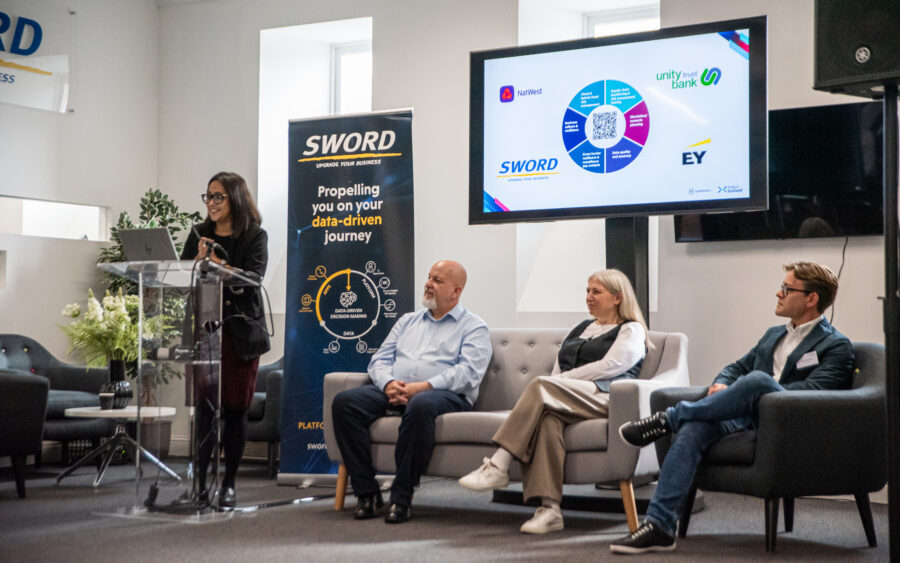
On 15 January 2026 in Glasgow, more than 100 people gathered for a high-stakes showcase.
The purpose of the gathering?
To address one of the most important regulatory shifts in financial services today. A shift which could reshape how millions of people access financial support and create fairer financial futures for all.
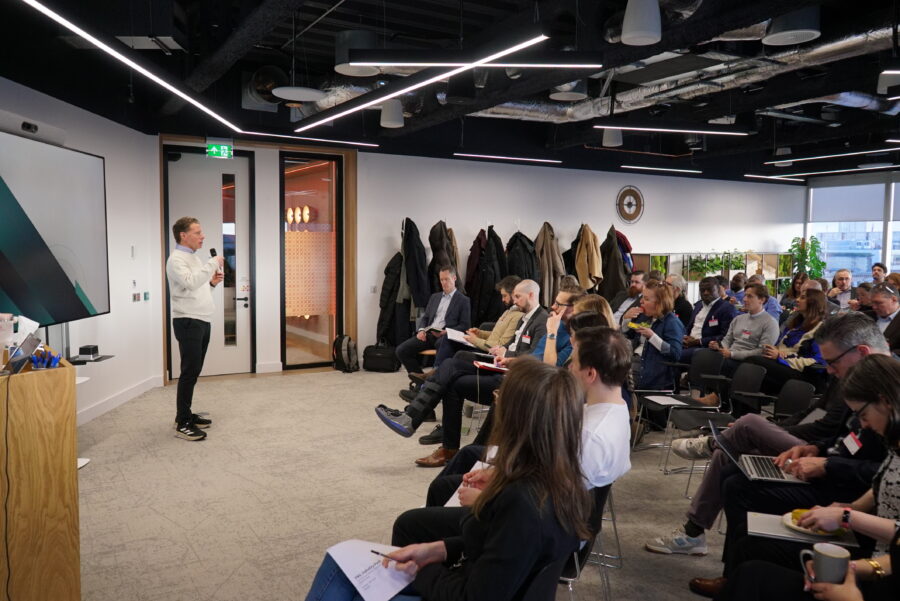
The event was the final showcase day of an Innovation Call – a pioneering initiative led by the Financial Regulation Innovation Lab (FRIL) at the heart of FinTech Scotland.
But, what is an Innovation Call, what happens on showcase day and what is achieved?
Well, join us as we take you behind the scenes of the day and speak to some of the people involved.
Let’s start with Clare Reid, Strategic Innovation Director at FRIL.
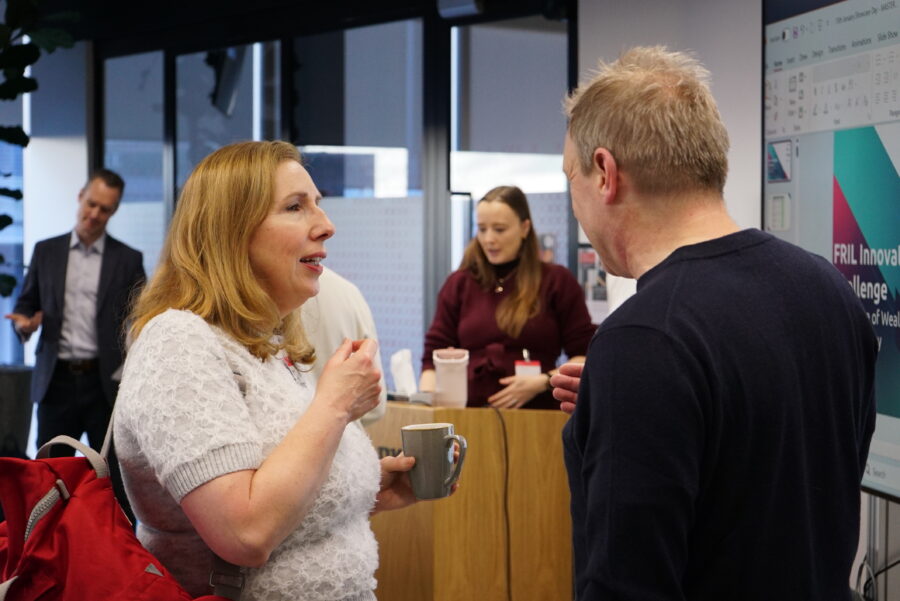
Clare, explain to us what to expect on a Showcase Day of an Innovation Call?
“Nerves certainly run high on showcase day of an Innovation Call! It’s the culmination of months of work for Fintech entrepreneurs as they pitch their solutions to an audience of potential Financial Services partners. And the stakes are high – there is an award of £50,000 to successful fintechs and the opportunity to take forward some potential game changing solutions and partnerships with those partners.“
What was the challenge or opportunity today’s call addressed?
“This call focused on the FCA’s Advice Guidance Boundary Review – which is addressing a very human issue about how to make financial help clearer, fairer and available to far more people.”
“The call is all about finding new ways to help consumers make informed financial decisions, delivering more accessible and tailored support while staying within evolving regulatory expectations.”
Who was involved?
“The call brings together fintech entrepreneurs, financials services and academia, who are all tackling some of the biggest challenges in financial services today.”
Let’s hear from one of the Fintech founders pitching today to hear their side of the story. Dia Banerji, founder of Cherpa.ai:
Dia, you’ve just done your pitch – how did it go?
“I was first up, which always adds a bit of pressure, but it felt good. The presentation went well. Most importantly, I was able to clearly tell the story of why Cherpa.ai exists.”
What was your pitch addressing?
“Cherpa.ai is an AI money coach that delivers hyper-personalised financial education. The pitch focused on the huge gap before financial advice – helping people build awareness, understanding, and confidence about their money, so they’re better prepared to make decisions.”
What are your hopes for the result?
“I’m really excited to be part of this cohort and would love to work more closely with some of the sponsors. Beyond that, it’s about being part of a wider fintech community, learning from others, and helping Scotland, and ultimately people everywhere, build more confidence and connection with their money”
And on that note, let’s hear from Kate Murray who works for Scottish Widows as part of Lloyds Banking Group.

What has struck you about the pitches that you’ve heard today?
“What’s really struck me is the breadth of innovation on show – from fintechs tackling very niche, complex problems to those covering the entire end-to-end customer journey. It’s impressive what they’ve delivered in such a short time, and the quality of the user interfaces has really stood out to me. They’re slick, well thought-through, and genuinely exciting to imagine working with as we design our future journeys.”
What does AGBR mean for your firm, and why does this call matter?
“For us, AGBR is about helping more people secure their financial futures, in a way that aligns with our wider purpose of helping Britain prosper. There’s a real advice gap in the industry, and a big void in the middle where people don’t know what to do next — how to save, how to prepare for retirement, or how to make better decisions. We see innovation and new solutions as a way to bridge that gap, giving people the clarity and confidence to take the next step towards a more prosperous financial future.”
“The Innovation Call matters because we’re always reviewing how we change, innovate, and go faster. And sometimes, being part of a big organisation slows us down. Bringing in outside thinking, new technology, and completely different perspectives helps us bridge that and move quicker.”
And let’s finish with Christine Sinclair, Programme Director for FRIL at the University of Strathclyde.

Christine, that was quite a day…anything else that might surprise us about an Innovation Call?
“It doesn’t stop here. There are many layers to an Innovation Call. While the successful fintechs will go on to partner with a financial services firm and grow their businesses, the research by the academics involved in the call is captured in White Papers to support industry learning.“
“The insights also shape current and developing skills programmes hosted by the University of Strathclyde and the University of Glasgow. These are aimed at helping people develop the skills they need to adopt new technologies responsibly, whether that’s AI, data, digital transformation or ESG reporting.”
Sounds interesting? You can hear more about those courses in this interview with Christine.
So what next for the fintechs who took part?
Now, the wait begins! Next week the judges will decide which teams will be awarded grants of up to £50,000 to develop, scale and implement their ideas.
But the journey doesn’t end there. Beyond the winners, many of these ideas are likely to spark further interest, partnerships and pilots in the months ahead.
We’ll keep you posted.
In the meantime, if you’d like to find out more about the work of the Financial Regulation Innovation Lab, please contact us at FRIL@fintechscotland.com.
About FRIL
Why Upskilling can’t wait: Building Smarter Skills for a Smarter Financial Future
Q&A With Christine Sinclair
Programme Director, Financial Regulation Innovation Lab (FRIL), University of Strathclyde
Financial services is undergoing one of the most significant periods of change in decades. Technology is advancing at pace, new regulations are emerging, and organisations of every size are wrestling with the skills needed to keep up. The Financial Regulation Innovation Lab (FRIL) was created as a catalyst to help the sector respond, to support better outcomes for consumers, strengthen the industry, and enable fintech entrepreneurs to innovate with confidence.
Central to this mission is a progressive skills development programme delivered in partnership with the University of Strathclyde and the University of Glasgow. Together, they’re building a portfolio of Microcredentials (which gain academic credits), short courses and executive education that help people across financial services understand, adopt and apply new technologies responsibly and effectively.

Christine Sinclair, Programme Director, FRIL, University of Strathclyde
Here, Christine Sinclair, Programme Director for FRIL, explains why this work matters, and why now is the time to invest in the future skills of the sector.
Q 1 – Hello Christine, let’s start with the big questions first… what challenge are you addressing here, and why does this matter?
A 1- When you look across financial services, the message is the same everywhere: the pace of technological change is relentless, and people and industry need to keep up. The biggest example right now is generative AI. There’s a real desire to understand it, but also a lot of uncertainty.
When you look at the evidence around AI adoption, the barriers are strikingly consistent. Many organisations hold back because they don’t have the skills or confidence to implement it safely. They don’t fully understand the risks, or they’re concerned about data management and governance. A lot of this is driven by the hype cycle, which can be overwhelming.
So the challenge we’re addressing is simple but vital: helping people develop the skills they need to adopt new technologies responsibly, whether that’s AI, data, digital transformation or ESG reporting. And what we’re doing is demand-led, we’re not creating courses and hoping people want them. We’re listening closely to what financial services and fintechs tell us they need.
Interestingly, the needs differ. Fintechs tend to be highly technical but often need more support with leadership, negotiation and change management. Larger financial institutions have deep organisational knowledge, but they often need help with the technical understanding. So it’s about supporting both sides, and helping both work together…
…and it’s all really important because with the speed of change, the biggest risk is to do nothing.
Q 2 – Who are the courses for?

A 2 – They’re for anyone in financial services, from credit unions to fintechs and large institutions to board-level executives.
A lot of participants join because they want to refresh their own skills. Others are sent by employers who know they need to build capability quickly. And we’re seeing more early-career professionals who want to understand the fundamentals of digital transformation or AI as they move into new roles.
What’s important is that the courses meet people where they are. You don’t need a technical background. You just need curiosity and a willingness to learn.
As a result of the success of the programmes developed for financial services, we’ve also welcomed people from energy and health sectors where the challenges are very similar.
Q 3 – What’s unique about this particular skills offering?
A 3 – The comprehensiveness. There are plenty of short “how to prompt engineer” or “what is GenAI” sessions out there, but they tend to cover only one slice of the picture. FRIL’s courses build from fundamentals all the way through to practical application in financial services.
For example, our AI microcredentials are designed to allow learners to understand and engage with AI in a structured and progressive manner. Focussing on core concepts and techniques, such as machine learning and large language models, but also, cover risk, governance and data science, and communication skills, whilst including real industry use cases which demonstrate practical application. For executives, we even include topics such as decision-making through AI driving business insights in the boardroom, AI Governance and compliance, as well as AI in Enterprise Risk Management and developing strategies to implement and scale GenAI.
Everything is designed to be flexible and accessible. You can learn in your own time, supported by lecturers who track your engagement and are available when you need help. It’s comprehensive without being overwhelming.
Q 4 – What kind of courses are currently being offered?
A 5 – We’ve developed microcredentials in Digital Transformation, ESG for Executives, and a full AI literacy suite, from beginner to advanced, plus an executive-level course. And there are programmes in AI & RegTech, and ESG Leadership.
We originally planned to deliver two microcredentials. We’ve delivered ten due to demand. Seven at Strathclyde, two at Glasgow, and one short course through the UK Government’s Help to Grow programme at Strathclyde. Our microcredentials are accredited and can stack towards a postgraduate qualification, so learners build credits over time.
For those who don’t wish to earn credits, we are now looking at awarding digital badges so learners can showcase their acquired skills on LinkedIn or their CV.
Q 5 – What format do the courses take?
A 5 – In general, course delivery is blended. Each week, participants complete short online lectures, which are no more than 15 minutes each. This, along with reading and other practical activities helps them apply what they’ve learned and typically brings the total up to around two to three hours per week.
We run online inductions, drop-in webinars and a final in-person consolidation session on campus. That’s where the learning community really comes together. Everyone arrives with the same foundation and can share what’s worked in their own organisations.
Our blended delivery provides a safe space to learn at your own pace and without judgement.
Q 6 – Can you share a story of someone who’s been on a course, and the impact it’s had?
A 6 – One participant told us he’d never been to college or university. He came straight into work and never had the opportunity to study formally. He was the first person in his family to ever take a university course, and it was our Digital Transformation programme.
Something clicked for him. After completing the course, he asked what else he could do. He’s now enrolled on a graduate apprenticeship degree. Another participant has gone on to apply for an MBA. So these short courses aren’t just about skills, they can genuinely spark lifelong learning.
Short courses are powerful…they can change the course of someone’s career.
Q 7 – How does FRIL create the ‘engine’ that drives these skills programmes?
A 7 – Our skills work is tightly linked to the Research and Innovation strands of FRIL. The research teams produce white papers, and we analyse common themes. We attend FRIL’s Innovation Calls, listening to pitches from fintechs proposing solutions to challenges highlighted by industry partners. That’s where you hear the real issues, things like: AI, data, legacy systems, regulatory change.
We also have a skills subgroup with finance industry representatives who act as a sounding board and help us to shape course priorities. Everything is demand-led, grounded in industry conversations, networking and skills gap analysis. We’re supporting a sector that contributes hugely to Scotland’s economy, and we want to get this right.
We’re not just creating courses, we’re listening to what the sector is telling us it needs.
Q 8 – How can what we’re doing here influence learnings across other sectors?
A 8 – While the focus here is financial services, the content isn’t always sector-specific, which means we can swap out case studies to fit different industries. We’re already seeing learners from energy and health joining our courses. Because the pace of change is constant everywhere, the need for digital and AI literacy applies just as much outside financial services.
And the short video-based model means we can keep content fresh. If something changes in AI, which it does daily, we can re-record a section quickly.
Q 9 – While this might be our final question today, this really is just the beginning. What might we expect to come?
A 9 Visibility is a big focus. We’re launching the FRIL Skills Academy, which brings everything together including upskilling, reskilling, executive education, and early-career engagement. It will guide people through learning pathways based on their needs, offer microcredentials, and connect with the student FinTech societies across Strathclyde and Glasgow. There will also be the opportunity to engage with either University to gain support for projects, knowledge transfer partnerships and PhD@Work.
Longer term, we want to work more closely with colleges to support talent pipelines, widen access and create opportunities for people who wouldn’t normally enter higher education. We’re also exploring mentoring programmes, internships guest lectures and masterclasses.
This is about us all embracing the future together. When you engage with the universities through FRIL you’re part of a learning community for the long term.
What next?
If you’d like to find out more about FRIL’s skills programmes, please visit:
- Financial Regulation Innovation Lab (FRIL) – Skills development.
- 10‑credit Online Microcredentials from the University of Glasgow.
The FRIL Skills Academy will be launched at the end of January 2026.
About FRIL
New Year, New Skills: 10‑credit Online Microcredentials from the University of Glasgow
Whether you’re looking to enhance your skills or develop your team, short online courses are a fast, flexible way to upskill and advance your career. The University of Glasgow is offering 10‑credit online microcredentials to help you build in‑demand capabilities quickly, with start dates in January and February 2026. Explore the options below.
Project Management
Start-Date: 26 January 2026
Project management is an essential business tool that is being adopted worldwide. It is also a growing and highly sought-after profession, with the Project Management Institute estimating it to have grown by $6.61 trillion by the end of 2020. In this microcredential course, you will gain a deep understanding of practical project management skills using real-world case studies. You will examine the entire project lifecycle, from feasibility to closure, and explore important topics such as managing people, setting priorities, working to tight deadlines, developing schedules and managing risks.
Intro to Business Analytics
Start-Date: 26 January 2026
The Introduction to Business Analytics: Empowering Decision-Making Through Data course is designed to introduce learners to the concepts, techniques, and methods used to analyse an organisation’s operational performance and enable them to make informed business decisions using business analytics skills. The course will discuss the different sources of data and information necessary for analysis, and how to turn an understanding of business analytics into a competitive advantage. At the end of this course, learners will understand the challenges in sourcing data in today’s internet enabled world, what we can/cannot expect the data/information to tell us, and how we can analyse what we have to the best effect. Learners will also be introduced to the data visualization techniques to maximise the impact of data on decision-making, presentation, stakeholder engagement and stakeholder buy-in.
Business Financial Management
Start-Date: 26 January 2026
This course examines the role of accounting and finance in organisational decision‑making, control and performance management. It offers a broad overview of the function and introduces practical skills for interpreting and using financial information and reports to support these activities.
AI & RegTech in Financial Compliance
Start-Date: February 2026 (TBC)
This course provides a practical approach to understanding and applying Artificial Intelligence (AI) and Regulatory Technology (RegTech) in financial compliance and risk management. It introduces the fundamentals of AI capabilities, the evolution of RegTech, and the regulatory and governance frameworks that shape compliance across banking, fintechs, and the wider financial ecosystem.
ESG (Environmental, Social and Governance) Leadership
Start-Date: February 2026 (TBC)
This course aims to introduce recent graduates and early career professionals in the financial services and financial technology sectors to the areas of ESG policy and compliance, data and analysis requirements, and organisational and strategic opportunities. By focussing on ESG leadership, the course aims to equip learners with the practical knowledge, skills and capabilities to evaluate the strategic positioning of their organisation and to develop an ESG plan for their organisation.
Discount codes
As a valued member of the FinTech Scotland community, and with support from the Financial Regulation Innovation Lab (FRIL), you can use the following discount codes:
- AI & RegTech course: use code ‘FRIL’ at checkout. Standard price £499; FinTech Scotland members pay £349 with this code.
- ESG Leadership microcredential: use code ‘ESGFriends’ at checkout. Standard price £599; FinTech Scotland members pay £399 with this code.
Navigating the Advice Frontier – Supporting informed consumer decision making.
The Future of Wealth Innovation Call launches.
This challenge is about finding new ways to support consumers in making informed financial decisions, delivering more accessible and tailored wealth support, while staying within evolving regulatory expectations.
This Innovation Call sees 21 cutting-edge fintech businesses selected to collaborate directly with leading financial institutions, professional services firms, regulators and academics using data-driven innovation that can bridge the “advice gap” an improve outcomes for millions of customers.
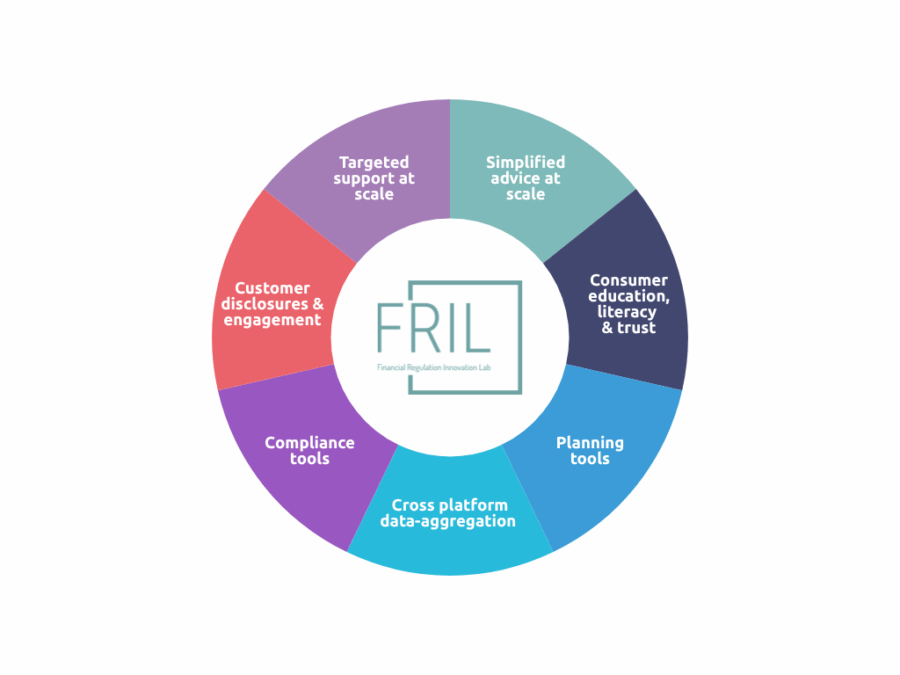
This is our sixth Innovation Call and will address challenges affecting the sector including:
Launch and next steps
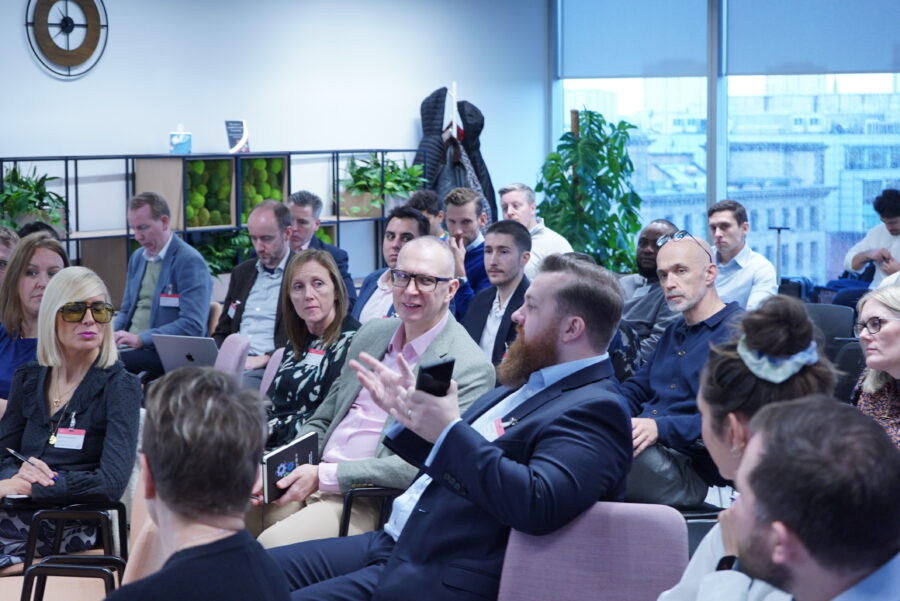
The programme officially launched on 13 November at PwC’s Glasgow offices, where the fintechs met with industry leaders and academic experts to kick-start their collaborative journeys.
Over the coming weeks, participants will take part in workshops and deep dive insight sessions designed to refine their solutions and align them with real-world industry needs. The most promising ideas may also receive grants of up to £50,000 to accelerate development
Who is involved?
The Future of Wealth Call is hosted by the Financial Regulation Innovation Lab (FRIL) in partnership with SuperTech West Midlands
We are proud to be working with 10 strategic partners - PwC, Barclays, Lloyds Banking Group, Sopra Steria Financial Services, NatWest Group, M&G, BNP Paribas, Dudley Building Society, Wesleyan and Standard Life – alongside academic partners at the University of Strathclyde and the University of Glasgow. Their combined expertise ensures that innovation is rooted in both cutting-edge research and real-world regulatory priorities.
We are also delighted to partner with Growth Builders to support in the delivery of this programme.
Our 21 successful Fintechs include:
Afternoon Finance, Alessia, Alethica, Amplifi, Aveni, Aventur Wealth, CherpaAI, Complia, Doconomy, Etcho, Finspector, Glimzer, Guiide, InicioAI, Iress, Open Book Analytics, Planda, Snowdrop Solutions & Stratiphy [joint entry] and The Wisdom Council & DocStribute [joint entry]
Find out more about each of the fintechs in our fintech brochure.
What next?
If you’ve liked what you’ve read, follow us on LinkedIn where we will keep you updated. Or, for more information about getting involved in future innovation calls contact us at FRIL@fintechscotland.com
About FRIL
Creating Fairer Financial Futures
Advice Guidance Boundary Review Innovation Call
The Financial Regulation Innovation Lab (FRIL) launched its latest Innovation Call last week, which addresses one of the most important regulatory shifts in financial services and could reshape how millions of people access financial support.
The call is all about finding new ways to help consumers make informed financial decisions, delivering more accessible and tailored support while staying within evolving regulatory expectations.
The call focusses on the FCA’s Advice Guidance Boundary Review – a technical name for a very human issue: how to make financial help clearer, fairer and available to far more people.
To understand what all this means – and how it connects to creating a fairer financial future – we spoke with Kostas Oikonomakos, Programme Manager at the Financial Regulation Innovation Lab (FRIL), ahead of last week’s launch of the Innovation Call.
In Conversation with Kostas Oikonomakos

Hi Kostas!
Q: OK, let’s start with what is the Advice Guidance Boundary Review, and why does it matter?
Kostas: The AGBR is a really important development for the financial services industry. Right now, millions of people in the UK don’t receive any financial advice at all. Advice exists, of course, but it’s often too expensive for most people. The Review aims to make sure those people can finally get some form of support to help them make important decisions about their money.
Just 9% of UK adults took financial advice in the year leading up to 2022. While 64% hadn’t in five years. This highlights an ‘advice gap’ affecting an estimated 12 million people identified as non-advised but with need or potential.
*Stats from FCA’s 2022 Financial Lives Survey and the Financial Services Scheme.
It’s also good for firms. It gives them new ways to deliver support that is practical and can scale. And it brings clarity. Today, there are grey areas where a firm thinks they’re offering guidance, but the FCA might say it’s actually advice. AGBR will help define what is advice, what is guidance, and how new services like ‘targeted support’ and ‘simplified advice’ fit in. That clarity will help the whole financial system work better for everyone.
Q: Why does this matter to our everyday lives?
Kostas: The gap is real. The wealthy can afford advice, but millions of people don’t receive any support at all, so they have to navigate pensions, savings, and long-term planning by themselves. New types of guided support can help close that gap and improve confidence and outcomes for people who’ve never had access to anything before.
Q: At what points in our lives would we feel the difference created by AGBR, and how would it change the way we access advice or guidance?
Kostas: You’d notice it would make financial decisions easier. For example, when you’re getting close to retirement and need to understand your pension options, but you can’t afford full advice. With developments from AGBR, you could use a digital service that gives you targeted support based on the information you share, helping you make decisions with much more confidence. The same applies if you have a few small pension pots from different employers and don’t know how they fit together. Guided tools can help you navigate that without needing a one-to-one adviser.
You’d also see the difference much earlier in life. Let’s say you have a small amount of savings and you’re trying to work out how to make it grow, or you’re deciding whether to pay off debt or put money into a pension. Right now, most people in that situation get no support at all. New ‘advice-lite’ services would give clearer, personalised guidance at a price people can actually access. And in time, as open finance develops, firms could safely build a fuller picture of your financial situation and offer even more accurate guidance without you having to pull everything together yourself.
Q: What is the main challenge that the FCA is trying to address?
Kostas: The main challenge the FCA and HM Treasury are trying to solve through the AGBR is that too few people are getting the financial support they need. There are lots of people who could really benefit from help but don’t get it – that is the advice gap. Part of the problem is that firms aren’t always sure where the line sits between regulated advice and general guidance. The Review should clear up that uncertainty and create space for new, more affordable ways to help people, like Targeted Support and Simplified Advice, so that many more consumers can get the right help at the right time.
Q: What is the difference between advice and guidance?
Kostas: Advice is the traditional, regulated service where an adviser understands your full financial picture and gives you a personalised recommendation. It’s tailored to you and your long-term goals, and the firm takes responsibility for that recommendation. Guidance is different. It doesn’t look at your whole situation and it doesn’t tell you exactly what to do. Instead, it helps point you in the right direction based on the information you choose to share. It supports your decision, but it’s not a personalised recommendation.
Q: Why is FRIL taking on this topic right now, and what does it hope to achieve?
Kostas: The timing is ideal because the AGBR framework is still being developed. Final rules are expected by the end of 2025, with firms able to apply for the new targeted-support regime from Spring 2026. That means there’s still an opportunity to feed in insights before anything becomes enforceable.
This creates a safe space for firms to share challenges and explore potential solutions without regulatory pressure. Through this work, we can generate early evidence and practical ideas to help shape how the new regime operates in practice.
The kinds of ideas we expect to explore include digital tools for targeted support, simpler ‘advice-lite’ journeys, interactive disclosures, and even early work on open finance so firms can safely access a fuller picture of a customer’s finances. The goal is to produce practical, testable solutions that show how AGBR could work in the real world, to prepare for tomorrow and to improve outcomes for people who currently receive no support at all.
Q: Why is FRIL a good environment to help shape developments?
Kostas: More broadly, what FRIL wants to achieve is genuine collaboration around real problems. Large firms get early sight of new technologies and ideas that could help them support customers at scale. Fintechs get a clear understanding of what those firms actually need, and they can adjust or sharpen their solutions accordingly. The FCA is part of those conversations too, which is helpful for any fintech that might want to become regulated in future. And our academic partners bring research and analytical thinking that helps everyone look at these issues from different angles.
Q: OK quick summary – how does this help create a fairer financial future?
Kostas: By widening access. More people get the right kind of help, firms can serve broader audiences, and the rules are clearer. That combination improves confidence, access to financial advice and guidance, and ultimately, better outcomes for everyone.
Explaining the terminology
The Advice Guidance Boundary Review. Just what does it mean? A brief glossary:
- Advice: A regulated service where a financial adviser looks at your full financial situation and gives you a personalised recommendation.
- Guidance: Support that points you in the right direction based on limited information you share, without telling you exactly what to do.
- Boundary: The line that separates advice from guidance, defining how much information is needed and what a firm can or can’t recommend.
- Review: The FCA’s process of consulting industry and consumers, and government to create clear new rules that will shape how these services work in future.
What next?
Over the coming weeks, FRIL will be exploring new technologies, fresh thinking and real-world challenges with partners across the ecosystem. Watch this space for insights and thought leadership content from across the call – there’s much more to come.
Email the team at FRIL@fintechscotland.com if you’d like more information about our Innovation Calls.
About FRIL
Building Trust in the Age of AI: How AFREEGUARD AI Is Redefining Ethical Intelligence
In today’s rapidly evolving fintech landscape, one question looms larger than ever: Can we truly trust artificial intelligence?
From generative AI models that shape financial decisions to autonomous systems that handle sensitive data, trust has become the most valuable and most fragile currency in technology. It’s in this climate that WOW Global Solutions Ltd, through its innovation hub AFREE Labs, is developing AFREEGUARD AI, a revolutionary trust layer for the global AI economy.
From Glasgow to the Global Stage
Founded in Glasgow in 2014, WOW Global Solutions began as a sales and marketing company helping small businesses scale their presence across the UK. But when the pandemic hit, founder Armand Byamha saw a deeper need: small businesses and entrepreneurs were struggling not only with visibility but also with digital adaptation itself.
That challenge sparked a transformation. WOW Global Solutions evolved into a digital innovation firm, helping companies navigate the new era of decentralisation, blockchain and artificial intelligence. This evolution gave birth to AFREE Labs, the company’s research and innovation division dedicated to building intelligent tools for the emerging decentralised economy.
The Problem: AI’s Trust Deficit
While AI continues to transform industries, its explosive growth has raised serious concerns around bias, misinformation and accountability. From inexplicable algorithms to deepfakes and manipulated data, users increasingly question what, or who, to trust.
As financial systems integrate AI more deeply, trust becomes not just a moral issue but also a systemic one. Regulators demand transparency. Institutions demand proof. And individuals demand control.
The Solution: AFREEGUARD AI
AFREEGUARD AI was built to answer that demand. It functions as a blockchain-powered AI trust layer, ensuring that every data point, algorithmic decision and AI output can be verified, traced and trusted.
By combining AI governance frameworks with Algorand’s blockchain infrastructure, AFREEGUARD AI provides verifiable proof of how AI systems behave, thereby turning “black box” intelligence into transparent, auditable technology.
In simple terms, it acts as the digital conscience of AI. It protects users from malicious or biased systems, ensures accountability and brings mathematical transparency to the way AI decisions are made.
Why Scotland, Why Now
Scotland has quietly become one of the most dynamic fintech ecosystems in Europe, a place where innovation meets integrity. FinTech Scotland’s focus on responsible innovation and inclusion aligns perfectly with AFREE Labs’ mission: to make advanced technologies human-centred and trustworthy.
By building from Glasgow, AFREE Labs bridges global collaboration with local excellence, combining Scotland’s world-class academic and financial institutions with a broader vision for global digital inclusion.
Beyond Borders: The AFREE Vision
AFREE Labs is part of a larger innovation ecosystem led by WOW Global Solutions, which includes:
- AFREECHAIN: blockchain education and empowerment;
- AFREE.AI: AI and Web3 education for underserved communities;
- AFREEGRI: AI and agri-tech innovation for sustainable farming.
Together, these initiatives form a unified mission: to bridge the gap between Web2 and Web3, ensuring that both businesses and individuals can thrive in the digital economy, with trust as the foundation.
A Vision of Ethical Intelligence
As Armand Byamha puts it:
“The future of AI isn’t just about intelligence: it’s about integrity. AFREEGUARD AI was born to ensure both. Scotland is where that vision begins.”
From the heart of Glasgow, AFREE Labs is proving that the next generation of fintech innovation will not just be powered by code; it will be built on trust.
Exploring the Digital Pound: The Bank of England’s Latest Update
The Bank of England and HM Treasury have shared their latest update on the progress towards a potential digital pound, a central bank digital currency (CBDC) that could serve as a base for the next generation of retail payments in the UK.
The two bodies are moving through the design phase, their focus remaining on developing a detailed blueprint for how a digital pound could work in practice. This includes rigorous experimentation through the Digital Pound Lab and continuous collaboration with industry stakeholders. Together, this work will inform a joint assessment by the Bank and HM Treasury, with a decision on next steps expected in 2026.
The update also introduces two new design notes that explore the technical and practical dimensions of a digital pound:
- Alias Service: Examines how using account aliases (such as email addresses or phone numbers) could simplify retail payments, enhancing usability and security. The paper also explores the Bank’s potential role in enabling such a service across the payments ecosystem.
- Offline Payments: Explores how the digital pound could support deferred offline transactions, including applications in transport, vending, and other unattended terminals. The paper also considers how device-to-device payments could operate securely without a live internet connection.
The exploration of a UK digital currency represents a great opportunity for innovation across the financial services sector. New payment architectures, trust frameworks and identity services will offer fintech innovators in Scotland and across the UK an opportunity to play a role in shaping and testing these emerging models.
We’re looking forward to collaborating on this initiative through the Digital TRUST Centre of Excellence that FinTech Scotland recently set up in collaboration with Edinburgh Napier University, the University of Edinburgh, the University of Glasgow and Scottish Enterprise.
Tackling the eSignature challenge in financial services
For established financial firms and fintechs, getting documents signed is a routine part of doing business. However, in regulated sectors, this far from a simple click and can be time demanding. The challenge is ensuring that each signature is genuine, the signer’s identity is verified, and the process stands up to legal and compliance scrutiny.
The problem: when speed meets risk
Digital transformation has made signing a document as easy as pressing a button, but not all eSignatures are created equal.
- Click-to-sign methods offer convenience but can leave gaps in proving who actually signed.
- In high-value transactions such as lending agreements or investment contracts, these gaps create legal and regulatory risk.
- For scaling fintechs, enterprise-grade solutions that meet evidentiary standards can be expensive, with licensing fees adding hidden operational costs.
This leaves many firms in a bind: how to balance speed, client experience, and compliance without breaking the budget.
The solution: a verified approach
Syngrafii emerged from a unique collaboration between CEO Matthew Gibson and Canadian author Margaret Atwood, initially to create remote wet-ink signatures for book signings. That invention evolved into a secure document execution platform designed for high-trust environments.
The system combines:
- Biometric ink signature capture – recording pressure, speed, and stroke data.
- Live video signing sessions – visually confirming the signer’s identity in real time.
- Tamper-proof audit trails – preserving every step of the transaction in a MasterFile™ for evidentiary use.
The result is a signing process that mirrors the assurance of in-person signing, but with the reach and efficiency of digital.
For growing fintechs, Syngrafii’s Pay-As-You-Sign™ model removes the barrier of large annual license fees. Firms pay only for the transactions they complete, making enterprise-grade compliance achievable without committing to long-term, high-cost contracts.
Use cases range from:
- Client onboarding with ID verification.
- Loan and mortgage approvals requiring verified signatures.
- Wealth management agreements where client trust is paramount.
View Syngrafii’s profile on FinTech Scotland’s website.