Financial Regulation Innovation Lab awards £50,000 each to four fintechs to accelerate consumer wealth support

The Financial Regulation Innovation Lab (FRIL) today announced the four fintechs selected to receive grants through its latest Future of Wealth Innovation Call, delivered by FinTech Scotland in partnership with SuperTech WM.

The six‑week programme concluded on 15 January with a Showcase Day, where 21 fintechs presented solutions to the challenge: helping consumers make informed financial decisions and access more tailored wealth support, while keeping pace with evolving regulation.

Throughout the programme, and against the backdrop of the joint HM Treasury-Financial Conduct Authority (FCA) Advice Guidance Boundary Review (AGBR) which seeks to help close the UK’s advice gap by clarifying how firms can provide more meaningful support under the Consumer Duty, participants took part in workshops and deep dive sessions to develop, refine and tailor their propositions to real world industry needs and potential pilots with partners. The FCA was involved throughout and provided both valuable clarity and guidance.

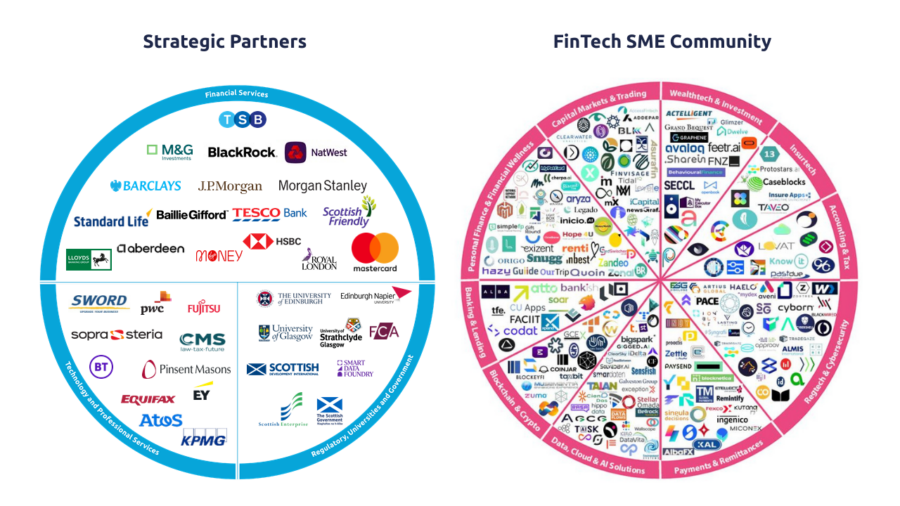
The Innovation Call was delivered with the support of 10 strategic partners: PwCBarclaysLloyds Banking GroupSopra Steria Financial ServicesNatWest GroupM&GBNP Paribas Personal Finance. , Dudley Building SocietyWesleyan and Standard Life; alongside academic partners at the University of Strathclyde and the University of Glasgow, and Growth Builders, which supported delivery.

Following the Showcase Day, four fintechs were selected to receive £50,000 each to further develop their solutions. Over the grant period, the awardees will continue to collaborate with industry and academic partners to test, validate and accelerate their innovations towards adoption and scale.

The winners are:

Finspector is an AI-powered compliance platform that automates the review and monitoring of financial promotions across text, images, video, and social media. It helps regulated firms reduce risk, evidence compliance, and scale marketing activity with confidence across jurisdictions.

Planda is a behavioural AI platform that helps financial services firms move beyond outdated segmentation to deliver hyper-personalised customer engagement. By connecting data across enterprise workflows, Planda builds dynamic customer segments that evolve in real-time, enabling institutions to personalise at scale and deepen relationships.

Amplified Global uses AI and Machine Learning to help firms assess, simplify, and demonstrate consumer understanding at scale, ensuring they meet compliance obligations with confidence. Its technology analyses and enhances intelligibility, helping organisations turn complexity into clarity. Through a guided digital journey, it makes content more engaging, measurable, and human – redefining how people connect with information.

Afternoon’s the new data + AI first operating model for advice firms. Data collection is automated with a focus on completeness and quality. AI modules automate work, allowing a doubling of clients with the same team and with less risk from meeting to report in under 2 minutes.

Aleks Tomczyk, Chief Executive, FinTech Scotland, commented:

“The Advice Guidance Boundary Review is pivotal to widening access to meaningful financial support across the UK. Too few people are saving adequately for retirement, and historically advice has skewed towards higher earners. Government, regulators and industry are aligned on helping the wider population make better‑informed financial decisions. By funding these four winning projects and opening real‑world pilots with partners, we’re accelerating practical solutions that improve consumer decision‑making and access to support, while helping firms operate confidently within the advice–guidance boundary.”

Kate Murray, Strategic Projects Lead, Scottish Widows & Lloyds Banking Group, said:

“We want to fill the advice gap that currently exists in Britain and ultimately, enable people to have a much more prosperous financial future. The Innovation Calls present such a massive opportunity. We at Lloyds Banking Group are changing the way we do change and innovate to go faster. Bringing in outside thinking, technology, and just a completely different perspective can help us achieve that.”

Hilary Smyth Allen, Chief Executive, SuperTech WM, added:

“Partnership matters because that’s how you really get things done with impact. Through the partnership with FRIL, we’ve been able to work across a broader spectrum of the ecosystem. Consumers come in all shapes and sizes, and so does the industry that services them. Innovation for us means we are maximising outcomes for those consumers.”

Crawford Taylor, CEO & co-founder, Afternoon Finance, stated:

“The advice gap is real, and firms are under growing pressure to support more people, with better outcomes, under tighter regulation. Afternoon exists to make that possible, using data and AI to remove friction, reduce risk and radically improve how advice is delivered.

This funding allows us to continue to accelerate our mission: helping advice firms support more clients, more effectively, without compromising quality, compliance or trust. Being selected as one of just four winners from over twenty fintechs is a huge validation of the approach we’re taking.”

About FRIL

The project is part of the Glasgow City Region Innovation Accelerator programme, funded through Innovate UK on behalf of UK Research and Innovation. The Innovation Accelerator programme is investing £130 million in 26 transformative R&D projects to accelerate the growth of three high-potential innovation clusters, including the Glasgow City Region.
Read more

FinTech Scotland marks its eighth anniversary reinforcing its position as one of Europe’s leading fintech clusters

Marking its eighth anniversary, FinTech Scotland reports that the nation’s fintech cluster has more than doubled in size in the past five years – from just over 120 firms in 2020 to more than 260 – confirming Scotland’s position as one of Europe’s most dynamic and collaborative fintech clusters.

This growth has been driven by higher levels of investment, deeper partnerships across industry, academia and the public sector, and more businesses scaling up and trading internationally.

Innovation in practice has also taken a major step forward, with the 10-year FinTech Research and Innovation Roadmap now embedded and over 40% of recommended actions under way. Central to this has been the 2025 award-winning Financial Regulation Innovation Lab (FRIL), which plays a key role in creating the right conditions for collaboration and product development. A recent example is the partnership between Amiqus and Virgin Money: through the FRIL programme, Amiqus moved from an initial pilot to live production with Virgin Money, using AI to transform business banking onboarding – demonstrating the capability and scalability of its platform.

In 2025, the cluster also launched two major new initiatives: the Centre of Excellence in Distributed Ledger Technology, focusing on digital assets, payments and tokenisation, with digital trust at its core, and the Finance and Health Lab a pilot cross-sector research and innovation programme dedicated to improving financial wellbeing, resilience and long-term financial health in Scotland.

Looking ahead to 2026, FinTech Scotland will focus on translating innovation into economic and social value, in line with UK industrial policy priorities, and enabling all participating in the cluster to thrive.

Aleks Tomczyk, Chief Executive of FinTech Scotland, said:

“The doubling of Scotland’s fintech density is a clear signal that our collaborative and cluster-based approach is working. The Research and Innovation Roadmap provided a national framework to accelerate purposeful innovation, and it’s been inspiring to see how fintech entrepreneurs, financial institutions, and universities have got behind that shared vision.

As I begin 2026 as FinTech Scotland’s new Chief Executive, I look forward to leading our plans to support the next stages of cluster growth and thereby accelerate successful business growth and innovation in financial technology.”

Jane Martin, Managing Director of Innovation and Investment at Scottish Enterprise, added:

“A major strength for Scotland is its connected fintech cluster, an inclusive network of entrepreneurs, researchers, and industry leaders working together to solve real world challenges. This growth shows that Scotland can have a global impact by focusing on purposeful and collaborative innovation.”

Callum Murray, CEO of leading fintech firm Amiqus, said:

“FinTech Scotland has provided practical ongoing support to Amiqus and many other fintech scale ups across the country for many years. Our involvement in their FRIL innovation programme dramatically accelerated relationships with large scale banks, built trust in our capability to deliver at scale and directly led to us securing a new ongoing client partnership. We look forward to the collaborative opportunities working with the Fintech Scotland team over the years ahead.”