
Every Life Moment Is a Money Moment
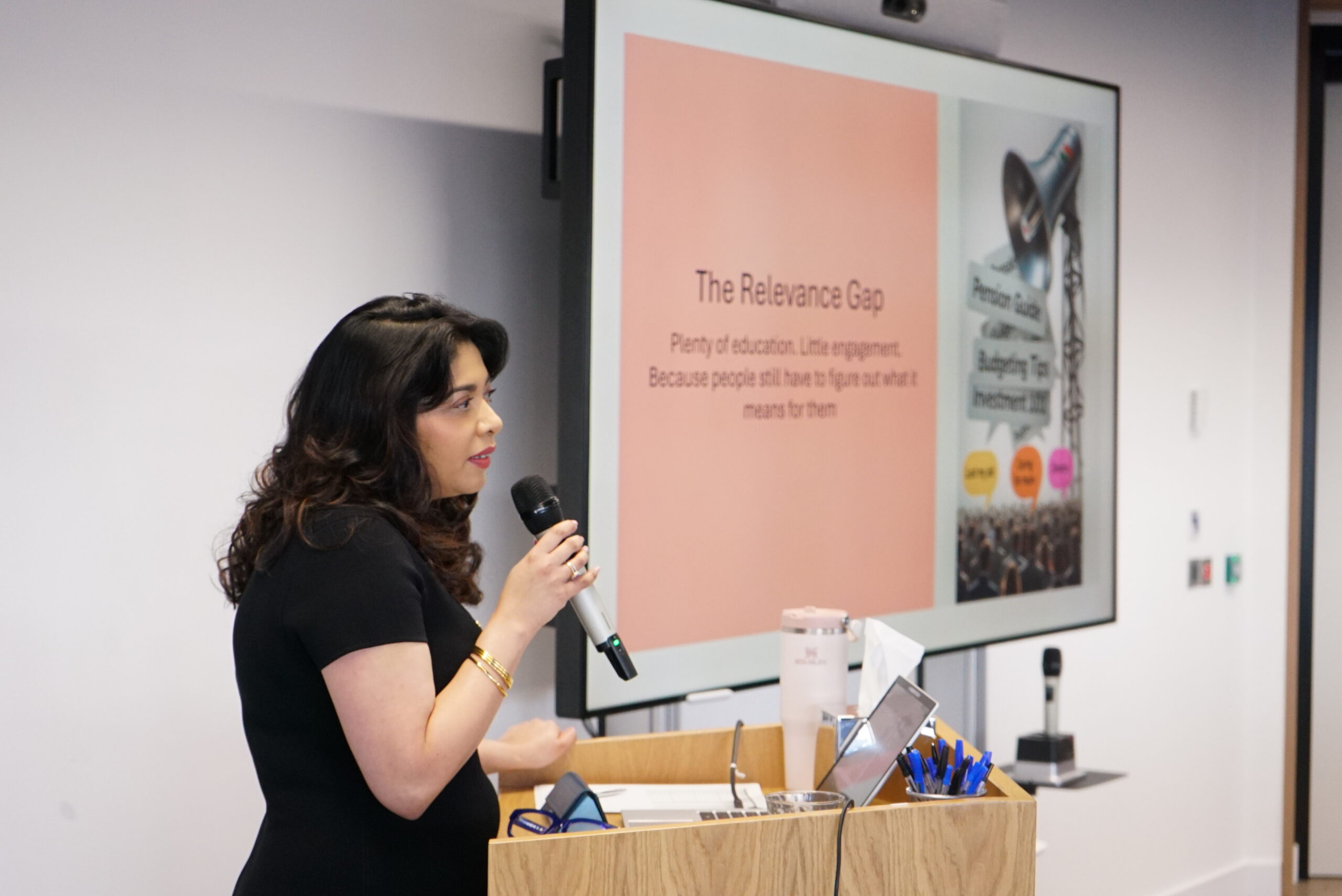
By Dia Banerji, Founder and CEO, Cherpa.ai
Separation. Redundancy. Having a baby. Losing a parent. Caring for an ageing relative. Retiring.
Every one of these moments comes with money questions. And for most people, those questions arrive at exactly the wrong time, when you are stressed, stretched, and trying to hold the rest of life together.
In some ways, I have been trying to make money simpler for people my whole career. I spent over 20 years in financial services, building products, shaping propositions, and working with customers at scale. I saw the best of what our industry can do, and I also saw a pattern that kept repeating.
The people who need help most are often the least likely to get it.
Not because they are not capable. Not because they are not trying. But because the industry still expects people to work out what they need, hunt it down across multiple sources, and then stitch it together for themselves, translating generic education into decisions that make sense for their own lives, often in the very moments they have the least capacity to do so.
The problem is not knowledge, it is design
Financial services impact everyone and it should work for everyone.
Yet the experience most people have is fragmented and exhausting. One app for budgeting. Another for savings. Another for pensions. Another for benefits. Another for insurance. Each tool does something useful in isolation, but real life does not arrive in neat categories.
If you are going through a separation, you might need to rethink your mortgage, update your pension beneficiary, understand what help exists for short term bills, and decide what to tackle first. Those are connected questions, but our tools split them into separate journeys, leaving the person to join the dots. We assume information equals empowerment. Too often it is just cognitive load, and when life is already full, it becomes disengagement rather than better decisions.
The same is true for financial education. The industry has invested heavily in it, and rightly so, but it is usually delivered at a distance from real life, generic, broad, and rarely anchored to the moment someone is actually living through. It tells you what people like you should think about, not what it means for you, right now, in your specific situation.
And if the choice is between a webinar on pension consolidation and the next season of Bridgerton, I know which one I am choosing, and I have worked in pension!
People do not need more content. They need clarity.
The advice gap, and the missing middle
There is another layer to this. Regulated advice is essential for big, complex decisions. But most everyday money questions are not asking for a product recommendation. They are asking for direction, options, and reassurance.
People want to know things like:
- What support can I access right now
- What should I change first
- What am I missing
- What is the “obvious” thing that everyone else seems to know
Often the most valuable intervention is not a recommendation. It is connecting the dots.
Before we built anything, we surveyed people about money confidence. Nine in ten told us they could improve. Many said they feel anxious just thinking about their finances. A meaningful number said they do not seek help from anyone at all. And the words people used stuck with me:
“I don’t need a PhD in financial products. Just tell me what’s relevant to me.”
“My budgeting app shames me for buying a coffee. Too many apps, too little help.”
“Make me feel safe asking stupid questions.”
That last line matters more than it seems. Because the real barrier is often emotional. Shame, fear of getting it wrong, fear of being judged, fear of being sold to, fear of admitting you do not understand.
What should the future feel like
I believe we are entering a new era of financial support. One where the default experience is not search, not generic content, and not a cold handoff into a process designed for specialists.
The future should feel more like this:
One front door. A conversation. Your life context. The options that matter to you.
Not to replace regulated advice, and not to turn every question into a product journey. Instead, to help people navigate the messy, human moments where money is involved, which is most moments.
To do that well, three things have to change.
First, we have to start from life moments, not financial categories. Life is the organising system. The tools should follow.
Second, we have to make information genuinely usable. That means connecting it, prioritising it, and presenting it in plain language, with next steps that feel doable.
Third, we have to treat trust and privacy as design requirements, not legal footnotes. Many people are understandably reluctant to share bank data with a new app.
Building a new front door to financial support
Cherpa exists to meet people right where they are. When life changes, money questions do not arrive neatly labelled. They arrive tangled, emotional, and urgent, and yet we still ask people to navigate a maze of tools, terminology, and generic content.
So we are taking a different approach. We start where real life starts, with the moment, not the product. One conversation that helps someone orient quickly, join the dots across the areas that matter, and move from noise to a clear set of options and next steps. The ambition is to create a trusted front door, a place people can begin, without needing to hand over more data than they are comfortable sharing.
That shift, from fear to agency, is the outcome I care about.
Why this is personal
I lost my dad when I was fourteen. I watched my mum try to navigate a financial system that gave her no useful answers during the hardest moment of her life. That memory has never left me.
It is one thing to know, intellectually, that help exists. It is another to live the reality of not being able to find it, understand it, or know what applies to you.
That is why I keep coming back to this belief.
Every life moment is a money moment. And nobody should have to face them alone.
Dia Banerji is the Founder and CEO of Cherpa.ai, based in Edinburgh.
What is on this page:

Related content

Zumo and Zeyro join forces to provide crypto firms with a compliant bridge into the evolving UK crypto market

Scottish fintech GiftRound, named one of ‘Nation’s Favourite Businesses’ for 2026