Who Does AI Say You Are?
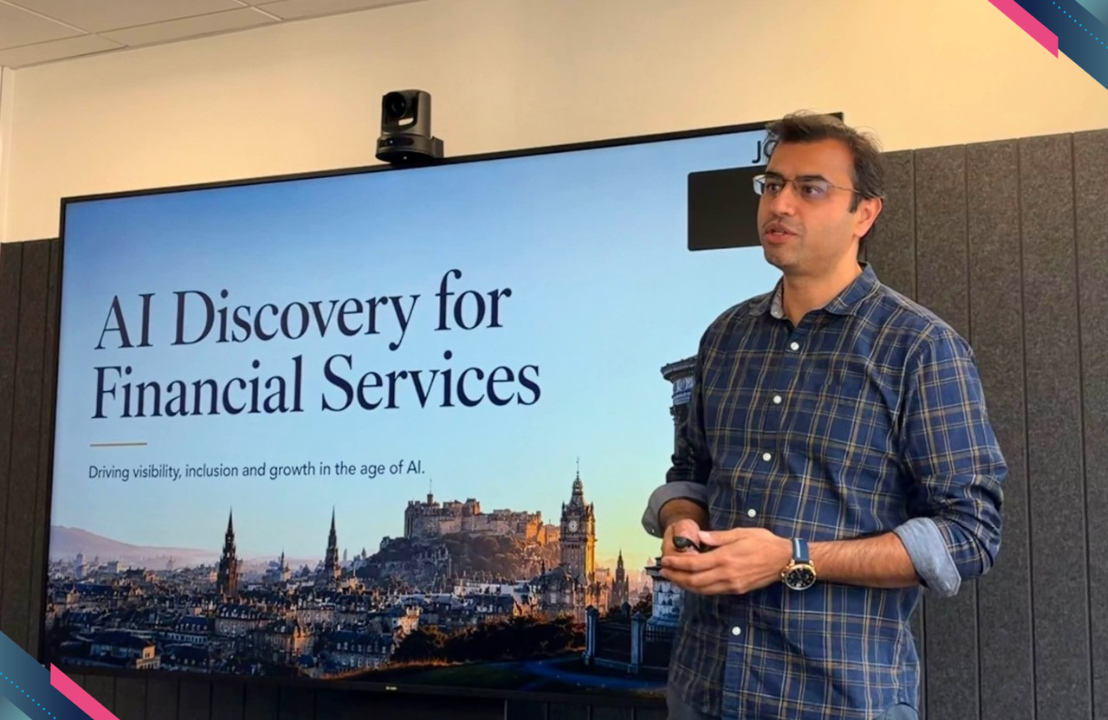
By Anurag Ahluwalia, Co-founder, JOAN UK
Millions of people are already asking AI which bank to choose, which savings account is safest, who to trust with a mortgage, and whether a particular fintech is any good, and getting a single, confident answer rather than ten blue links.
For most financial services organisations, very few inside the building ‘confidently’ know what that answer says. I have witnessed this first-hand within the confines of a major financial organisation where I worked tirelessly to build their organic search and AI discovery functions together. Just like with the beginning of SEO, there is a similar vague unease around AI Discovery (essentially how a brand is recognised, represented, and recommended by AI Assistants).
Leaders are questioning whether – are we showing up? Is it saying the right things about us? Should we be worried? Can we do anything or something about it? The lack of clear direction particularly around measuring AI visibility has made these questions nearly impossible to answer.
Nobody could clearly answer, because nobody was accurately measuring it.
The problem is not visibility, it is evidence
Traditional search gave us a shared language which was rooted in search engine rankings, traffic, click-through, impressions etc… Imperfect, but measurable, and boards understood them – over two decades of very similar reporting that they were used to.
AI-generated discovery has no equivalent where the biggest risk is that a financial organisation can be absent from an answer and never know. Worse, it can be present but wrong with outdated rates, a product it no longer offers, a regulatory status described inaccurately. In a regulated industry, being misrepresented is not a marketing problem but becomes more of a commercial and conduct risk.
Most of the advice on offer right now is opinion in the form of a recommendation checklist. You could publish more content or add some technical schema or just… hope for the best. None of it tells a board where they stand, or what to do first.
Are we endorsed and does it lead to being chosen?
AI systems don’t rely on an owned website alone. They draw on what customers, reviewers, journalists and social platforms say, and whether those voices back up the story the organisations talk about itself. Where they agree, the organisations name or product is endorsed and trust builds. Where they conflict, the gap shows up in the answer. But endorsement only matters if it leads somewhere.
Most firms cannot connect an AI recommendation to what happens next on their own website, so they cannot tell whether being recommended is turning into customers choosing them. Closing that link is what turns a recommendation into a measurable result.
Two disciplines, rarely in the same room
When Joseph and I started talking about this, we realised we were looking at the same gap from opposite ends.
My side is understanding how AI systems find, interpret, and represent an organisation (and its products and services) as accurately as possible. Joseph’s is measuring behaviour and exposure with enough rigour that a leadership team can act on the result. He has spent his career quantifying digital behaviour across financial services, e-commerce and the public sector.
Most organisations are good at one of these but very few connect the two.
That connection is what JOAN is built on.
What the future should look like
I believe financial services industry is entering a new era of discovery. The firms that do well will not be the ones that shout loudest. They will be the ones that can answer three questions with evidence:
- How are we being discovered? Not in theory, but across the AI systems customers actually use.
- How are we being represented? Accurately, fairly and in line with what we are authorised to say.
- What is the return on fixing it? Evidence that shows where the risk sits, what it costs, and where each pound of investment will do the best.
To get there, three things must change.
First, we must treat accuracy as seriously as visibility. Being found is not enough if what is said is wrong. An inaccurate answer does more harm than no answer at all, because the customer believes it.
Second, we must replace opinion with a method. That is why we built the Discovery Standard™, a defined framework that makes our work repeatable, measurable and independent of any one person.
Third, we must bring this to the board, and across the business. AI discovery is not a task for the SEO team alone. It shapes how a firm is found, how it is understood, how it is trusted and how it performs commercially. That makes it a shared responsibility to be taken seriously across marketing, compliance, data, product, journey and risk, and a matter for the boardroom.
Where JOAN UK starts
Our first offering is an independent diagnostic assessment, delivered as a board-ready report. It turns a vague concern into a structured, evidence-based view of where a firm stands and where the risk sits.
It is deliberately a starting point. You cannot manage what you cannot see, and right now most firms cannot see this.
Why this matters to me
I have watched search change shape more than once in my career, and each time the firms that moved early were the ones that made it understandable to the people who control the budget.
This shift is bigger. It changes who customers believe, not just who they find. That is why financial services deserves a partner who has worked inside it, and who can do more than describe the problem. We show a board, with evidence, how their organisation is being discovered and represented. We then turn that into a prioritised plan, support the internal teams who deliver it, and measure the improvement, so leaders can see what changed and what it was worth.
When someone asks AI who to trust with their money, the answer should be accurate, and it should be earned.
Anurag Ahluwalia is Co-founder of JOAN UK, a specialist consultancy helping FCA-regulated organisations navigate AI-generated search. He is based in Edinburgh and has over 20 years’ experience in SEO, most recently leading technical SEO and AI visibility at NatWest.
What is on this page:

Related content

GiftRound launches fee-free PartiGift in partnership with Argos, to relieve stress around birthday celebrations
Stirling tech firm Vidai launches ‘tiny’ AI tool to stop sensitive data leaks