
Behind the Scenes at the Skills Academy

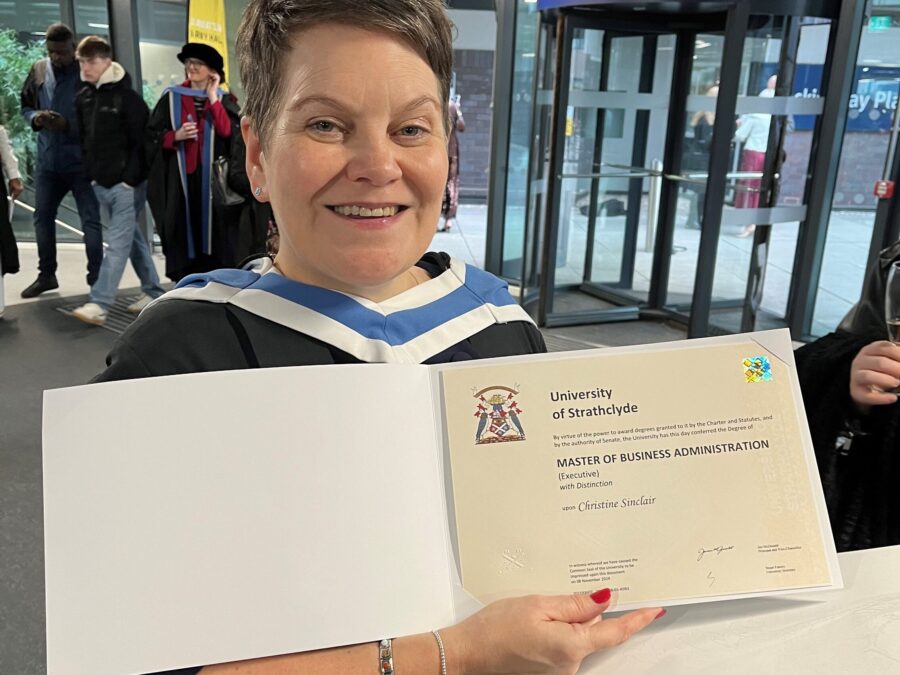
“When you look across financial services, the message is the same everywhere: the pace of technological change is relentless, and people and industry need to keep up,” explains Christine Sinclair, Programme Director for FRIL.
And that is exactly what sits behind the FRIL Skills Academy – a pioneering, demand-led, skills and education platform created by the Financial Regulation Innovation Lab (FRIL).
“With the speed of change, the biggest risk is to do nothing,” adds Christine.
The Academy is delivered in partnership between Fintech Scotland and the University of Strathclyde and the University of Glasgow. It is a practical response to real skills gaps identified across the sector from work within FRIL’s Innovation Calls and research.
The academy, which launched officially in January, brings together a portfolio of short courses, microcredentials (which gain academic credits), and executive education that help people across financial services and beyond to understand, adopt and apply new technologies responsibly and effectively.
So, that’s the context. But what are people actually learning at the Academy, and what difference does it make?
Here, we explore the stories of several participants to find out:
Closing the gap, accelerating progress
Professor Mick O’Connor started his working life as an apprentice welder in the Clyde shipyards and is now a serial entrepreneur, academic and managing director of multiple high‑tech businesses spanning regtech, spaceports and drones. When Mick’s regulatory technology firm Haelo won one of FRIL’s first Innovation Calls, he was already building AI-enabled solutions. But as we often find, the more we learn, the more we realise we need to learn.
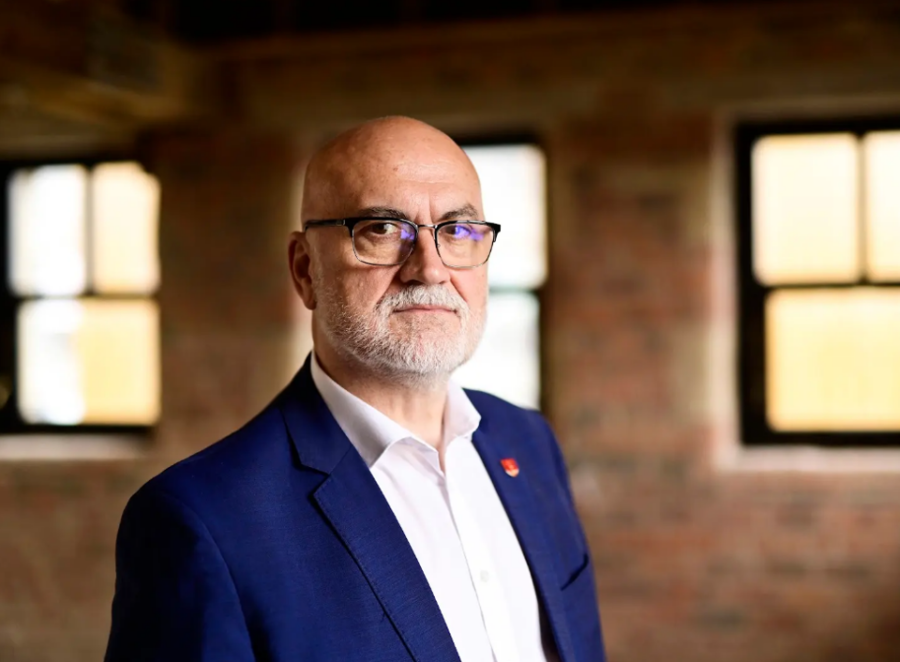
“I’d never been formally taught AI,” he says. “I’m not a coder. I had an enthusiastic amateur understanding, but I owed it to myself and the business to understand more.”
So, he enrolled in the AI and Regulatory Technology in Financial Compliance microcredential at the University of Glasgow.
“I still wouldn’t describe myself as an AI expert,” he explains. “But I can now talk comfortably with people who are. I can translate the customer problem into user stories, and then into technical requirements.”
And this has helped Mick bring together the business and technical teams required to make the Haelo magic happen.
“We talked different languages. This has helped close that gap,” he explains.
And while the gap may have narrowed, Haelo’s trajectory has accelerated.
“As a direct consequence of FRIL, I developed a technology roadmap. I didn’t have that before. I started with the problems then understood the technology I needed to solve them.”
Haelo is now preparing to launch its first product, designed to be sector-agnostic, capable of pivoting across highly regulated industries including pharma, rail, nuclear, space and aviation.
“I’ve said to FinTech Scotland that this is such a great story,” he reflects. “I can demonstrate that the whole genesis of that product and building the business has been seeded by FRIL.”
Joining the dots between rockets and regulation
“My job is business development,” says Derek Harris. “I need to understand what my clients are doing, especially around satellite launching. These courses helped me have that conversation.”
Derek is Director of Business Development and Communications at Skyrora, which builds small launch vehicles for launching satellites into space.

You might not associate the FRIL Sklls Academy as an enabler for the Space industry but the sectors intersect in surprising ways.
Satellites may orbit the earth, but their impact is grounded in everyday systems: encryption, cybersecurity, data protection, which is also the invisible infrastructure behind banking and digital security.
And similarly, Derek’s career has bridged those two worlds. Before rockets, he spent 15 years in financial services.”
“When it comes to Space and Finance, we have one of the biggest finance areas outside London and Frankfurt. But we also now have a fully forming space industry where the two can work hand in hand.
“So, if we can identify what data is required by financial institutions, these courses can help turn wish lists into actual products,” he explains.
Micro-credentials in AI Implementation and Financial Crime Prevention gave him a structured understanding of how space-enabled data connects with financial regulation and risk.
“These courses helped me fill in the dots,” explains Derek.
And it wasn’t just what was being taught that was helpful, it was the way it was being taught too.
For someone who is dyslexic, the flexible online format was crucial.
“I could go back, relook, learn at my own pace, even while on the go and in between flights. I could jump online and do 30 minutes. That made a huge difference,” explains Derek.
And his biggest surprise about the Academy? “It’s not as well-known as it should be,” says Derek.
“If all the banks were doing this, it would be a game changer. And it’s the customers who would win at the end of the day.”
Confidence to challenge and connect
“The Digital Transformation course brought learning to life with real-world examples, group work and problem-solving,” says Joanne Seagrave, founder of Norwood Risk and Compliance, who offers yet another perspective on the Academy’s impact.

“As a result, I felt empowered to grow my scope within the fintech community, which inspired me to develop my role as a board advisor to start-ups.”
With 25 years in financial services and experience supporting fintechs through FRIL as an industry partner, she joined the course not out of necessity, but curiosity.
“I wanted to take my understanding to a more in-depth level,” she says.
The micro-credentials allowed her to explore business strategy through a technology-led lens, from generative AI to distributed ledger technology, grounding innovation in commercial and regulatory realities.
“The course gave me confidence to be curious,” she explains. “Whether that means challenging compliance teams to use technology more effectively or factoring risk in at the early stages of a project.”
What surprised her most was the diversity of the cohort.
“I’ve worked in financial services for over 25 years, but the community included people from charities, engineering, life sciences, public sector and software development, which made for some interesting discussions and led to diversity of thought,” she explains.
Shaping the future… and your future
So that’s a glimpse behind the scenes of the Academy and the programmes on offer. But let’s leave the final word around its impact to Christine:
“There are so many inspiring stories from people who’ve been through these programmes,” she says. “One participant told us he’d never been to college or university. He went straight into work and never had the opportunity to study formally. He was the first person in his family to take a university course, and it was our Digital Transformation programme.”
“Something clicked for him. After completing the course, he asked what else he could do. He’s now enrolled on a graduate apprenticeship degree. Another participant has gone on to apply for an MBA. So, these short courses aren’t just about skills, they can genuinely spark lifelong learning.”
“Short courses are powerful,” she adds. “They can change the course of someone’s career.”
If you’ve liked what you’ve read and would like to change the course of your career, then please check out the FRIL Skills Academy webpage. Or contact the Skills Team for more information at sbs-fril@strath.ac.uk. They are waiting to hear from you.
About FRIL
What is on this page:

Related content

Financial Regulation Innovation Lab (FRIL) launches Skills Academy to Develop Future FinTech and Financial Regulation Talent
Why Upskilling can’t wait: Building Smarter Skills for a Smarter Financial Future