
Research in Action – How Financial Regulation Innovation Lab (FRIL) Is Turning Insight into Impact for Industry and Consumers

FRIL is turning collaborative research into real-world solutions for the future of financial services – and, in turn, for all of us.
“There’s hardly an organisation you can talk to that isn’t interested in artificial intelligence and cyber security – the opportunities created and the challenges they might face,” explains Professor Eleanor Shaw OBE, Associate Principal External Engagement and Partnerships at the University of Strathclyde.
“As researchers, it’s really important that we use our expertise to explore those challenges with our external partners and find solutions. That’s how we drive impact.”
And the impact Eleanor describes isn’t just for industry; it’s for all of us, in our everyday financial lives.
“Imagine a world where, regardless of your postcode, you can access good-value, high-quality financial products: mortgages, insurance, advice and guidance. That’s the world we’re working towards at FRIL,” adds Eleanor.
Speak to almost anyone in financial services right now – just like many sectors – and you’ll hear the same underlying tension: the future is arriving faster than most organisations can comfortably absorb.
Technology and consumers. Opportunity and risk. Acceleration and anxiety. The list of modern paradoxes keeps growing. It’s enough to raise the pulse slightly.
That’s why addressing those challenges is at the core of the research undertaken by FRIL. This research is not theory alone. It is applied, fast-moving, tested, and shaped alongside industry and regulators – with real-world consequences in mind. Consequences that mean faster solutions for consumers, greater innovation capacity for banks, and new skills development programmes designed for the next generation of financial services.

“There’s a magic formula at the heart of FRIL, which is why we see the results we do. Actionable research is one of four key ingredients. The others are our Innovation Calls, Knowledge Exchange and Skills and Education programmes. Together, they drive impact and get solutions out into industry quickly,” explains Clare Reid, Strategic Innovation Director at FinTech Scotland. “Our partnerships with the Universities of Glasgow and Strathclyde are really important in driving research that shapes positive outcomes.”
Preparing for the future now
So, how does this actionable research actually work? Mark Cummins, Professor of Financial Technology and Lead Investigator at the University of Strathclyde, explains:
“At the University of Strathclyde translation of research has always been a key focus. We work in fundamental research and publications are critical – they build credibility, but we also work hard to translate that research into impact.
“At the University of Strathclyde, for example, we use cluster mechanisms to coordinate expertise across different areas. I lead our FinTech cluster, and those clusters are a key way of translating research for real-world impact.
“What FRIL brings is a mechanism for bringing all the stakeholders into one room: financial services, professional services, fintechs, regulators and others. That coordination gives us a reach that can be difficult to replicate in other ways.”
And that connection to industry and regulators is key:
“We draw on our academic knowledge to deliver applied research set by companies and regulators, and connect that directly to skills development and real industry challenges,” adds John Finch, Professor of Marketing at the Adam Smith Business School at the University of Glasgow and another Lead Investigator for FRIL.
FRIL research starts with real, live problems ranging from consumer vulnerability to operational resilience. The research activities bring banks, fintechs, regulators, and technology firms together to turn those challenges into direct, applied research built for a rapidly moving environment and evolving consumer needs. And it is a model that is appealing to action orientated academics.
“One of the key reasons I came back to academia was the chance to work on these white papers with industry,” says Steve Owens, a knowledge exchange fellow at the University of Strathclyde, and an engineer by trade. “We take real use cases and put academic research around them, then get that knowledge back out quickly. The focus is on getting useful insight into industry hands as quickly as possible.”
That research is increasingly boundary-pushing, and spans explainable AI, multi-modal generative AI, earth intelligence using satellite data, and agentic systems, but always tied back to regulatory and market needs.
The FRIL research model blends open and applied innovation. White papers are published openly so the wider sector can benefit.
Meeting needs
For banks, this means the research environment that FRIL offers becomes a home for strategic insights.
“We’re an insight-led team,” explains Nicole Alston, Programmes and Community Engagement Manager from Natwest. “FRIL gives us visibility across disruptive technologies and emerging sectors. We know we can’t build everything internally and that this is a two-way exchange.”
And that two-way exchange is critical, because at the centre of this high-tech research, is a clear purpose to tackle very human needs.
“If we apply technology correctly in financial services, we can drive greater inclusion and economic prosperity,” Eleanor reminds us.
Consumer vulnerability and consumer duty are recurring themes across FRIL research, but all of these areas are deeply nuanced where ‘one-size-fits-all’ solutions won’t cater for the needs of all those in society. John helps explain:
“Vulnerability isn’t always permanent; it can be linked to life stage and personal circumstances. Insights from firms who see this day to day often reshape how and where we focus our research.”
Those insights are increasingly being translated into practical tools, and Advanced AI research is being applied directly to consumer outcomes.
But what does all of that actually mean? Well, just a few of those examples include identifying potential discrimination in financial decision-making, bringing financial advice and guidance to the masses rather than the few, and building voice-led digital interfaces that help people with reading or learning difficulties access support more easily. This is work that matters for everyday people.
And for technology partners, the value lies in bringing together the academic rigour with market urgency.
“We take hypotheses from industry challenges and shape them into structured research with academic partners,” says John Donoghue, Chief Technology Officer at Sopra Steria, a major tech firm with over 50,000 employees worldwide.
Students are embedded too – through live projects, dissertations, and industry-defined challenges, with the aim of building future skills alongside present solutions
“Students and researchers test and explore the challenges through projects and dissertations, then play findings back to us. We feed that directly into our product and strategy thinking,” adds John.
“This matters because we want to stay at the front edge of the industry,” he explains. “Working on challenges alongside – or ahead of – our clients helps us respond proactively and differentiate.”
People and collaboration
Across every voice we speak to, there is one theme that repeats: collaboration is essential – critical, even:
“Actionable research is crucial,” adds Kal Bukovski, Head of Academia and Research at Sopra Steria. “We bring together regulators, firms and technical practitioners so everyone takes something practical away. It’s about answering the what, why and how, not just describing the problem.”
With such a focus on technology, it may be surprising that what really drives FRIL’s research environment is a community of people who place a strong emphasis on meaningful and productive relationships. Mark explains:
“Our research, skills and education activities are all built on relationships. FRIL gives us a unique environment to build those and to translate research into real use.”
Research with purpose
This is research that doesn’t sit still. It moves quickly into white papers, innovation calls, student projects, product strategy, workforce upskilling and regulatory thinking. Kate Blatchford- Hick is Head of Consumer Investments Policy and Market Analysis at the Financial Conduct Authority and explains how the work drives impact for the regulators:
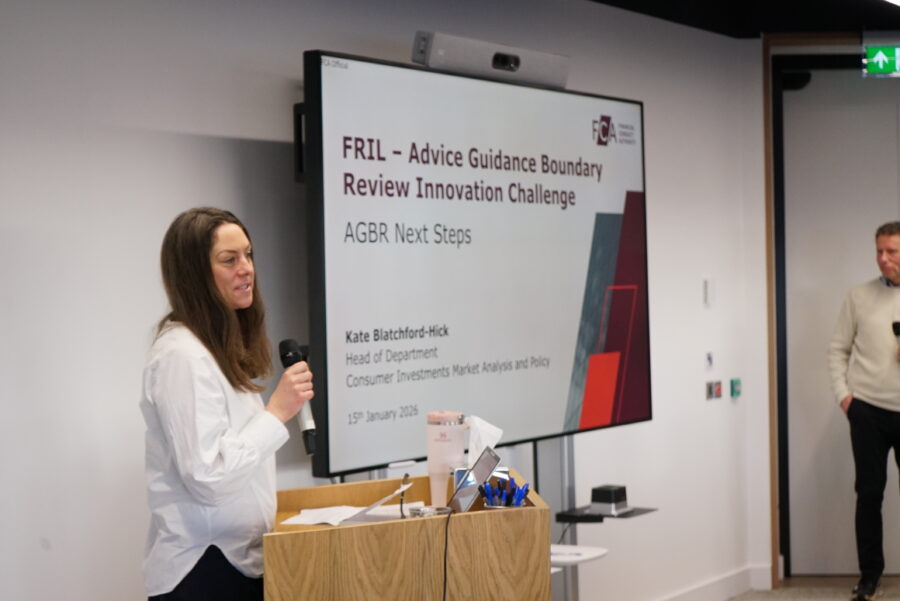
“FRIL’s research is really valuable as part of the market analysis, horizon scanning and insight work that we do. The work on AI and open finance, for example, helps deepen the evidence base around how emerging technologies are shaping consumer decision-making, both now and in the future. That, in turn, strengthens the FCA’s ability to anticipate market behaviours, risks and innovation, and helps us prioritise policy work that responds to both the opportunities and the potential risks.”
And while insights from FRIL are actively informing regulation and policy, they are also shaping a new generation of skills programmes designed for a rapidly changing sector. Earlier this year, FRIL launched the FRIL Skills Academy. The academy is a first-of-its-kind skills and education platform created to address capability gaps and support career development across financial and professional services and the wider fintech community.
Delivered with academic partners at the University of Strathclyde and the University of Glasgow, the Skills Academy responds directly to the accelerating pace of technological change, particularly in areas such as AI, data quality, and regulatory compliance, where talent shortages continue to slow innovation and increase recruitment costs.
FRIL research has highlighted persistent skills gaps across the sector, reinforcing the need for sustained, strategic investment in workforce development to maintain the UK’s global competitiveness.
“This is a new benchmark for how academia and industry partner at pace,” says Clare Reid, Strategic Innovation Director at FinTech Scotland.
And this point leads us to the nub of FRIL research. This research doesn’t just help us understand change, it informs how we shape it. That’s what makes this model so distinctive.
“I believe in this research because it’s about doing good quickly, we’re not just producing journal outputs, but creating real industry impact and addressing real consumer needs, right here and right now,” concludes Mark.
At the centre of FRIL’s research is a common theme – in a world of rapid change, we need to think differently and act boldly. That same mindset runs through the fintech world, where pushing boundaries, breaking ground, and creating new ways forward are part of the DNA.
As Kal puts it: “Fintech is a kind of art: you have to think beyond the limits and create something new that genuinely serves the right purpose.”
And that is FRIL research.
‘Innovation in financial regulation’ might not sound like the catchiest tagline, but it is at the heart of making the world better for all of us – today, tomorrow and in the decades that come.
What next?
Interested in the research generated by FRIL? Then check out our White Papers across a range of subjects.
If you’re interested in the work of FRIL more generally and would like to contact a member of the team email: FRIL@fintechscotland.com.
About FRIL
What is on this page:

Related content
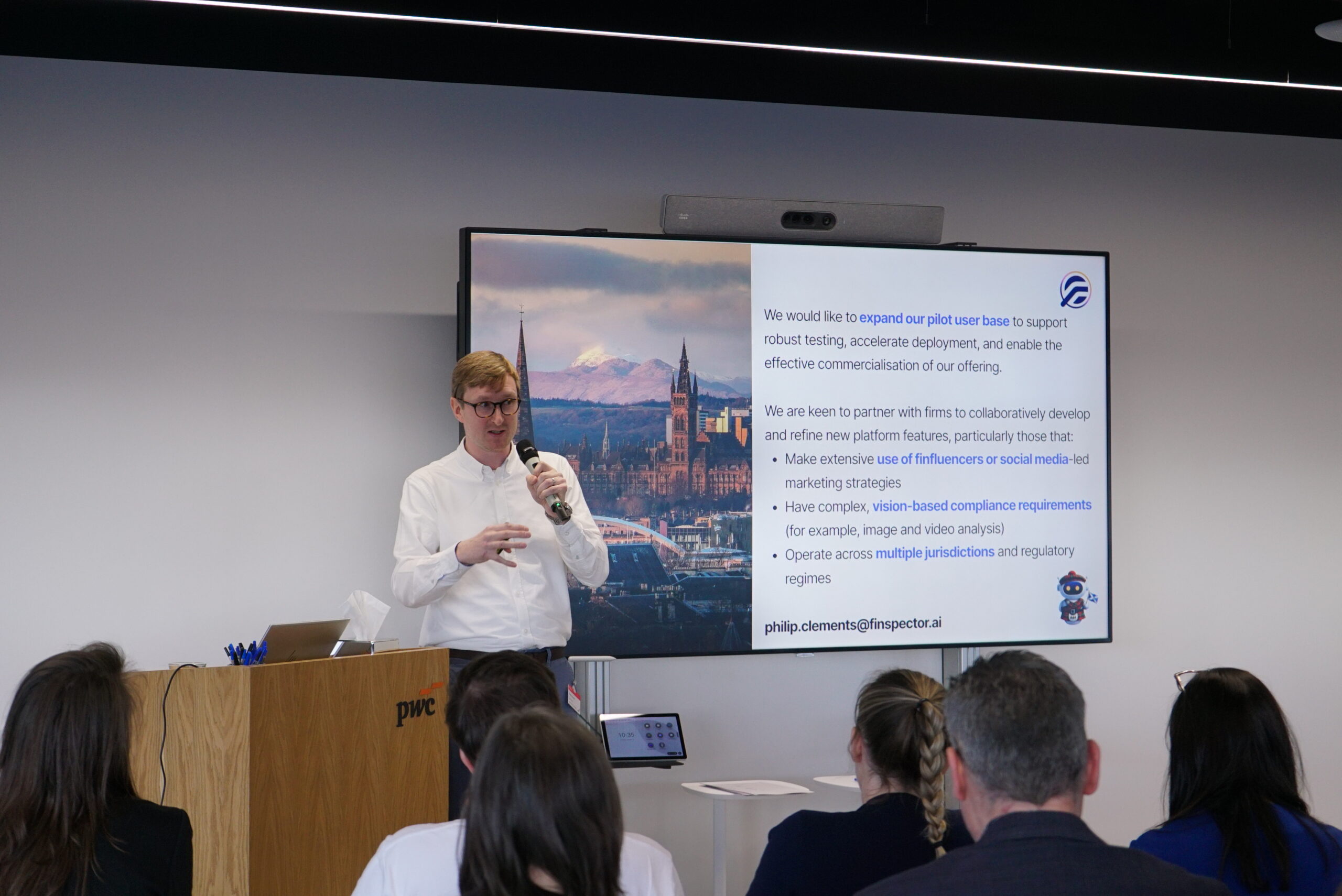
From innovation challenge to Scottish ambition: How Finspector is building the future of financial promotions compliance

Towards a Fairer Financial System: Insights from Gillian Docherty and Clare Reid