
Atos UK&I joins FinTech Scotland as Strategic Partner to accelerate AI‑led fintech innovation and growth
FinTech Scotland today announced that Atos, a global leader of AI-powered digital transformation, has joined the Scottish fintech cluster as a Technology Strategic Partner, strengthening the cluster’s ability to drive collaborative innovation and growth.
Atos brings global scale with a strong UK presence to help create the conditions for faster innovation, secure scaling and economic impact across Scotland’s fintech community. Experts in Agentic AI, digital sovereignty and cybersecurity with a 60,000‑strong team worldwide, Atos provides end‑to‑end digital expertise across consulting, infrastructure, operations and optimisation, as well as integrated services across cloud, application services, smart platforms and the digital workplace.
This partnership strengthens the cluster’s momentum and the shared commitment to collaborative innovation that will shape the future of next-generation financial services. It takes our network to 37 Strategic Partners, building a world-class environment for fintech innovation and regional growth, at a time when Scotland’s fintech cluster has more than doubled in five years, from just over 120 firms in 2020 to more than 260 today, reinforcing its position as one of Europe’s most dynamic and collaborative fintech clusters.
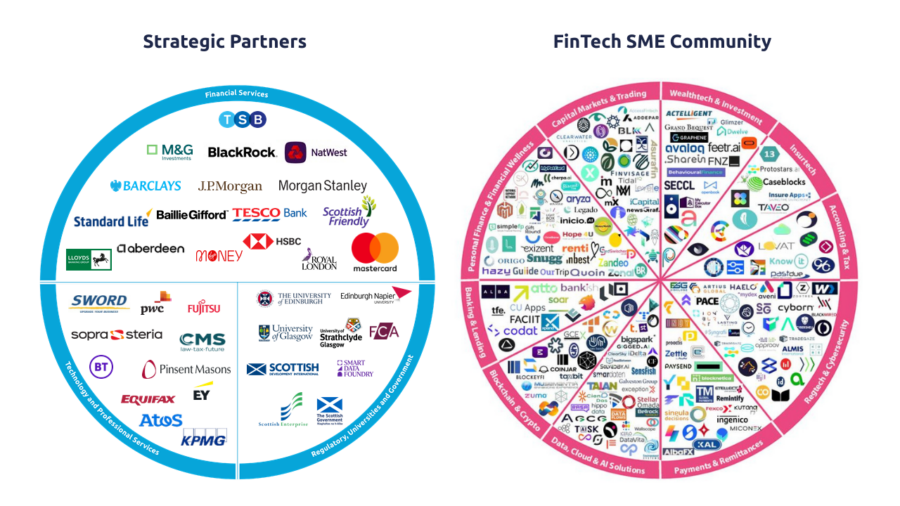

Aleks Tomczyk, Chief Executive at FinTech Scotland, said: “This partnership with Atos strengthens our shared commitment to fostering innovation, collaboration and growth across Scotland’s fintech cluster. By bringing deep expertise in AI, data, secure cloud and digital platforms, alongside a strong global presence, Atos will enhance the support available to fintechs as they develop new solutions and build resilience, contributing to Scotland’s economic and societal progress.”
Simon Chandler, Head of Financial Services and Insurance, UK & Ireland at Atos said: “Atos is delighted to join FinTech Scotland to cement our investment in Financial Services in Scotland. We are excited to work in collaboration with the; FinTech SME community, Financial Services organisations, regulators, universities, and government by leveraging our leading Sovereign Agentic AI, Data, cloud and digital global expertise, underpinned by our unique Sustainability and Social Value commitments. We aim to drive Shared Value success for every part of this community to the betterment of this community and Scotland as a whole.”
The Tipton selects docStribute® to modernise member communications
docStribute® and the Tipton & Coseley Building Society partner to improve the firm’s communications and strengthen member engagement
docStribute®, a UK RegTech company specialising in regulated customer communications, today announces a strategic partnership with the Tipton & Coseley Building Society.
The partnership reflects the Tipton’s continued focus on personalised service, deepening member engagement and meeting the requirements of the Financial Conduct Authority’s (FCA) Consumer Duty.
A key priority for the Tipton is accelerating digital transformation, with the partnership forming part of a multi-year change programme to expand online services, enhance systems and create better retail and working environments.
Through the docStribute® platform, the Society wants to move towards an electronic-first approach for both regulated and general communications. It aims to reduce delivery costs, process important documents more quickly, and use less paper, thereby lowering the associated carbon emissions.
Beyond cost, efficiency and environmental gains, the partnership will help the Tipton in repositioning its regulated documents, so they are not just a compliance requirement, but an opportunity to engage with members.
By presenting information in a clearer, more accessible digital format for those who want it, the Tipton can build greater awareness and understanding within its membership. This in turn supports well informed financial decisions, in line with Consumer Duty expectations.
docStribute® enables the delivery of timely, relevant communications which are easier to access, read, and navigate. The result is improved engagement and measurable insight into how members interact with information, allowing the Tipton to continuously improve clarity and outcomes.
Central to this approach is docStribute’s AIDA, the Artificial Intelligent Document Assistant. Developed through docStribute’s participation in FinTech Scotland’s Financial Regulation Innovation Lab (FRIL), it enables recipients to interact with regulated documents in a conversational way, helping them navigate complex information, ask questions, and receive clear explanations in real time.
The platform can also incorporate supportive formats such as short video and enhanced visual layers to aid accessibility and comprehension. Together, these tools support financial literacy and stronger understanding, while ensuring communications remain compliant and appropriately governed.
The platform uses Distributed Ledger Technology to protect the integrity of customer documents and create a verifiable record of what information was sent and when. This ensures communications remain secure, accessible, and compliant with the FCA’s Durable Medium requirements, while providing the sender with greater visibility of engagement and understanding.

Chris Ansara, CEO of docStribute®, said:
“We are pleased to be working with The Tipton & Coseley Building Society. Building societies have always been rooted in trust and community. Our role is to help turn regulated communications into moments that strengthen that trust by making important information clearer and easier to engage with.
“With AIDA, and enhanced formats such as video, we are adding another layer that actively supports member understanding, not just delivery. This partnership brings our total building society partners to four and highlights the sector’s continued emphasis on improving customer understanding through stronger engagement.”

Richard Groom, Chief Customer Officer at the Tipton, added:
“We are focused on increasing the proportion of compliant digital communications we send as this brings multiple benefits to our business and members alike. Adopting an electronic-first approach, in line with members’ preferences, is another step towards modernising our Society and will improve the overall standard of service we offer.”
Finance and Health Lab National Conference to convene cross-sector leaders at The Edinburgh Futures Institute
FinTech Scotland today announced the Finance and Health Lab National Conference, on 19 March 2026, an invite-only national event bringing together leaders from financial services, health, academia, government and the innovation ecosystem to explore how Scotland can lead the next wave of progress at the intersection of health and financial wellbeing.
Hosted at the University of Edinburgh’s Futures Institute, the conference will showcase practical insights, emerging innovation, and opportunities for collaboration focused on challenges that matter in later life and beyond — including inclusive service design, strengthening financial resilience, and building trusted approaches to data.
The Finance and Health Lab is designed to accelerate collaboration across sectors, connecting partners to test ideas, generate evidence, and support innovations to move from insight to impact. The conference will share what’s been learned so far and set out the next steps for continued ecosystem action.
What to expect on the day
The one-day programme (10:00–16:00, arrival from 09:30) includes:
- A keynote and guided discussion on the future of financial health in an ageing society
- A research insight showcase on health–wealth dynamics in later life
- An industry panel on designing future-ready, inclusive financial services
- A startup showcase and demonstrator session featuring ventures from the innovation call
- A data proposition session exploring trusted, ethical pathways for financial-health data use
- A closing conversation on scaling innovation through collaboration and national impact
Registration is invite-only, with a register interest option available via the event page.
Aleks Tomczyk, Chief Executive, FinTech Scotland, said: “Scotland has a unique opportunity to lead in innovation that connects financial resilience with healthier outcomes. The Finance and Health Lab National Conference brings partners together to share evidence, spotlight innovation, and build practical routes to collaboration and scale.”
Dr Andrea Taylor, Chief Executive Officer of Edinburgh Innovations, said: “This is an opportunity to align research, practice and policy and focus collective effort on innovations that can make a measurable difference for people as they age.”
Register interest
This event is by invitation only. Register your interest on the Finance and Health Lab National Conference page to receive further details.
Financial Regulation Innovation Lab awards £50,000 each to four fintechs to accelerate consumer wealth support
The Financial Regulation Innovation Lab (FRIL) today announced the four fintechs selected to receive grants through its latest Future of Wealth Innovation Call, delivered by FinTech Scotland in partnership with SuperTech WM.
The six‑week programme concluded on 15 January with a Showcase Day, where 21 fintechs presented solutions to the challenge: helping consumers make informed financial decisions and access more tailored wealth support, while keeping pace with evolving regulation.
Throughout the programme, and against the backdrop of the joint HM Treasury-Financial Conduct Authority (FCA) Advice Guidance Boundary Review (AGBR) which seeks to help close the UK’s advice gap by clarifying how firms can provide more meaningful support under the Consumer Duty, participants took part in workshops and deep dive sessions to develop, refine and tailor their propositions to real world industry needs and potential pilots with partners. The FCA was involved throughout and provided both valuable clarity and guidance.
The Innovation Call was delivered with the support of 10 strategic partners: PwC, Barclays, Lloyds Banking Group, Sopra Steria Financial Services, NatWest Group, M&G, BNP Paribas Personal Finance. , Dudley Building Society, Wesleyan and Standard Life; alongside academic partners at the University of Strathclyde and the University of Glasgow, and Growth Builders, which supported delivery.
Following the Showcase Day, four fintechs were selected to receive £50,000 each to further develop their solutions. Over the grant period, the awardees will continue to collaborate with industry and academic partners to test, validate and accelerate their innovations towards adoption and scale.
The winners are:

Finspector is an AI-powered compliance platform that automates the review and monitoring of financial promotions across text, images, video, and social media. It helps regulated firms reduce risk, evidence compliance, and scale marketing activity with confidence across jurisdictions.

Planda is a behavioural AI platform that helps financial services firms move beyond outdated segmentation to deliver hyper-personalised customer engagement. By connecting data across enterprise workflows, Planda builds dynamic customer segments that evolve in real-time, enabling institutions to personalise at scale and deepen relationships.

Amplified Global uses AI and Machine Learning to help firms assess, simplify, and demonstrate consumer understanding at scale, ensuring they meet compliance obligations with confidence. Its technology analyses and enhances intelligibility, helping organisations turn complexity into clarity. Through a guided digital journey, it makes content more engaging, measurable, and human – redefining how people connect with information.

Afternoon’s the new data + AI first operating model for advice firms. Data collection is automated with a focus on completeness and quality. AI modules automate work, allowing a doubling of clients with the same team and with less risk from meeting to report in under 2 minutes.
Aleks Tomczyk, Chief Executive, FinTech Scotland, commented:
“The Advice Guidance Boundary Review is pivotal to widening access to meaningful financial support across the UK. Too few people are saving adequately for retirement, and historically advice has skewed towards higher earners. Government, regulators and industry are aligned on helping the wider population make better‑informed financial decisions. By funding these four winning projects and opening real‑world pilots with partners, we’re accelerating practical solutions that improve consumer decision‑making and access to support, while helping firms operate confidently within the advice–guidance boundary.”
Kate Murray, Strategic Projects Lead, Scottish Widows & Lloyds Banking Group, said:
“We want to fill the advice gap that currently exists in Britain and ultimately, enable people to have a much more prosperous financial future. The Innovation Calls present such a massive opportunity. We at Lloyds Banking Group are changing the way we do change and innovate to go faster. Bringing in outside thinking, technology, and just a completely different perspective can help us achieve that.”
Hilary Smyth Allen, Chief Executive, SuperTech WM, added:
“Partnership matters because that’s how you really get things done with impact. Through the partnership with FRIL, we’ve been able to work across a broader spectrum of the ecosystem. Consumers come in all shapes and sizes, and so does the industry that services them. Innovation for us means we are maximising outcomes for those consumers.”
Crawford Taylor, CEO & co-founder, Afternoon Finance, stated:
“The advice gap is real, and firms are under growing pressure to support more people, with better outcomes, under tighter regulation. Afternoon exists to make that possible, using data and AI to remove friction, reduce risk and radically improve how advice is delivered.
This funding allows us to continue to accelerate our mission: helping advice firms support more clients, more effectively, without compromising quality, compliance or trust. Being selected as one of just four winners from over twenty fintechs is a huge validation of the approach we’re taking.”
About FRIL
FinTech Scotland marks its eighth anniversary reinforcing its position as one of Europe’s leading fintech clusters
Marking its eighth anniversary, FinTech Scotland reports that the nation’s fintech cluster has more than doubled in size in the past five years – from just over 120 firms in 2020 to more than 260 – confirming Scotland’s position as one of Europe’s most dynamic and collaborative fintech clusters.
This growth has been driven by higher levels of investment, deeper partnerships across industry, academia and the public sector, and more businesses scaling up and trading internationally.
Innovation in practice has also taken a major step forward, with the 10-year FinTech Research and Innovation Roadmap now embedded and over 40% of recommended actions under way. Central to this has been the 2025 award-winning Financial Regulation Innovation Lab (FRIL), which plays a key role in creating the right conditions for collaboration and product development. A recent example is the partnership between Amiqus and Virgin Money: through the FRIL programme, Amiqus moved from an initial pilot to live production with Virgin Money, using AI to transform business banking onboarding – demonstrating the capability and scalability of its platform.
In 2025, the cluster also launched two major new initiatives: the Centre of Excellence in Distributed Ledger Technology, focusing on digital assets, payments and tokenisation, with digital trust at its core, and the Finance and Health Lab a pilot cross-sector research and innovation programme dedicated to improving financial wellbeing, resilience and long-term financial health in Scotland.
Looking ahead to 2026, FinTech Scotland will focus on translating innovation into economic and social value, in line with UK industrial policy priorities, and enabling all participating in the cluster to thrive.
Aleks Tomczyk, Chief Executive of FinTech Scotland, said:
“The doubling of Scotland’s fintech density is a clear signal that our collaborative and cluster-based approach is working. The Research and Innovation Roadmap provided a national framework to accelerate purposeful innovation, and it’s been inspiring to see how fintech entrepreneurs, financial institutions, and universities have got behind that shared vision.
As I begin 2026 as FinTech Scotland’s new Chief Executive, I look forward to leading our plans to support the next stages of cluster growth and thereby accelerate successful business growth and innovation in financial technology.”
Jane Martin, Managing Director of Innovation and Investment at Scottish Enterprise, added:
“A major strength for Scotland is its connected fintech cluster, an inclusive network of entrepreneurs, researchers, and industry leaders working together to solve real world challenges. This growth shows that Scotland can have a global impact by focusing on purposeful and collaborative innovation.”
Callum Murray, CEO of leading fintech firm Amiqus, said:
“FinTech Scotland has provided practical ongoing support to Amiqus and many other fintech scale ups across the country for many years. Our involvement in their FRIL innovation programme dramatically accelerated relationships with large scale banks, built trust in our capability to deliver at scale and directly led to us securing a new ongoing client partnership. We look forward to the collaborative opportunities working with the Fintech Scotland team over the years ahead.”
The Delivery and Impact of the FinTech Scotland Cluster in 2025
This report highlights the progress made across the FinTech Scotland Cluster in 2025, a year marked by continued growth and increasing global influence. The cluster has welcomed new firms, attracted higher levels of investment, and seen more businesses scale confidently and trade internationally. Scotland’s fintech SME community has matured significantly, supported by deeper partnerships across industry, academia, and the public sector — reflecting a shared commitment to collaboration as a driver of meaningful progress.
Innovation in practice has also taken a major step forward. The 10-year FinTech Research and Innovation Roadmap is now firmly embedded, with over 40% of recommended actions underway. Central to this has been the award-winning Financial Regulation Innovation Lab, which expanded its scale and earned national recognition for its collaborative, industry-led approach. In 2025, the cluster also launched its second priority innovation environment, The Centre of Excellence in Distributed Ledger Technology, focusing on digital assets, payments, and tokenisation, with digital trust at its core.
These successes reflect the collective effort and commitment across the ecosystem to drive responsible innovation and sustainable economic growth. They provide a powerful platform for the next phase. Thank you to all who have contributed — 2026 promises new opportunities, new collaborations, and continued progress for Scotland’s fintech community.
Together, these environments are enabling pioneering work and helping firms explore and commercialise technologies shaping the future of financial services. National and international engagement has matched this momentum. From strong representation at Money20/20 Europe to productive activity and engagement across North America, Canada, Hong Kong, and wider Asia, Scotland’s international presence has grown, supporting an increasing number of fintech SMEs entering global markets.
Nicola Anderson, Chief Executive at FinTech Scotland, said:
“These successes reflect the collective effort and commitment across the ecosystem to drive responsible innovation and sustainable economic growth. They provide a powerful platform for the next phase. Thank you to all who have contributed—2026 promises new opportunities, new collaborations, and continued progress for Scotland’s fintech community.”
Aleks Tomczyk, Chief Executive at FinTech Scotland, said:
“As I step into the role of Chief Executive in January, I do so with genuine excitement for what lies ahead. The foundations built over the past seven years including in 2025 create a strong foundation for the next phase of growth. Scotland’s fintech community is rich with talent, ambition, creativity, and a collaborative spirit that is widely admired – including internationally. I am energised by the opportunity to contribute further to this vibrant cluster, including its innovators, current and future strategic partners, and supporters in the ecosystem. Together, we will build on the momentum already achieved and shape a successful future in which Scotland continues to lead, influence, and inspire across the rapidly evolving fintech landscape.”
Amiqus announces partnership with Virgin Money to transform business banking onboarding through AI innovation
- Amiqus, the compliance platform powering customer and staff onboarding at scale across regulated sectors, agrees a three-year contract with Virgin Money to deliver AI-driven automation within Virgin Money’s business banking onboarding journeys.
- The partnership builds on the success of an initial 12-week pilot, which saw Amiqus reduce the time to undertake key ‘Know Your Business’ (KYB) processes to under two minutes.
- The success of the pilot programme greenlights the full rollout, with Amiqus now set to be fully integrated into Virgin Money’s onboarding system in 2026 for an initial three-year period.
The collaboration will see Amiqus’ scalable technology integrated directly into Virgin Money’s system, enabling faster decision-making, improved regulatory assurance, and a simple fully digital experience for new business customers.
Facilitating faster, seamless onboarding
Virgin Money engaged Amiqus through FinTech Scotland’s Financial Regulation Innovation Lab (FRIL) to solve their core challenge: how Virgin Money could use AI to strengthen quality control across digital and manual onboarding, ensuring compliance with regulatory obligations while meeting customer service objectives.
Over the initial pilot programme, Amiqus demonstrated their ability to:
- Reduce KYB check turnaround times to under two minutes.
- Support even stronger regulatory assurance through structured, real-time data.
- Improve customer experience through faster, low-friction onboarding.
- Provide scalability for deployment across wider banking operations.
Callum Murray, CEO and Founder of Amiqus, said:
“Partnering with Virgin Money over the next three years, we’ll be supporting their business banking customer onboarding to make complex decisions faster at scale whilst also improving upon their already well renowned customer and product experiences.
Thanks to the FRIL programme via FinTech Scotland, we’ve been able to demonstrate both the capability and scalability of the Amiqus platform from initial pilot into live production with Virgin Money. I expect it’s the start of a long-running relationship where we’re able to move at pace, creating positive outcomes for both their clients and internal compliance teams and we’re proud to play our part in their success.”
A scalable capability built for regulated oversight
By combining real-time data insights and automation, Amiqus gives Virgin Money instant access to company filings, shareholder information, supporting structured extraction, and analysis, delivered via Amiqus’ purpose-built API, supporting fast, accurate, and efficient decision-making.
Graeme Sands, Director of Digital Business Banking at Virgin Money, commented “Business customers want a speedy account opening process and we want the same – but that needs to be done in accordance with rules designed to prevent economic crime. It was clear when we met Amiqus they had a differentiated capability in identity checking and business verification. During the pilot we saw a significant improvement in the time to complete onboarding checks while maintaining their accuracy and that’s what made us want to deploy this for our customers.”
Long-term investment in compliance
Amiqus’ partnership with Virgin Money reflects their ongoing commitment to strengthening compliance, enhancing customer experience, and driving operational efficiency across regulated sectors at scale. By investing purposefully in secure automation workflow and integrations, Amiqus enables organisations to reduce friction for end users, streamline internal processes, and uphold the highest standards of regulatory assurance.
To learn more about how Amiqus is supporting KYB checks across regulated sectors and beyond, get in touch today.
New fintech programme aims to help Scotland’s ageing population financially prepare for later life
FinTech Scotland is aiming to help address the growing link between people’s financial situation and their health in later life with the launch of a new initiative that will accelerate innovation through the development of new research, technologies, and services.
The Finance and Health Lab will bring together financial services firms, fintechs, academia, government, health specialists and policy leaders to enhance understanding of the drivers of later life financial vulnerability and to co-design solutions that could improve the financial wellbeing and resilience of people across Scotland. The programme is being enabled by funding from the Scottish Government and delivered in collaboration with the University of Edinburgh and Edinburgh Innovations, its commercialisation service, leveraging their innovation and research networks.
By fostering collaboration amongst partner organisations, the lab will support the ideation of new ventures, prototypes, and pilot projects, strengthening Scotland’s innovation pipeline and competitiveness in the global fintech market. It will also generate research that will shape future service models, product development, and policy that support good financial and health outcomes.
Participating organisations will collaborate on solving a number of challenge areas, with end outcomes potentially including making digital financial services more accessible and supportive for older people, creating personalised tools that help individuals plan for health events in later life, and strengthening financial confidence and decision-making.
The four-month programme will include a National Conference on innovation in finance and health and calls for projects targeting high-priority issues related to later life and financial wellbeing. In addition, participants will have opportunities to showcase new prototypes, understand data, undertake research, produce policy papers, and exchange knowledge through a series of webinars, roundtables, and other platforms.
A range of studies have drawn a direct link between household wealth and the likelihood of poor health in older age. For example, according to the Institute for Fiscal Studies (IFS)(2023–24), 54% of women aged 55–64 in the lowest third of the UK’s wealth distribution reported at least one mobility issue, compared to just 20% in the wealthiest third.
The UK has a longstanding retirement savings gap. Office for National Statistics figures suggest the average pension wealth in the UK for people between the ages of 65 and 74 stands at just under £146,000, equivalent to just over 4.5 years of ‘comfortable’ retirement income by the Pensions and Lifetime Savings Associations’ standards.
Aleks Tomczyk, Chief Executive at FinTech Scotland, said:
“The retirement savings gap is a longstanding challenge in Scotland and across the UK – and it is only going to grow in importance as more people live longer and, therefore, need more money to fund themselves in later life. The Finance and Health Lab will bring together the best minds from across different sectors to find different types of solutions – whether that is policy, research, or technology – and set out a way forward for ensuring people can have a good retirement, minimising the adverse impact that poor health or limited finances can have.”
Dr Andrea Taylor, chief executive officer at Edinburgh Innovations, added:
“Scotland is the ideal test bed for an initiative like the Finance and Health Lab, with a strong fintech ecosystem, globally recognised universities, and a thriving financial services sector. The solutions that emerge from the programme could make a significant difference to people’s lives and further cement our position as a world leader in collaboration and innovation between the public, private, and education sectors.”
A spokesperson for the Scottish Government said:
“Scottish Government committed £5 million this financial year to support the growth of our key innovation clusters as drivers of economic development in areas with huge value potential, including fintech and life sciences. This project, as an important element of a broader suite of cluster development projects, will strengthen cross-cluster collaboration and contribute to the enhancement of innovation and economic growth of these key clusters.”
Read more about the Finance and Health Lab.
Five Fintechs Awarded £50,000 Grants to Strengthen Operational Resilience Across the UK Financial Sector
The Financial Regulation Innovation Lab (FRIL) is pleased to announce the five organisations selected to receive grants following its latest Innovation Call. These grants will support the development and deployment of solutions that strengthen industry resilience, operational capability, and regulatory responsiveness.
The Innovation Call, developed in collaboration with FinTech Scotland, Supertech WM, the University of Glasgow and the University of Strathclyde concluded on the 2nd of October at a Showcase Day.
Over a 6 week programme, innovators worked with industry leaders Sword Group, NatWest, Morgan Stanley, M&G, Pinsent Masons, Tesco Bank, Aberdeen, KPMG, EY, Dudley Building Society, Tipton & Coseley Building Society and Unity Trust Bank, to develop, refine and adapt their solutions to real industry needs.
Following the showcase Day, 5 Scottish companies were selected to receive £50,000 each to develop their solutions further. These firms will continue to work with industry partners throughout the grant period to support their development. Those firms are:
Profylr
Profylr builds intelligent, AI-powered solutions that connect the minutiae of regulation with firms’ data, transforming compliance from reactive oversight into predictive intelligence. Powered by their Information Genetics® proprietary technology, Profylr makes compliance live, linked, and undeniable giving firms the clarity, confidence, and control regulators can trust.
An intuitive, easy to use solution that secures data across Cloud and updates its security classification on demand, protecting it from threats like ransomware even when out of sight or control of its owner. Acclaimed by cybersecurity leaders as the “next essential building block in secure Cloud,” Ionburst delivers what no Cloud provider can, a unified secure Cloud.
HAELO
HAELO delivers automated global regulatory horizon scanning. It tracks changes across hundreds of regulators and millions of documents, distilling actionable insights, reducing manual burden, and helping firms stay ahead of regulatory changes.
Continuity2
Continuity2 Ltd is a provider of a multi disciplined software platform for operational resilience. The platform includes business continuity, ITDR, enterprise risk and incident management.
Lupovis
Lupovis delivers real-time contextual cyber security threat intelligence enabled by a deception environment, providing early identification of advanced attacks and insider threats while reducing false positives.
Nicola Anderson, Chief Executive of FinTech Scotland, said:
“Operational resilience is essential for a trusted financial services industry. Through the Financial Regulation Innovation Lab, we’re seeing fintech innovation directly address these priorities, shaping practical solutions that strengthen the UK’s financial infrastructure. The quality of collaboration between innovators, industry partners and regulators in this programme demonstrates the power of purposeful innovation.”
Rob Mossop, COO, Financial Services and International, Sword Group said:
“Sword is proud to have supported this innovation call and are looking forward to seeing how the successful grant recipients will develop their ideas into practical solutions. Operational resilience is a critical concern for customers across Financial Services, and it has been exciting to work with Fintech Scotland and fellow partners – both industry and academic – to see how the participating organisations have addressed critical use cases with innovative solutions and a passion for building more resilient financial infrastructure.”
Building on the success of this operational resilience programme, FRIL has now launched its next UK-wide Innovation Call focused on the future of Wealth support and advice.
Innovating firms across the UK are encouraged to apply and collaborate with industry partners to shape the future of inclusive, data-driven financial advice and guidance.
Anne Lanc – Co-Founder, Ionburst said:
“We’re delighted and honoured to be selected to receive the grant to develop our solution further. FRIL was a great opportunity for us to connect with a wide range of Financial Institutions and advisors to both understand their specific challenges, and showcase Ionburst’s cutting edge innovation in addressing a problem plaguing digital economies globally – how to secure, protect & recover data in any Cloud. FRIL was a great experience, very well run and one I’d recommend to other Fintechs with relevant solutions”
Rhona Kennedy, Head of Business Development, C2:
“FinTech Scotland’s FRIL initiative is an amazing opportunity to build solid relationships, gain feedback on products and insight into the incredible talent and ambition in the Scottish FinTech community. The funding is amazing, but it is the partnerships and support which really make this programme worthwhile.”
Mick O’Connor, Founder, HAELO:
“FRIL was a gamechanger for HAELO. To be able to attend deep dive sessions with customers and directly hear their candid experiences is commercial gold dust”
Caroline Steel, COO, Profylr:
“The FRIL challenges are instrumental to fintech growth in Scotland. The opportunity to gain further industry insight and collaborate with a strategic partner is invaluable.”
Ivan Andonovic, CSO, Lupovis:
“FRIL provides evolving companies wishing to secure market traction in the financial sector such as Lupovis with a co-development environment with end users that allows the creation of fit-for-purpose solutions that reduce the barrier to adoption.”
The Financial Regulation Innovation Lab is part of the Glasgow City Region Innovation Accelerator programme, funded through Innovate UK on behalf of UK Research and Innovation. The Innovation Accelerator programme is investing £130 million in 26 transformative R&D projects to accelerate the growth of three high-potential innovation clusters, including the Glasgow City Region.
FinTech Scotland Announces Leadership Change
FinTech Scotland announces today that Nicola Anderson will be stepping down as Chief Executive at the end of 2025 to take up new senior director position with Scottish Enterprise.
Aleks Tomczyk is the new incoming Chief Executive for the cluster management body and will join with immediate effect as designate CEO, to work with Nicola over the remainder of 2025.
After five years as Chief Executive, Nicola is stepping down having made a significant impact on the growth and success of FinTech Scotland. During her tenure, she has been instrumental in leading the development of the fintech cluster, delivering substantial progress through ground-breaking research, innovation, and collaboration.
Under Nicola’s leadership, FinTech Scotland has launched and led a series of nationally and internationally recognised initiatives, including the Financial Regulation Innovation Lab and the UK’s first FinTech Research and Innovation Strategic Roadmap. These initiatives have served to strengthen the fintech opportunity in Scotland and continue to enhance its position as a leader in financial innovation.
Aleks Tomczyk takes the helm at FinTech Scotland to build on the excellent foundations now in place including a broad range of over thirty industrial and academic strategic partners, and a highly engaged fintech community of 250 plus strong entrepreneurial SMEs.
Stephen Ingledew, Chairman of Fintech Scotland, said:
“My deep heartfelt thanks to Nicola for her inspiring leadership as that has resulted in FinTech Scotland being recognised nationally and internationally as a leading cluster management organisation.
It has been a privilege to see Nicola’s visionary leadership achieve so much and Nicola will be a huge success in her new exciting role with Scottish Enterprise making a broader contribution to economic development.
As FinTech Scotland prepares for the next stage of its journey in driving economic growth through financial innovation, I am absolutely delighted that we have secured Aleks as our new Chief Executive. Aleks’ appointment comes after a detailed search process focused on what is needed for the next stage of our journey.”
Nicola Anderson said:
“It’s been a privilege to lead Fintech Scotland for the past five years and to work with so many committed and collaborative partners. We can all be proud of the fintech cluster we have collectively built and the positive impact of businesses and people in shaping the economy.
I know Aleks will be a huge success in this role and look forward to continuing to work with him.
Looking to the future I am excited by my new role which will focus on extending my experience and impact through fintech further, helping businesses across all sectors to succeed, thrive and grow.
Aleks Tomczyk said:
“I am delighted to be taking on the CEO role and building on the great work of Nicola and the team.
I am energised by the opportunity to deliver yet further for all our stakeholders. With a great academic base, an important financial services sector and ambitious growing fintechs there is much to build on and more potential that through continued collaboration can result in a positive impact on the economy.”
Catherine Martin said on behalf of University of Edinburgh:
“As a founding strategic partner, we have been delighted to be involved in the work and achievements of FinTech Scotland, and the growth in fintech over the past five years working with Nicola. We look forward to working with Aleks over the coming years.”
Jane Martin said on behalf of Scottish Enterprise:
“Nicola will bring fantastic experience of building partnerships in a key industry across industry, academia and the public sector to her new role at Scottish Enterprise to support scaling companies across further high growth sectors in Scotland. I look forward to working closely with her throughout her transition to lead our brilliant scaling team and with Aleks Tomczyk the incoming Chief Executive of FinTech Scotland as we continue to work together to benefit our economy.”
Jackie Leiper said on behalf of LBG and all Strategic Partners:
“Having been a Board Member of FinTech Scotland over the past few years and sponsoring LBG’s
partnership with FinTech Scotland, I would like to thank Nicola for her efforts and achievements on behalf of all Strategic Partners.
I have also got to know Aleks through his simultaneous presence on the FinTech Scotland Board. His experience as a fintech founder, committed cluster participant and business leader will help take FinTech Scotland forward to the benefit of all strategic partners.”
Myles Stephenson, Founder & CEO of Modulr, on behalf of the FinTech Scotland community:
“During Nicola’s tenure as CEO FinTech Scotland has gone from strength to strength with activities and initiatives that are enabling businesses to grow, partnerships to develop and deeper connectivity across the sector. I wish Nicola every success in her next role.
I have known Aleks since we became part of the FinTech community, a community that Aleks has been part of and I know he has a deep-seated drive to help all participants in the cluster succeed.”