
DirectID and Zinia AI partner to assist with regulatory compliance in lending
The collaboration between DirectID and Zinia AI propels lenders towards an unprecedented realm, where flawless compliance and unrivaled personalisation coexist seamlessly.
In the rapidly evolving digital landscape of today, discerning customers yearn for bespoke financial encounters tailored precisely to their distinct requirements. Through DirectID’s cutting-edge open banking service, lenders gain direct access to real-time financial data, emboldening them to truly apprehend their customers’ financial patterns, inclinations, and capabilities. This wealth of information serves as the bedrock for lending decisions that transcend boundaries, ushering in an era of hyper-personalized experiences that foster unparalleled satisfaction and unwavering loyalty.
Armed with Zinia’s visionary decisioning algorithms, lenders can automate, refine, and imbue hyper-personalised journeys within the lending process, birthing superlative outcomes that captivate customers. Zinia’s formidable technology empowers lenders to make precise, consistent, and equitable lending determinations, taking into account an expansive array of factors, encompassing affordability, risk tolerance, and suitability.
In an era of transformative shifts in consumer obligations within the lending industry, the alliance between DirectID and Zinia emerges as a paradigm-shifting game-changer. Together, we embrace the opportunity to shape the future of lending, equipping lenders with the ability to deliver unparalleled personalisation on a grand scale, surpassing even the loftiest of regulatory benchmarks.
If you are a lender driven to carve your own distinct identity in the market and surge ahead of the competition, we implore you to embark upon an exploration of the profound possibilities that lie within the DirectID-Zinia AI partnership. Connect with us today to unlock a treasure trove of insights into how we can empower you to drive hyper-personalised outcomes that will leave an indelible mark.
Standards for Innovation: Mapping the global financial landscape in Open Banking
The expansion of Open Banking across the globe has led to a burst of innovation within financial products, leading to improved customer money management where consumers give access, and consent to their data being used. The opportunities to transform the economy and society are even greater with more countries embracing Open Finance and putting in place a secure data-sharing infrastructure across multiple industries and not just banking.
With Open Banking initiatives gaining momentum around the world, a range of different standards are emerging. Smart Data Foundry and Ozone API have collaborated to develop the Standards Library and Innovation Atlas, outlining the features and similarities between different standards being set across the globe. Beyond a general desire to drive innovative outcomes, not all standards are designed with the same intentions in mind. As nations look to allow API access to customer-consented data, it’s clear that the main drivers may differ, from competition and inclusion to stability or innovation.
For the UK, with its ground-breaking Open Banking Standard, increasing competition was key. The Competition and Markets Authority’s (CMA) 2016 report found that big banks dominated the market and wanted consumers to benefit from introducing other players. Has the mandating of Open Banking worked to achieve this in the UK? The FCA reported in 2022 that large banks’ historic advantages were starting to weaken, in part due to digital innovation.
As well as increasing competition, Open Banking’s other advantages are consumer based- such as increasing the ease of charitable spending and financial decision-making.
So how do the main objectives of other standards vary?
Countries with financial inclusion in mind in their Open Banking regimes, such as Brazil, Mexico or Indonesia, look to embrace a broader scope of data exchange and invite new participants into the regime to ensure a greater diversity of products and services for the financially vulnerable.
From the outset, Banco Central do Brasil’s goals aimed for a more inclusive and competitive business environment’, highlighting the promotion of financial citizenship as one of their four objectives. Also listed were encouraging innovation, promoting competition and increasing the efficiency of the National Financial System and the Brazilian Payment System. From the outset, a broad range of products were included in their standards to tackle these objectives.
The Open Banking move for India was part of a bigger infrastructure build called India Stack, encapsulating a digital identity infrastructure, a digital documents system, a payments system (UPI) and the account aggregator framework. This was part of a massive digital overhaul of the management of the economy, with paperwork dominant, to address financial inclusion. Cross-border interoperability, particularly for remittance payments, is another target being addressed by the nation.
Financial access is a top priority in Mexico for the government, whose Fintech Law was enacted in 2018. However, regulated Open Banking is not yet a reality, but with a FinTech ecosystem growing rapidly and it being a hotbed of software engineering talent, Mexico will be one to watch when Open Banking does come into force.
Finally, in the Kingdom of Saudi Arabia, Open Banking has been driven as a pillar of the ambitious vision for Saudi 2030. Open Banking and Open Finance are key enablers in transforming the financial services sector, economy, and society.
As Open Banking standard frameworks are developed globally, it allows for innovative products to spread across borders. Smart Data Foundry’s aizle synthetic data engine looks to drive innovation and produces Open Banking compliant synthetic data. Ozone API provides compliant open API technology to monetize Open Banking globally. The global environment for applying APIs and synthetic data can be understood with Standards for Innovation.
Learn more about the global financial landscape by exploring Smart Data Foundry’s”¯Standards for Innovation.
Written by Magdalena Getler and Lucy Lloyd (Smart Data Foundry), Huw Davies, Chris Michael (Ozone API)
DirectID and Smoothpay to provide stable income to freelancers
Scottish fintech, DirectID, the global credit and risk platform, has recently formed a strategic partnership with Smoothpay, a fintech startup that converts unpredictable income into a dependable paycheck. By leveraging DirectID’s open banking platform, Smoothpay will now offer freelancers, contractors, and small business owners a reliable monthly income.
Smoothpay’s solution aims to remove the anxiety associated with erratic pay schedules, enabling people to pursue the flexible work they desire. By utilising real-time and historical income data through open banking, Smoothpay guarantees gig economy workers a level of certainty, ensuring a consistent income stream.
DirectID’s income verification tool, powered by open banking, is utilised to evaluate the earnings of small business owners and freelancers. Once users undergo a quick 30-second connectivity process, Smoothpay can rapidly analyse up to a year’s worth of customer earnings. As a result, individuals can promptly sign up for the service and start receiving their “Smoothpay” without any delay.
Henry Oakes, Founder of Smoothpay, said:
Reliable income analysis is at the heart of Smoothpay, but so too is a smooth (ahem) and trustworthy customer experience. We wanted our customers to find out their Smoothpay within a minute or so of signing up – and we’ve managed to achieve this with minimal fuss by integrating DirectID into the app.
Clare McCaffery, Chief Commercial Officer, DirectID, said:
When I first heard about Smoothpay, I instantly understood the role open banking could play in helping freelancers earn a stable income. Our mission has always been to promote financial inclusion ”“ that means to help people access the products they need, and help the providers to provide them. The world of work has transformed in recent years, and this is an incredible opportunity to use open banking to support those without a traditional salary for the first time.
UK Fintech Week special – a chat on synthetic data with Smart Data Foundry
Season 3, episode 6
Listen to the full episode here.
In this special episode with speak with David Tracy, Head of Data Science, at Smart Data Foundry on the week they presented their new Aisle proposition at Innovate Finance Global Summit.
What is synthetic data is? How is it different from real-world data?
We’ll explore how it will speed up innovation and collaboration in the fintech world, what the risks and benefits are and much more.
David will also speak to us about the work they’ve done with the FCA and the PSR to tackle APP fraud using Agent Based Simulation.
Fintechs DirectID and Faciit partner to make accessing credit easier
DirectID, the global credit and risk platform for risk managers, has announced a partnership with Faciit, an alternative lending solution for individuals without a UK credit history. This partnership utilises DirectID’s open banking insights to assist people with new-to-country status in accessing affordable credit.
Faciit’s save-to-borrow solution operates by requiring users to save one-third of their loan requirements for a minimum of three months. Following this, Faciit provides the remaining two-thirds as competitive loans. Faciit distinguishes itself from traditional lenders by not relying solely on bureau data to make credit decisions. Instead, the company employs DirectID’s income verification, using open banking data to determine whether an individual can afford to repay the loan.
James Varga, CEO & Founder of DirectID, said:
We’re delighted to partner with Faciit to help new-to-country individuals access affordable credit using DirectID’s open banking-powered insights. The partnership is perfectly placed alongside our mission to promote financial inclusion and responsible lending practices. By using open banking, we can enable better access to financial services for everyone, regardless of their credit history or financial status.
The partnership between DirectID and Faciit is rooted in their shared mission to promote financial inclusion. Faciit aims to provide new-to-country status individuals with the loans they need to achieve their financial goals, while DirectID believes everyone should have access to the financial services they need.
Olaolu Olaleye, CEO & Founder of Faciit said:
Our name Faciit means we facilitate it, and it sums up our mission to help create financial possibilities for those who will struggle otherwise. We are excited to partner with DirectID to deliver our complimentary missions of enabling financial inclusion.
New solution for Pensions Dashboards onboarding
A consortium of four leading technology providers has joined forces to offer a comprehensive end-to-end solution for pension providers seeking to integrate into the UK pensions dashboards ecosystem.
The collaboration between Target Professional Services, mypensionID, Bravura, and Delta Financial Systems is designed to simplify the complex processes and regulatory requirements that providers face when connecting to the ecosystem.
Each firm specialises in a particular area of expertise to ensure a seamless journey toward dashboard readiness before the staging deadline. Target Professional Services uses its leading tracing capabilities to screen and cleanse member data while mypensionID verifies and traces individual members using a verification app tailored to the pensions industry.
Bravura and Delta then provide a jointly developed cloud-hosted Integrated Service Provider (ISP) solution for providers’ data, with a focus on configurability and compliance with the Pensions Dashboards Programme’s (PDP) Code of Connection. The four firms’ technical expertise and market knowledge combine to create a unique solution capable of addressing pensions providers’ urgent and specific needs.
Jonathan Hawkins, Principal Consultant & Pensions Specialist at Bravura, said:
“Delta, mypensionID and Target’s deep expertise and technical know-how in the pensions and data sectors, combined with our ability to process huge volumes of assets and trades on our systems, brings a level of reliability and scalability that pensions providers require right now.
“Pensions dashboards are a crucial step towards modernising and digitising the UK’s pensions sector and, with the clock ticking, pensions providers up and down the country need tech partners with proven scale and expertise. This unique collaboration delivers that solution.”
Photo by Andrea Piacquadio: https://www.pexels.com/photo/young-woman-helping-senior-man-with-payment-on-internet-using-laptop-3823488/
Inbest and MaPS launch New benefits calculator
In collaboration with Scottish fintech firm Inbest, the Money and Pensions Service (MaPS) has introduced a benefits calculator.
The tool, which is free of charge, will be integrated into the MoneyHelper website of MaPS to assist individuals in determining the benefits and social tariffs for which they may be eligible.
Entitledto.co.uk claims that there may be billions of pounds in unclaimed benefits across the United Kingdom. By entering their basic information, users will be able to conduct a quick search and receive results in less than a minute.
The calculator will then request that they complete a more detailed search to verify their eligibility for any potential claims. MaPS emphasizes the importance of identifying other sources of income and any available assistance to help individuals manage their money and pensions, given the rising cost of living.
This initiative was launched after MaPS launched a new campaign in the previous month to increase awareness of the free help and advice available.
Michael Royce, Senior Policy and Propositions Manager at the Money and Pensions Service, said:
“The most common reasons why so much goes unclaimed in benefits is that people are unaware of what they’re entitled to or assume that they aren’t eligible.
“We look forward to working closely with Inbest and hope that making their benefits calculator available through our MoneyHelper website helps millions of households who are currently missing out to maximise their income.”
Manu Peleteiro, founder and CEO at Inbest, said:
“We are thrilled to partner with MaPS and power their MoneyHelper benefits calculator. Working with MaPS colleagues is a fantastic learning experience, and their input is crucial to continuously improve our calculator and shape our product roadmap.
“We are looking forward to working with MaPS and contributing to the delivery of the UK’s Strategy for Financial Wellbeing by helping people access the benefits, grants and social tariffs they are eligible for.”
€9m Investment by Ingka into Scottish fintech DirectID
DirectID, one of the leading fintech in Scotland, that specialises in credit risk assessment, risk analytics and predictive modelling, has announced that it has received a minority investment of €9m from Ingka Investments, the investment division of Ingka Group.
DirectID’s main objective is to promote financial inclusion worldwide through its global credit risk score, by providing advanced data to optimise credit and risk decisions in an increasing number of countries. The company provides risk managers with a real-time dataset that can drive efficiency, improve decisions and lifetime value across the credit lifecycle. DirectID’s insights enable decision makers to assess risk better, regardless of age, location, and past credit performance.
James Varga, CEOand Founder of DirectID, said:
“We’re proud to join Ingka Investments’ portfolio of market-leading firms. We are excited to be shaping a new global standard in credit scoring that enhances people’s lives by enabling access to products they need in an affordable way. Our coverage, advanced insights and predictive models provide a unique opportunity to achieve this by creating the world’s first real-time, inclusive, credit score based on open finance data.”
The funding received will help expedite the launch of DirectID’s most advanced predictive models for credit and risk, built from open banking data. Additionally, the company plans to expand its credit risk offering into new markets and accelerate the development of models for each stage of the credit lifecycle, from originations through portfolio management to collections.
Peter van der Poel, Managing Director of Ingka Investments, said:
“We are pleased to have made this investment in DirectID and are confident of their continued growth in the open banking market. They have developed an innovative solution with the potential to complement and disrupt the traditional credit and risk market and help drive financial inclusion for more people. Open Banking-enabled credit and risk insights is an area we believe can add value to Ingka’s financial services proposition in the future.”
This investment is just the latest in a series of investments made by Ingka Investments, which aims to strengthen Ingka Group’s core retail business by investing in innovative companies in areas such as digitalisation, customer fulfilment, fintech and sustainability. These investments support the ongoing transformation of Ingka Group to become more affordable, accessible, and sustainable.
Open Banking – the UK’s next biggest export?
According to Accenture, there’s $416bn of revenue at stake for fintechs and banks across the world by the end of this decade. That’s roughly four times the size of the scotch whisky market ($91bn) – so is Open Banking the UK’s next iconic export? Maybe”¦ but only if we make some important changes
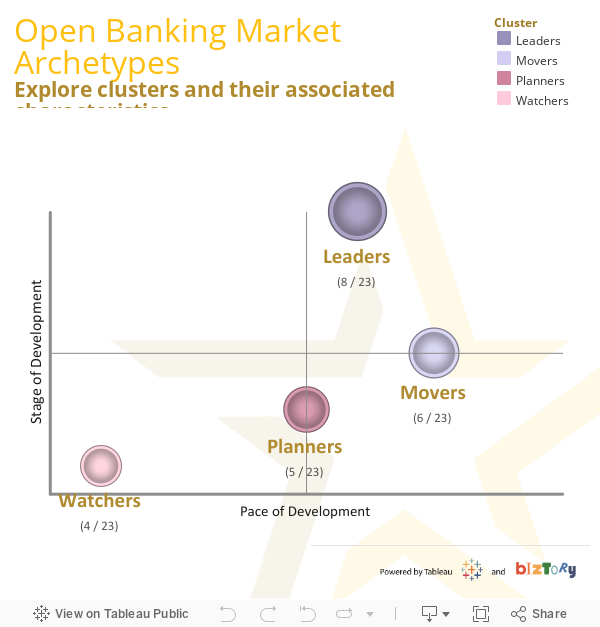
Last week, we released a piece of research – The Global Open Finance Index. It tracks the development of Open Banking across the world and focuses on the 23 countries where we’re seeing the most progress. Its findings are fairly stark. The UK’s position as a leader in the space, which was once completely uncontested, is now in serious danger of evaporating.
Countries like Brazil and Australia are accelerating with regulatory regimes that already go far beyond the UK’s initial blueprint whilst markets like India and the US are finding different approaches leveraging market forces and industry collaboration to create huge potential. India’s Open Banking standard now covers a group of more than 1 billion accounts whilst in the US 42 million accounts have coalesced under the FDX standard with zero regulatory push. Perhaps even more significantly, that regulatory push is coming in the US and soon. The Consumer Federal Protection Bureau (CFPB) is already in the late stages of consultation on how that process should be rolled out and they have the legislative backing to get it done.
So where does this leave UK fintechs?
I have no doubt that Open Banking and (eventually) Open Finance will have profound impact on the UK, revolutionising our credit market, bringing huge, excluded groups into mainstream finance and providing differentiated competition to the card rails, but in terms of the economics, the real prize is still on the table.
UK firms have built businesses that are designed to handle large quantities of API-driven transaction data. They’ve developed the security systems to protect the data, the skills to handle, clean and contextualise it and the case studies to prove how impactful that data can be. They are, in short, in a position of huge competitive advantage vs companies at the beginning of this journey in evolving markets. In order to maintain that advantage though, they have to keep working at the cutting edge of the technology, here the UK is falling down.
Australian firms are already working with Open Energy data, Brazilians are getting to grips with the wider financial product set through their country’s Open Finance programme.
We have to accelerate progress in the UK and the opportunity to do that is here.
On the public policy side, we need to establish a strong, independent body to preside over the future of the sector, we need to move on Open Finance, (the data bill is sitting in a drawer in parliament and should be moved forward as a priority) and we need to think about how we can build regulatory passporting into trade deals as we sign them.
On the market forces side we need more banks to take a leaf out of NatWest’s book and accelerate the development of premium APIs, we need to align on risk and liability frameworks for the use of these and work towards clarity for the market on commercial details. Finally we need better engagement between institutional lenders and retail lenders that use open banking data. Cost of capital is a major hurdle for Open Banking’s proliferation in the lending space and this both can and should be addressed.
This is a blockbuster agenda for 2023, but if we can get it done the prize for UK firms will be transformational. If we can’t, Open Banking will still have a major impact on our domestic economy but it might not be the firms hiring UK talent and paying UK tax that deliver it. This is not beyond us. There’s a lot to do but if we lace up our trainers, I’m very confident that we can make it happen.
”˜Consumer’ data has failed its creators
Consumer data’ is a remarkable quantity for the lack of ownership afforded to its eponymous creator ”“ the internet browser, the Google-er’, the consumer. Indeed, all of us are the creators of digital data from which Big Tech ”“ Google, Facebook, Amazon (you know the names) ”“ have achieved their giant status.
In fact, each time we open a website or app we leave behind a digital footprint used to track our movements across different websites and applications. This trail is inspected by Big Tech’s pack of algorithms, subsequently, determining’ a web user’s probable interests in products, ideas, and trends. With such an accurate’ determination of human interest at its disposal, Big Tech amasses a library of consumer data that it sells to advertisers, generating a lucrative revenue stream.
The relationship between consumers and advertisers goes back to Roman market squares and still serves just as important an economic function today. Yet, in today’s digital context, the creators of the industry’s most prized resource ”“ data ”“ have been excluded from sharing in its reward.
How has such an intrinsically unjust state of affairs survived for so long? Largely because consumers have been misled. In the first instance, consumers have been made to believe that their data holds no personal value. Secondly, that lack of control over data and, indeed, privacy is inseparable from the internet. While, this is slowly changing, with users now able to opt out of certain trackers, Big Tech is still aggressively trying to force us to adopt them: even if a user chooses to reject certain targeting preferences, they are often forced to confirm every time they enter the site or until impatience overcomes concerns.
Although they have certainly been egregious, we cannot place the entire blame on Big Tech, advertisers also have much to answer for. Advertisers spend approximately £27 billion a year on digital marketing, for the most part, this goes straight to Big Tech. This enormous expenditure is justified because it is, in actuality, an investment ”“ an investment made to entice consumers to spend. Moreover, in today’s digitally entangled economy in which jobs, networking, and day-to-day life are so dependent on internet access, the reach of advertising is inescapable. And so, we exist within a digital ecosystem that demands we share our thoughts and data with Earth’s largest corporations, only to boost our own likelihood to spend.
Undoubtedly, this status quo must change. Consumers must recognise the worth of their data and demand remuneration. Meanwhile, advertisers must stop encouraging and feeding Big Tech with the dirty cash that encourages such malpractice. The objective of advertisers must shift from only selling to selling and rewarding. In short, advertisers who seek access to consumer data must provide them with benefits.
Fortunately, the emergence of direct-to-consumer marketing apps and platforms has made such solutions a reality. For advertisers who market via such platforms, they unlock the ability to directly communicate with target consumers, in return offering the latter cash benefits and rewards. It is the responsibility of the platforms themselves to keep the end-user in mind, leveraging their position to ensure consumers get access to the highest value rewards. Furthermore, consumers are able to identify a preferred level of privacy, exchanging a level of data access on a quid quo pro basis to maximise cash benefits, all while driving a positive feedback loop of more relevant ad targeting.
By using direct-to-consumer marketing platforms, consumers can finally reclaim the right to their data and expect a fair price for its exchange. The current economic environment, undoubtedly, makes such solutions particularly enticing.
Though, far more importantly, direct-to-consumer platforms are resetting the relationship between data and advertising, shifting power away from Big Tech and back to consumers. Slowly, we march towards a future where digital data is not a price tag of the modern economy, but a precious commodity back in the hands of its creators, who financially benefit from its transparent and consensual exchange.
Mohsin Rashid is the CEO and co-founder of ZIPZERO, which offers a mass-market consumer solution to the cost-of-living crisis. Shopping via the ZIPZERO app earns users cash to pay bills ”“ the cash rewards are funded by retailers and brands, which gain access to a formidable direct-to-consumer marketing platform, allowing them to divert a collective £27 billion digital advertising spend back to their own customers. Through its compelling consumer proposition, ZIPZERO has become a prolific source of first-party, product-level consumer data. ZIPZERO is inviting major utility firms, leading retailers & brands (advertisers) to make active use of its progressive platform and help UK consumers tackle the cost-of-living crisis.